
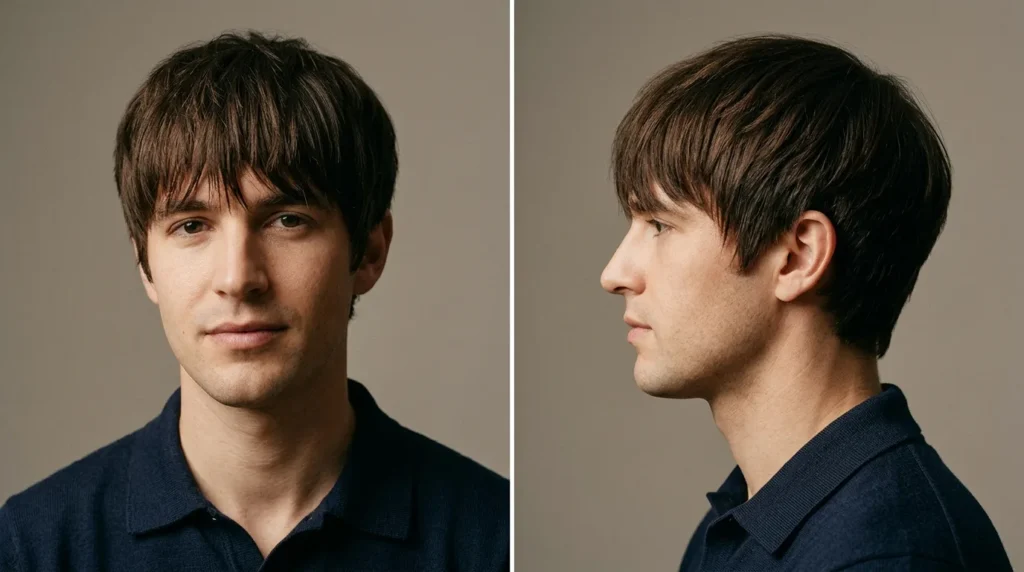
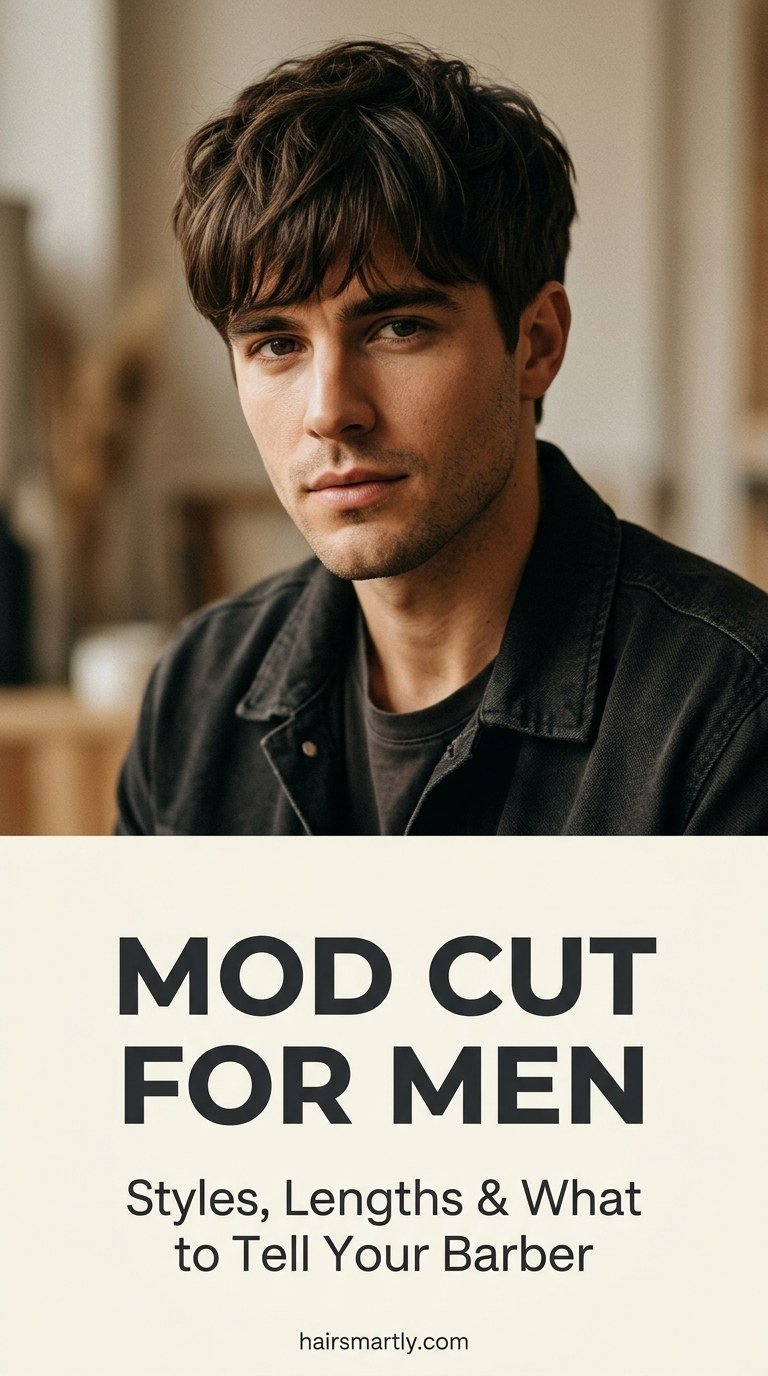
The mod cut is a medium-length men’s haircut with a heavy, textured fringe that falls toward the eyebrows, a rounded layered crown, and sides that are blended rather than shaved. It sits between a neat short cut and a long shag, which is exactly why it has become one of the most requested haircuts of 2026.
It looks simple. It is not. The difference between a great mod cut and a bad bowl cut is a few centimetres of layering and the right words in the barber’s chair. This guide gives you both — plus the lengths, the face-shape logic, and the styling routine that most guides skip.
Table of Contents
What Is a Mod Cut?
A mod cut is a scissor-cut, medium-length style built around the fringe. The hair on top and at the front is long enough to fall forward over the forehead, the crown is layered so it sits round instead of flat, and the sides cover the top of the ears with no hard disconnection.
Three features define it:
- A heavy fringe — dense at the front, broken up at the ends so it never looks like a straight line.
- A rounded silhouette — the head shape looks soft and full from every angle.
- Blended sides — trimmed with scissors or a long taper, not a skin fade or a disconnected undercut.
One quick correction: some sites call this cut a “wolf cut.” It isn’t. A wolf cut has choppy, shaggy layers and noticeably longer length at the back. The mod cut is more balanced and controlled all around the head.
Mod Cut Anatomy: Length Guide by Zone
Most guides tell you what the style looks like. Few tell you how long each part should be. Use these as a starting point and adjust for your hair density.
| Zone | Classic mod cut | Short mod cut | 90s / overgrown mod |
|---|---|---|---|
| Fringe | 4–5 in (10–13 cm), to the eyebrows | 2.5–3.5 in (6–9 cm), above the brows | 5–6 in (13–15 cm), brushing the lashes |
| Top | 3.5–4.5 in (9–11 cm) | 2.5–3 in (6–8 cm) | 4.5–5.5 in (11–14 cm) |
| Crown | 3–4 in, layered for roundness | 2–2.5 in | 4–5 in, softly textured |
| Sides | 2–3 in, covering upper ear | 1–1.5 in or a long taper | 3–4 in, over the ears |
| Back / nape | 2–3 in, soft taper | 1–1.5 in, tapered | 3–4 in, touching the collar |
Key takeaway: the fringe is always the longest and densest point. If your barber takes too much from the front, the cut loses its identity.
A Short History: 1960s London to 2026
The mod cut was born in early-1960s London inside the Mods (“Modernists”) subculture — young working-class men who loved sharp Italian suits, scooters, jazz and soul. Barbers adapted continental European cuts into a fuller, fringe-led British shape. The Museum of Youth Culture holds a large photo archive of the original scene if you want visual references.
Bands like The Who, The Small Faces and The Kinks made it famous. A late-1970s mod revival led by Paul Weller and The Jam brought it back, and in the 1990s Britpop era (see our 90s men’s hairstyles guide), Oasis and Blur loosened it into a longer, messier version. For more cuts from that decade, browse our 1960s men’s hairstyles.
The 2026 version takes the best of both: the round shape of the 60s with the texture and ease of the 90s. Men are moving away from tight skin fades toward cuts with length and movement, and this look fits that shift perfectly.
Is the Mod Cut Right for You?
This cut suits most men with medium to thick hair and works on nearly every face shape once the fringe is adjusted. The big deciding factors are hair density and hairline, not face shape alone. If you are unsure about your shape, check our guide to men’s haircuts for your face shape first.
By Face Shape
| Face shape | Does it suit? | How to adjust |
|---|---|---|
| Oval | Excellent | Any length works |
| Square | Excellent | Keep fringe soft and broken to balance a strong jaw |
| Round | Good | Add height at the crown; avoid fullness at the cheeks |
| Long / oblong | Very good | A fuller, lower fringe shortens the face visually |
| Heart | Very good | A fuller fringe balances a wider forehead |
| Diamond | Good | Keep sides slightly fuller to soften cheekbones |
| Triangle | Good | Add volume at the crown and temples |
By Hair Type
- Straight hair: The classic choice. Needs internal texturizing so it doesn’t lie flat and look like a helmet.
- Wavy hair: Arguably the best texture for the style — natural movement does half the styling work.
- Curly hair: Works well. Keep it slightly longer and ask for weight to be removed at the sides so it doesn’t turn triangular.
- Thick Asian or South Asian hair: Very good fit, but the hair is often dense and straight, so ask for heavy point cutting and thinning through the fringe to stop it looking stiff.
- Afro-textured hair: Possible as a rounded, sculpted variation with a shaped fringe — go to a barber experienced with textured hair.
Fine, Thinning or Receding Hair
This is the question most guides avoid. A short textured mod cut can actually help fine hair look fuller because the fringe sits forward and hides a light hairline. However, if you have a significantly receding hairline or thinning crown, the heavy fringe can separate and show the scalp. In that case, ask for a shorter, choppier version and use texture powder for grip. If hair loss is progressing, a dermatologist can check the cause — the American Academy of Dermatology lists the most common ones. You can also compare other haircuts for thin hair.
Lifestyle Check
- Office / professional: Yes — the short mod cut looks neat and polished.
- Gym and sport: Manageable, but the fringe gets in your eyes when sweaty.
- Humid climates: Expect frizz and fringe collapse; matte products and a quick blow-dry are essential.
- Wearing glasses: Keep the fringe above the top of the frames, or it constantly touches the lenses.
8 Mod Cut Variations Worth Trying
Each variation keeps the fringe-led round shape but changes length, texture or the sides.
1. Classic Mod Cut
The original: eyebrow-length fringe, rounded crown, scissor-cut sides over the ears. Best for straight to wavy medium-density hair.
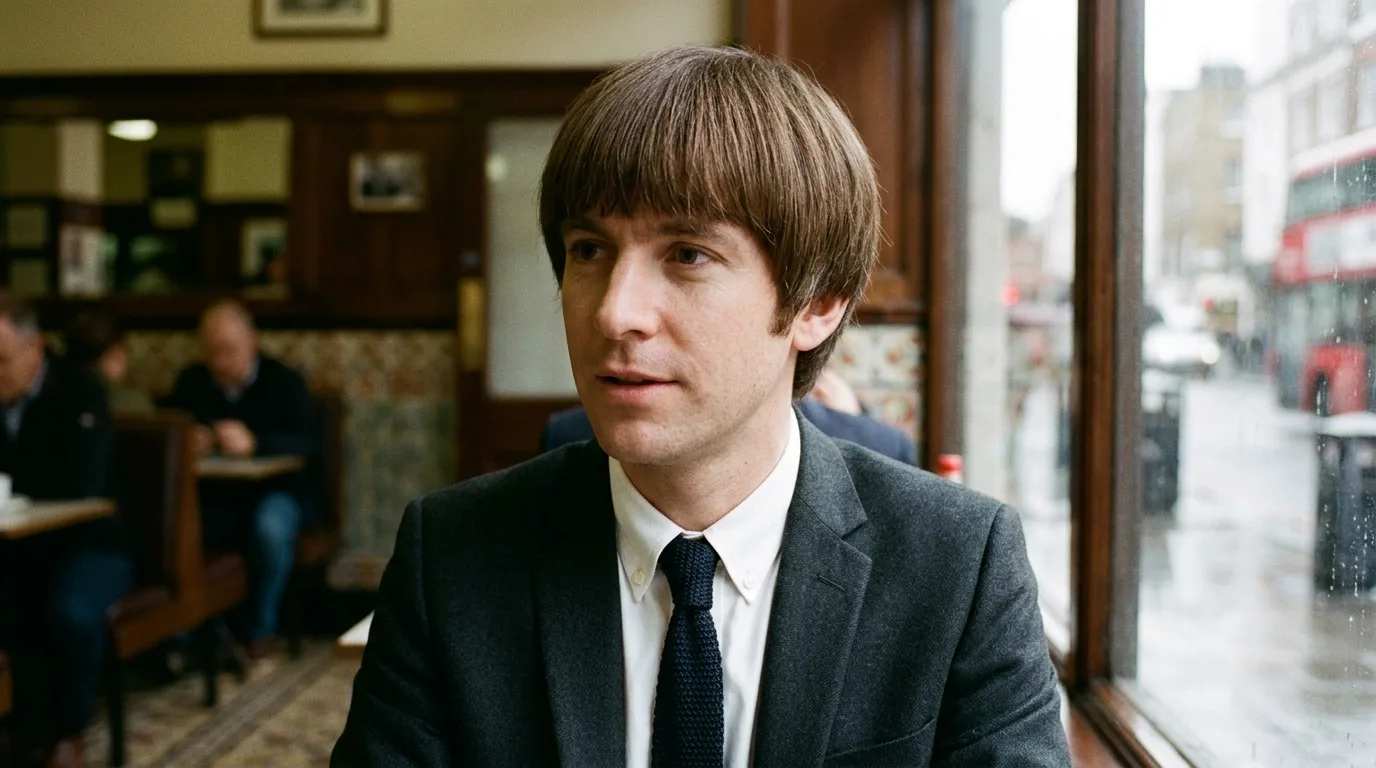
2. Textured Mod Cut
The most popular 2026 version. Point cutting and internal layers create separated, piece-y texture. Ideal for thick hair that would otherwise look bulky.

3. Short Mod Cut
A shorter fringe above the brows and a neat taper at the sides. The best option for offices, finer hair, or first-timers who want to test the look.

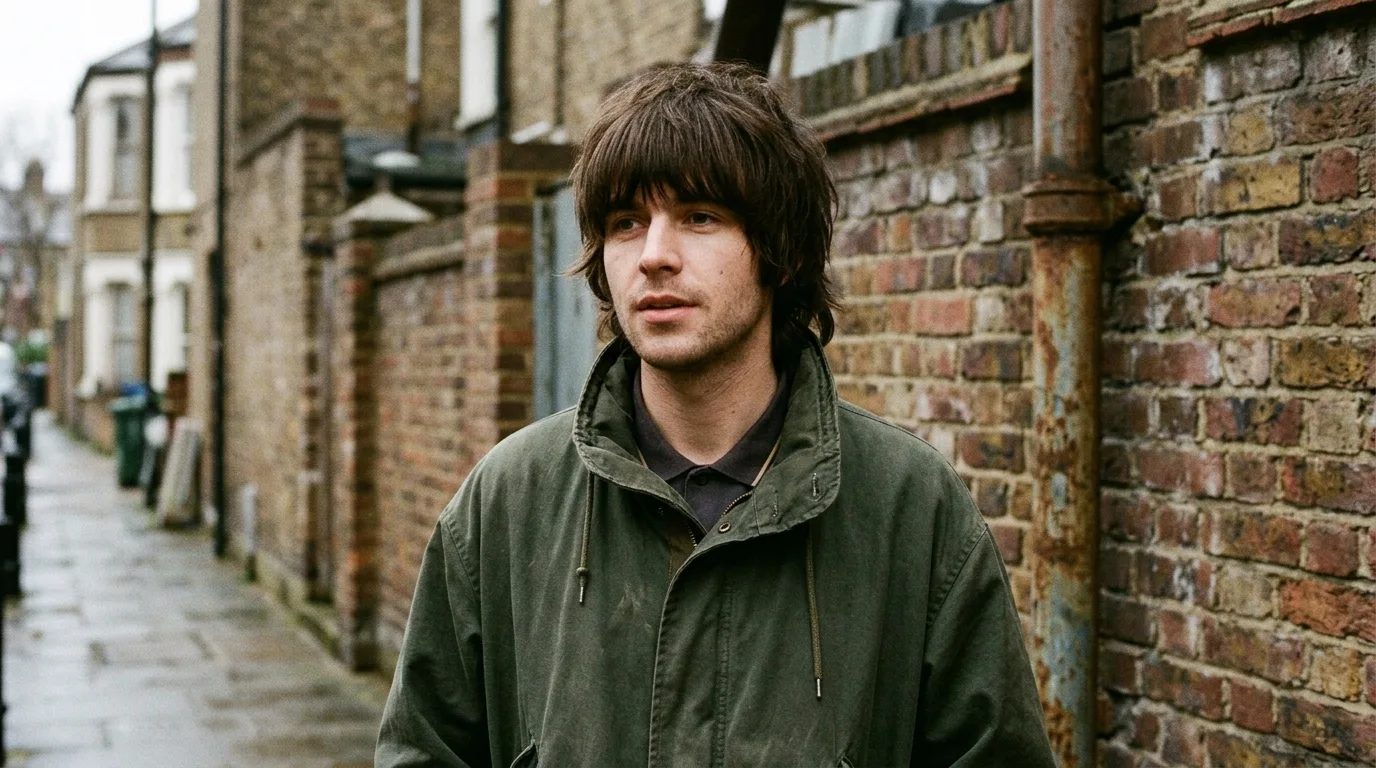
4. 90s Mod Cut (Britpop Mod)
Longer, messier and fuller, with the fringe brushing the eyelashes. Suits thick straight or wavy hair and a relaxed personal style.
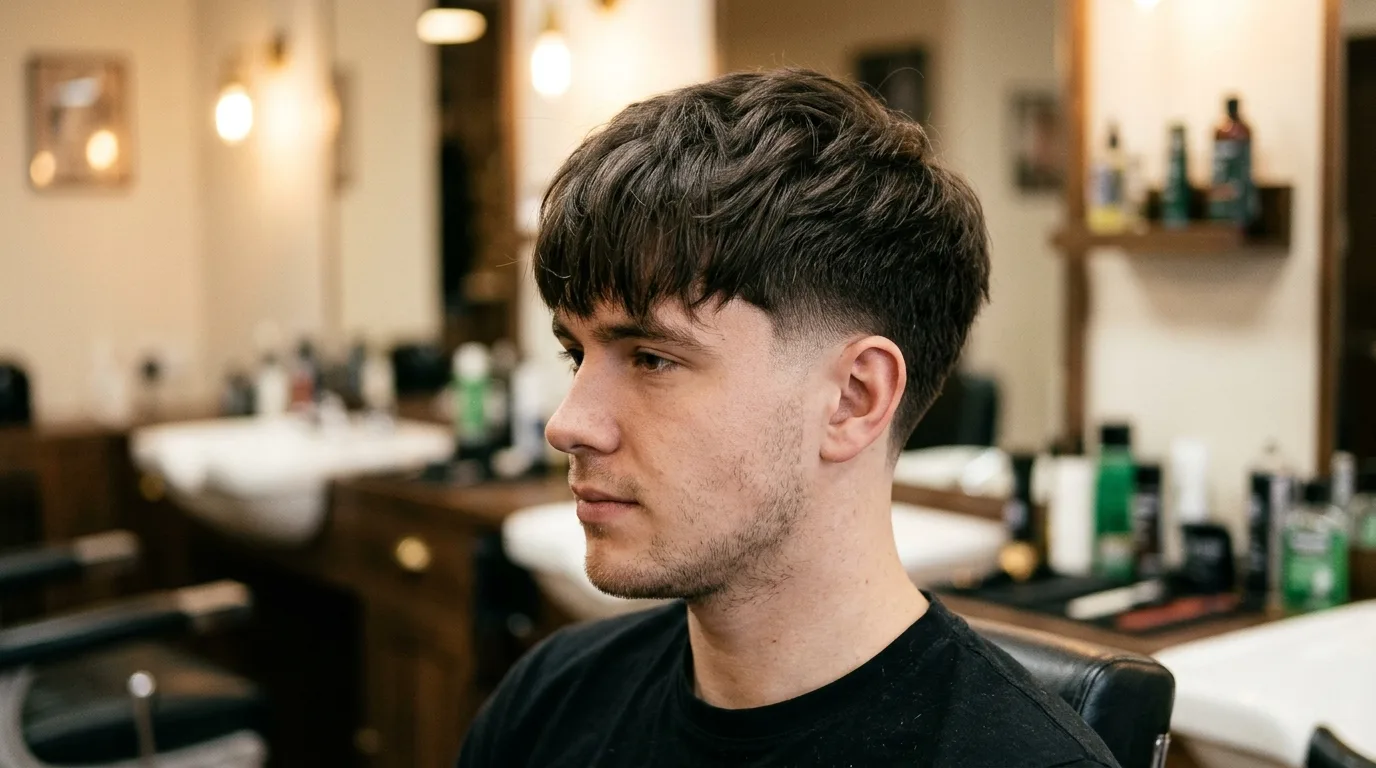
5. Mod Cut with Taper or Low Fade
Keeps the mod top but cleans the sides and nape with a low taper. A good bridge for men coming from fade haircuts. Not sure which height to pick? Our low vs mid vs high fade comparison explains the difference. Keep the fade low — a high skin fade breaks the round silhouette.
6. Curly Mod Cut
Curls on top with a defined fringe of curls. Weight is removed at the sides to keep the shape round, not pyramid-like. A simple curly hair routine for men keeps the curls defined between cuts.
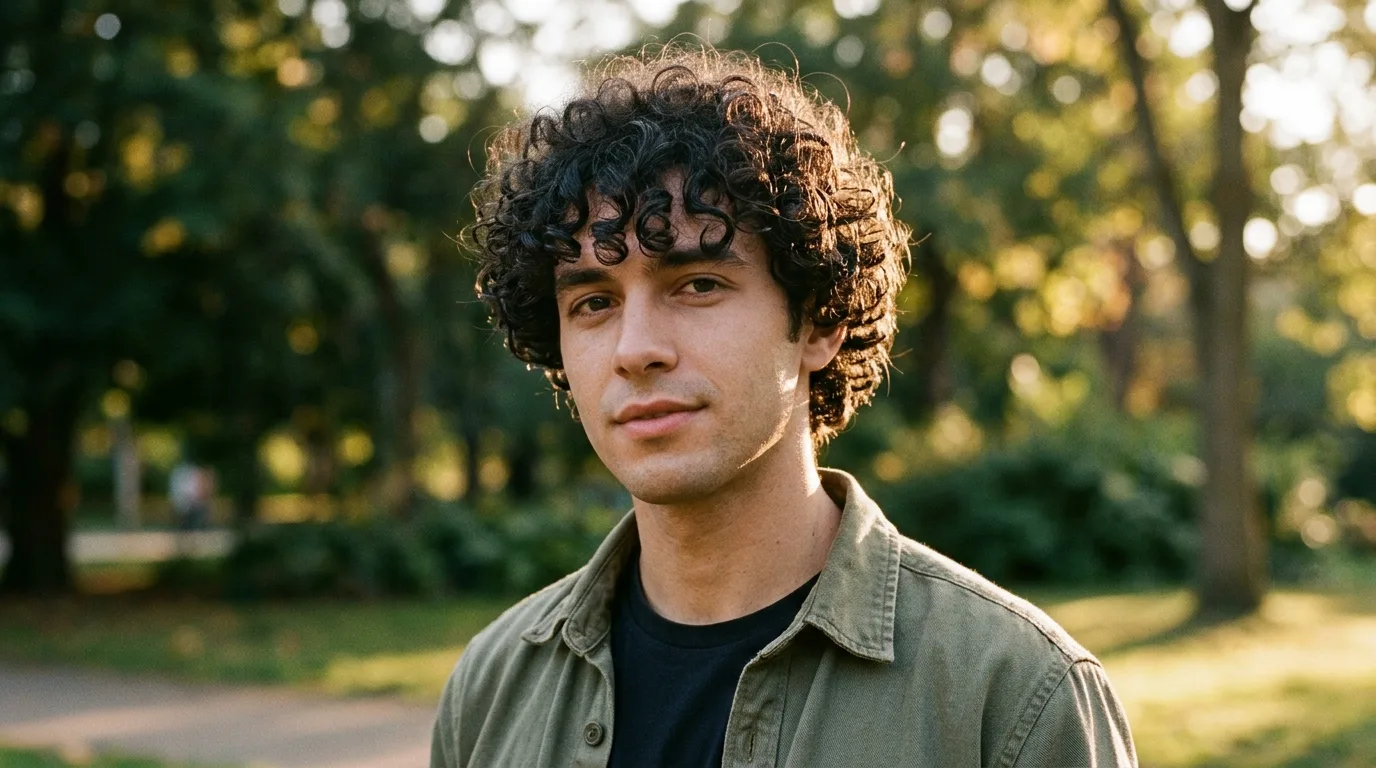
7. Korean / Asian-Style Mod Cut
An airy, see-through fringe with soft volume on top. Usually needs heavy texturizing and a blow-dry to lift dense straight hair.

8. Overgrown Mod Cut
Deliberately grown-out and fluffy, almost touching a shag. Best for men who want low-effort length and visit the barber less often.

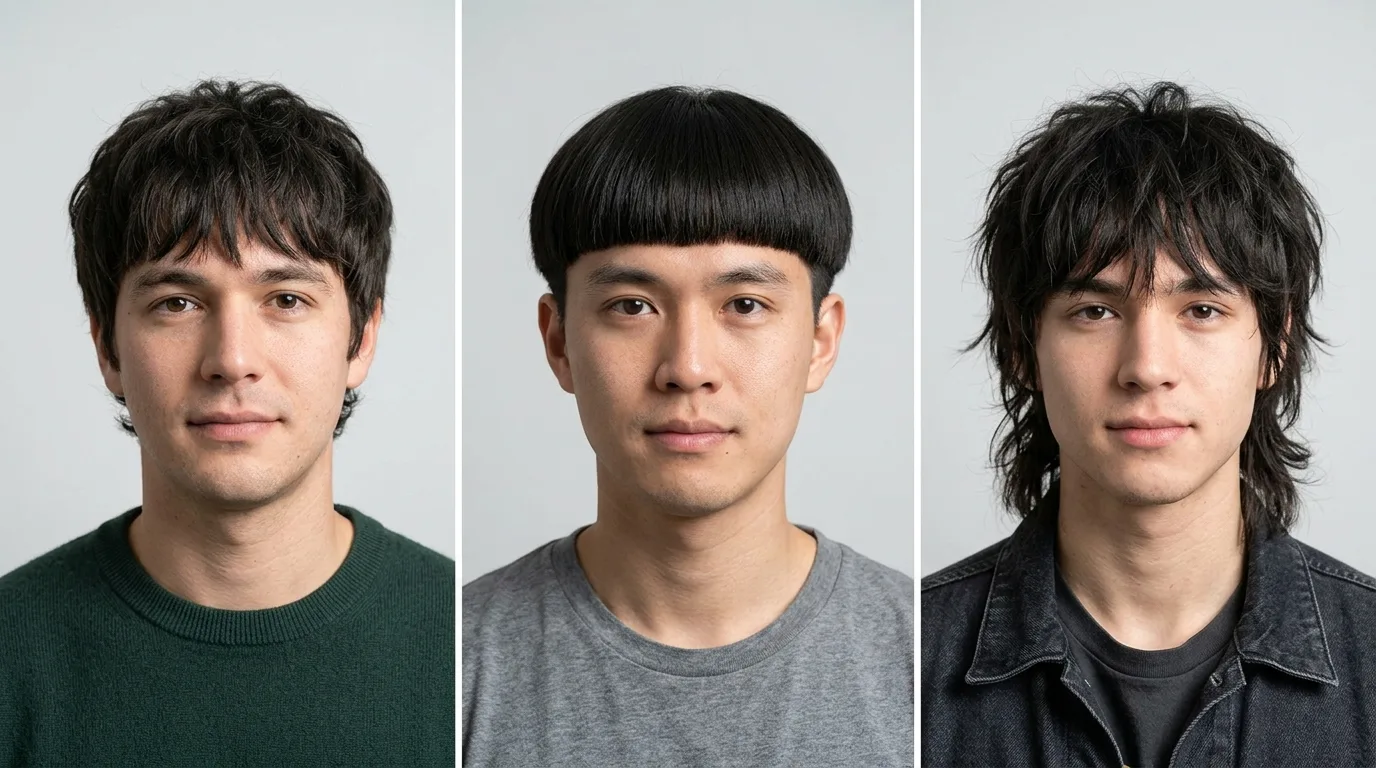
Mod Cut vs Bowl Cut, Wolf Cut, Mullet and More
The cut gets confused with several similar styles. Here is how they actually differ.
| Style | Fringe | Sides | Back | Overall feel |
|---|---|---|---|---|
| Mod cut | Heavy, textured, to brows | Blended, cover upper ear | Soft, medium | Round, balanced, retro-modern |
| Bowl cut | Blunt, straight line | Same length as fringe, often hard edge | Same line all around | Rigid, uniform |
| Mop top (Beatles) | Long, over the brows | Long, over ears | Long | Shaggy, less structured |
| Wolf cut | Choppy curtain-style | Short, choppy layers | Noticeably longer | Wild, layered |
| Mullet | Short-to-medium | Short | Long | Business in front, length behind |
| Shag | Curtain or wispy | Long, layered | Long | Undone, heavy layering |
| Two-block cut | Medium, often parted | Disconnected short undercut | Short | Clean contrast |
| French crop | Short, blunt | Short fade | Short | Neat and short |
Simple rule: if the sides are disconnected, it’s a two-block haircut. If the back is clearly longer, it’s a mullet or wolf cut (or a shag if it is layered everywhere). If the edge is a single blunt line, it’s a bowl cut.
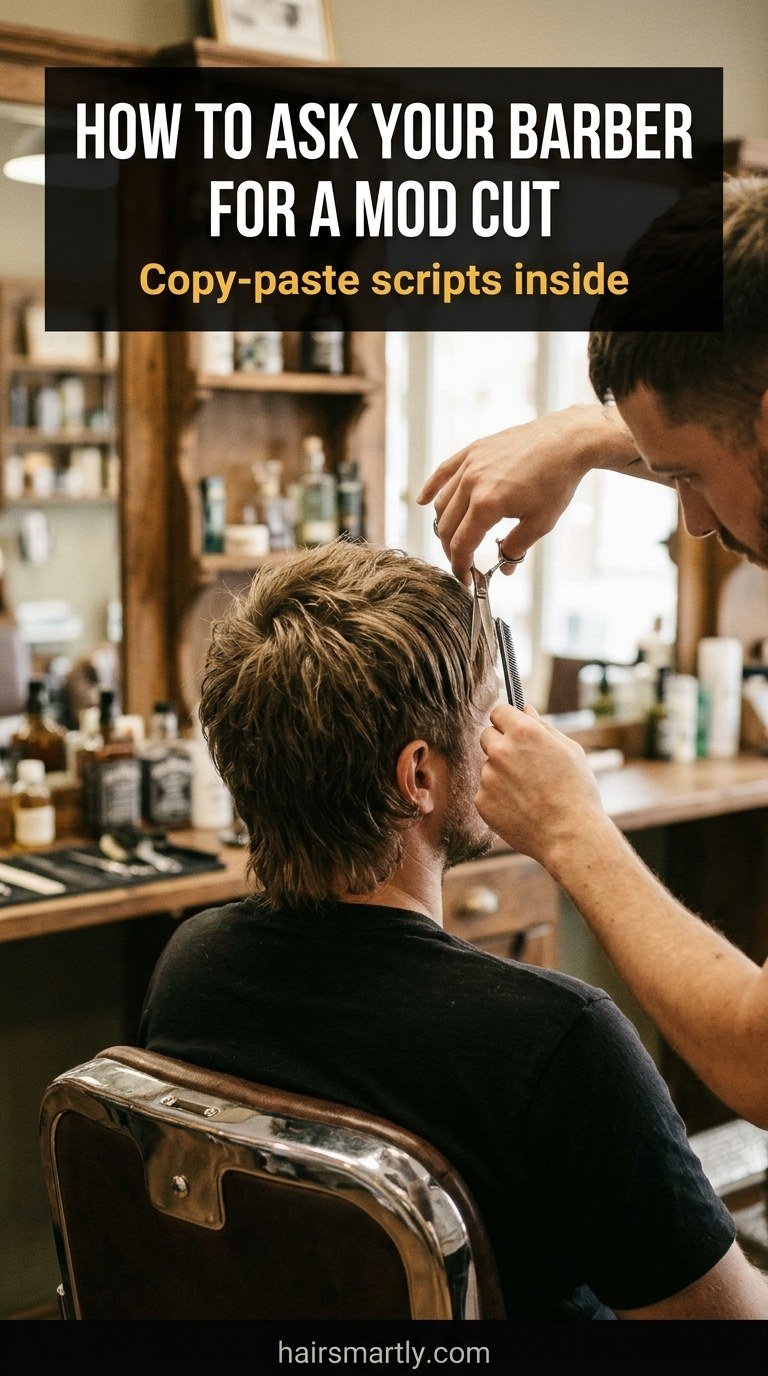
How to Ask Your Barber for a Mod Cut (Copy-Paste Scripts)
Asking for “a mod cut” alone is risky — barbers interpret it differently. Bring 2–3 photos of the cut on someone with your hair type, then use one of these scripts.
Classic version:
“I want a mod cut. Please keep the fringe long — down to my eyebrows — and texture the ends so it isn’t a straight line. Layer the crown so it looks round. Scissor-cut the sides to cover the top of my ears, no fade and no undercut. Soft taper at the back.”
90s / overgrown version:
“I’m going for an overgrown 90s mod cut. Keep as much length as possible, especially the fringe. Just remove bulk with point cutting so it moves and looks a bit messy. Don’t clean up the sides too much.”
Short / professional version:
“I want a short mod cut. Fringe just above my brows, textured. Rounded shape on top, and a low scissor taper on the sides and back so it looks neat for work.”
Barber terms that help: point cutting, texturize, remove weight, blended sides, soft taper, no disconnection, keep the fringe heavy.
How Long Does It Take to Grow a Mod Cut?
Hair grows roughly half an inch (about 1.25 cm) per month, according to the American Academy of Dermatology. So the time depends on where you start.
| Starting point | Approx. time to a classic mod cut |
|---|---|
| Buzz cut or skin fade | 6–8 months |
| Short crew cut / French crop | 4–6 months |
| Medium textured crop | 2–3 months |
| Long hair or shag | One appointment |
Grow-out tip: keep trimming the sides and neckline every 6–8 weeks while you leave the top and fringe completely alone. This avoids the awkward “helmet” phase.
How to Style a Mod Cut in 5 Minutes
The goal is separation and movement, not hold. Heavy, shiny products flatten the fringe and ruin the round shape.

- Start with damp hair. Towel-dry until about 70% dry.
- Add a pre-styler. Spray sea salt spray or apply a light texturizing cream through the roots.
- Blow-dry forward and round. Use medium heat and your fingers (or a round brush) to push the fringe forward and lift the crown. This step creates the shape.
- Finish with a matte product. Rub a pea-sized amount of matte clay or cream between your palms and twist small sections of the fringe.
- Break it up. Run your fingers through once more so the fringe doesn’t sit as one block.
Cowlick at the front? Blow-dry the fringe against the direction of the cowlick first, then bring it back forward.
Best Products by Hair Type
Pick products by hair type, not by brand. This cut needs light, matte products that add grip and separation without weight. If you are unsure how clay, paste and pomade differ, read our hair gel vs pomade vs clay breakdown.
| Hair type | Pre-styler | Finisher | Avoid |
|---|---|---|---|
| Fine or thin | Sea salt spray | Texture powder | Heavy wax, oils |
| Thick straight | Light cream | Matte clay | High-shine pomade |
| Wavy | Sea salt spray | Light paste or cream | Strong gel |
| Curly | Curl or leave-in cream | Light styling cream | Clay (can make curls dry) |
| Frizz-prone / humid climate | Leave-in conditioner | Matte cream | Alcohol-heavy sprays |
Maintenance, Trims and Cost
The style is low-to-medium maintenance. Plan on a trim every 4–6 weeks to keep the fringe out of your eyes and the shape round; longer 90s versions can stretch to 8 weeks.
- Daily: 3–5 minutes of styling.
- Between visits: If the fringe gets too long, a barber fringe trim takes 10 minutes — many shops do it for a small fee.
- Cost: It is a scissor cut, so it usually costs slightly more than a standard clipper cut because it takes longer. Expect a standard men’s scissor-cut price at your local barbershop.
- Washing: Wash 2–4 times a week; daily washing can make straight hair too soft and flat.
Common Mod Cut Mistakes (and Fixes)
1. It looks like a bowl cut. Cause: the fringe and sides were cut in one blunt line. Fix: ask for point cutting on the fringe and graduated layers at the sides.
2. It sits flat like a helmet. Cause: not enough crown layering, or air-drying straight hair. Fix: more internal texture and a 2-minute blow-dry.
3. The sides puff out. Cause: too much weight above the ears (common on thick and wavy hair). Fix: ask the barber to remove weight from the sides.
4. The fringe splits in the middle. Cause: a natural parting or cowlick. Fix: blow-dry against it and use a matte product with grip.
5. It looks greasy by midday. Cause: too much or too heavy product. Fix: switch to texture powder or a smaller amount of clay.
FAQs
What is a mod cut?
A mod cut is a medium-length men’s haircut with a heavy, textured fringe, a rounded layered crown and blended sides. It originated in 1960s London’s Mod subculture and returned in a softer, more textured form in recent years.
What should I ask my barber for a mod cut?
Ask for a long, textured fringe to the eyebrows, a layered rounded crown, scissor-cut sides covering the top of the ears, and no disconnected undercut. Bring photos of the style on hair similar to yours.
Does a mod cut suit round faces?
Yes. Add height and texture at the crown and keep the sides close so the face looks longer. Avoid extra fullness around the cheeks.
Can you get a mod cut with thin hair?
Yes, a short textured mod cut works well for fine hair because the forward fringe makes hair look denser. With a strongly receding hairline, a shorter, choppier version is the safer choice.
What is the difference between a mod cut and a bowl cut?
A bowl cut has one blunt edge all around the head. This cut has a textured fringe, layered crown and graduated, blended sides, so it looks softer and more natural.
Is a mod cut high maintenance?
It is low to medium maintenance. You need a trim every 4–6 weeks and about 3–5 minutes of styling each day.
How long does it take to grow a mod cut?
From a short crop, about 4–6 months. From a buzz cut or skin fade, around 6–8 months, since hair grows about half an inch a month.
Can you have a mod cut with a fade?
Yes, but keep it a low taper or low fade. A high skin fade removes the side fullness that gives this cut its round shape.
Final Word: Is the Mod Cut Worth It?
If you have medium to thick hair and want a cut with personality that still looks put-together, the cut is one of the best choices you can make right now. It works in the office, on weekends and across most face shapes — as long as the fringe is textured and the sides are blended.
Ready to try it? Save the photos above, copy the barber script that matches your hair, and book a scissor cut — not a clipper cut. Give it two to three weeks to settle before judging the shape, then fine-tune the fringe length on your next trim.
Related reads: Men’s haircuts for your face shape · Two-block haircut guide · 90s men’s hairstyles · Curtain haircut guide