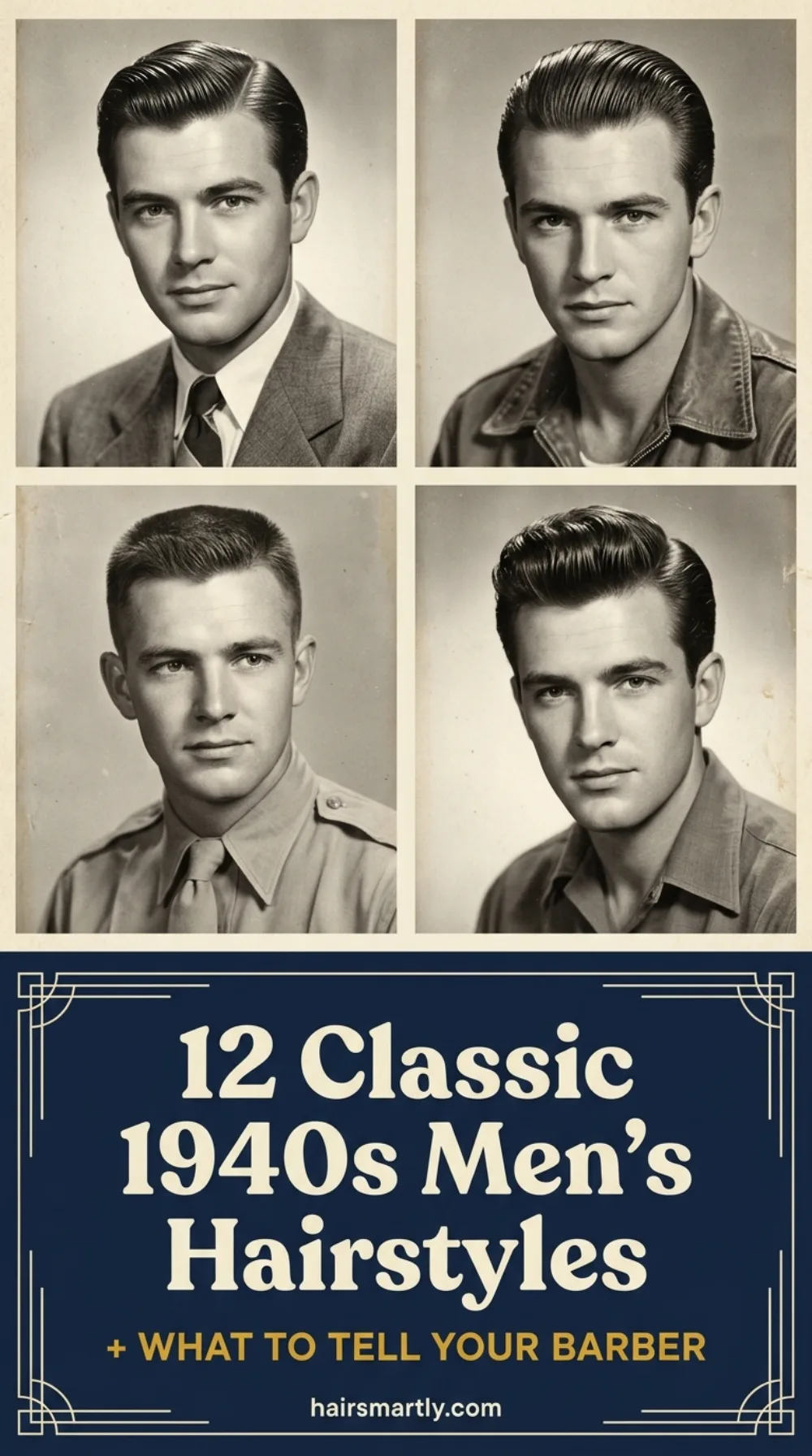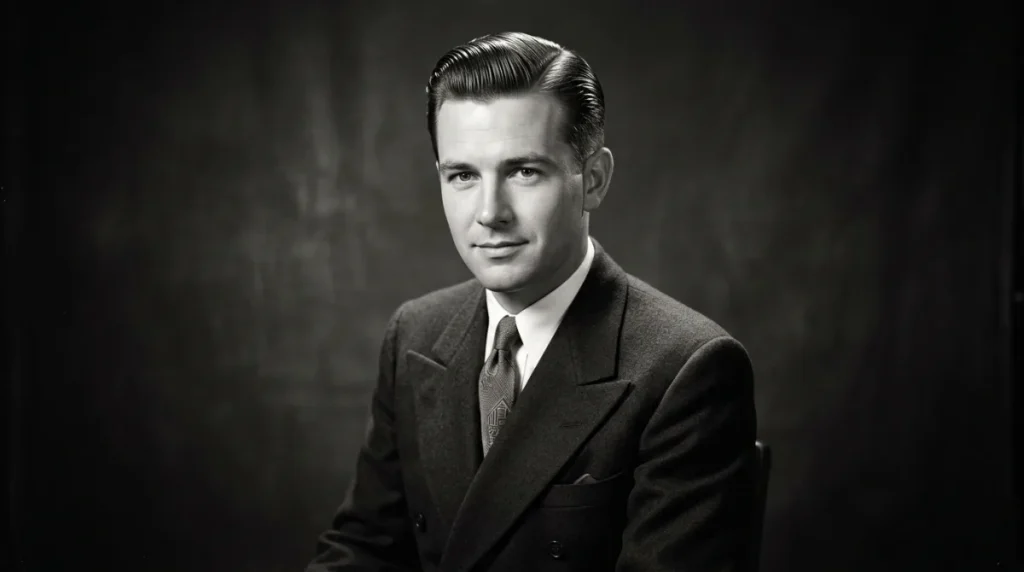
Quick answer: 1940s men’s hairstyles followed one formula: short back and sides, 2–4 inches on top, a side part, and a shine product like pomade or hair cream. From that base, men wore slick backs, single waves, low pompadours, or military crew cuts. Early-decade hair was flat and glossy; post-war hair was taller and wavier.
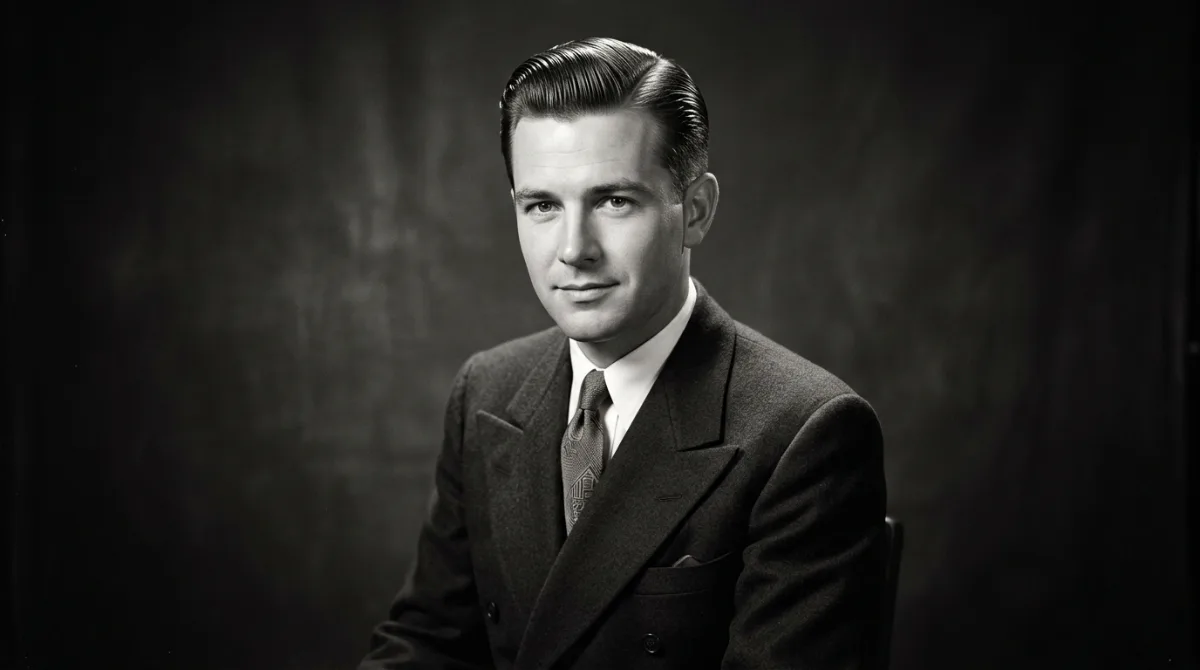
The decade was split in two by World War II. Millions of men went from civilian barbershops to Army clippers and back again. Hollywood stars such as Cary Grant, Gregory Peck, and Clark Gable set the civilian standard, while the military set the practical one.
This guide to 1940s men’s hairstyles covers the 12 cuts men actually wore, the myths that most “1940s” lists get wrong, the products then and now, and the exact words to use with your barber.
Table of Contents
The 1940s Formula: What Every Cut Had in Common
Almost all 1940s men’s hairstyles were tapered short on the back and sides with noticeably more length on top. The top was then parted on one side and combed back or over with a shine product. That single template explains most photos from the decade.
Three rules held across most of the decade:
- Side part, never centre. A centre part read as old-fashioned or feminine by the 1940s, so men parted on the left or right.
- Tapered, not faded. Barbers blended the sides with scissors over comb and hand clippers. The hard skin fade is a later invention.
- Shine was the finish. Matte hair barely existed. Oils, creams, and pomades gave a wet or soft gloss.
Early 1940s vs late 1940s
The biggest change across the decade was height and wave. Early-war hair was flat and polished; post-war hair grew taller and looser.
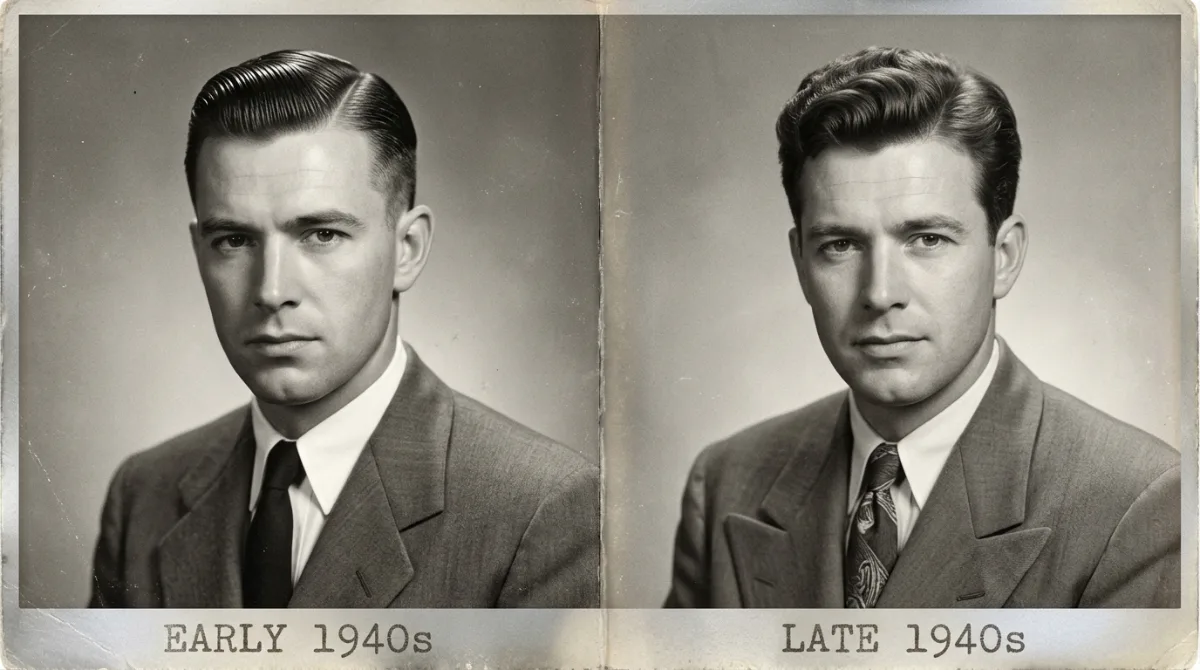
| Feature | Early 1940s (1940–1944) | Late 1940s (1945–1949) |
|---|---|---|
| Top shape | Flat or smoothly rounded, one neat wave | More height, layered or sculpted waves |
| Product use | Heavy oil or pomade, high gloss | Lighter creams; very oily look fading except on slick backs |
| Main influence | Military regulations, wartime practicality | Returning servicemen, Hollywood, youth culture |
| Signature looks | Slick back, single-wave side part, GI crew cut | Taller pompadour, ducktail, wavier side part |
| Where it led | Continued the 1930s gentleman look | Set up 1950s rockabilly and greaser styles |
Source for the early vs late shift: Vintage Dancer.
Why Men’s Hair Looked This Way
Four forces shaped 1940s men’s hairstyles: the war, Hollywood, the barbershop, and the products available. Each pushed toward short, neat, and controlled.
World War II. Enlisted men had their hair clipped short for hygiene, helmet fit, and uniformity. Many kept the easy crew cut after demobilisation, and home electric clippers made short cuts cheaper to keep.
Hollywood’s golden age. Film stars were the decade’s style influencers. Cary Grant’s side part, Alan Ladd’s slick back, and Gregory Peck’s soft wave were copied in barbershops across the US and UK.
The weekly barbershop. A well-groomed man saw his barber every one to two weeks. Short back and sides grows out fast, so frequent visits were part of the look, not a luxury.
Cheap, mass-market products. Hair creams like Brylcreem and Wildroot Cream-Oil were cheap, widely advertised, and made a tidy look easy. In Britain, RAF pilots were nicknamed the “Brylcreem Boys” for their glossy hair.
The result was a decade where looking neat signalled respectability, employment, and service.
12 Iconic 1940s Men’s Hairstyles
These are the cuts that appear again and again in 1940s films, yearbooks, and military photos. Each one notes who wore it and how to get it today.
1. The classic side part
The side part was the default among 1940s men’s hairstyles: tapered sides, 2–3 inches on top, a clean part on the left or right, combed over with light shine. Cary Grant and James Stewart made it the original gentleman haircut and the standard for office, church, and evening wear.
Get it today: Ask for a scissor taper on the sides and a natural part line. Use a cream or water-based pomade with medium hold and medium shine.
2. The slick back
The slick back combs all of the top hair straight back from the forehead with oil or pomade for a high-gloss, flat finish. Alan Ladd and Tyrone Power wore it, and it was the go-to evening look.
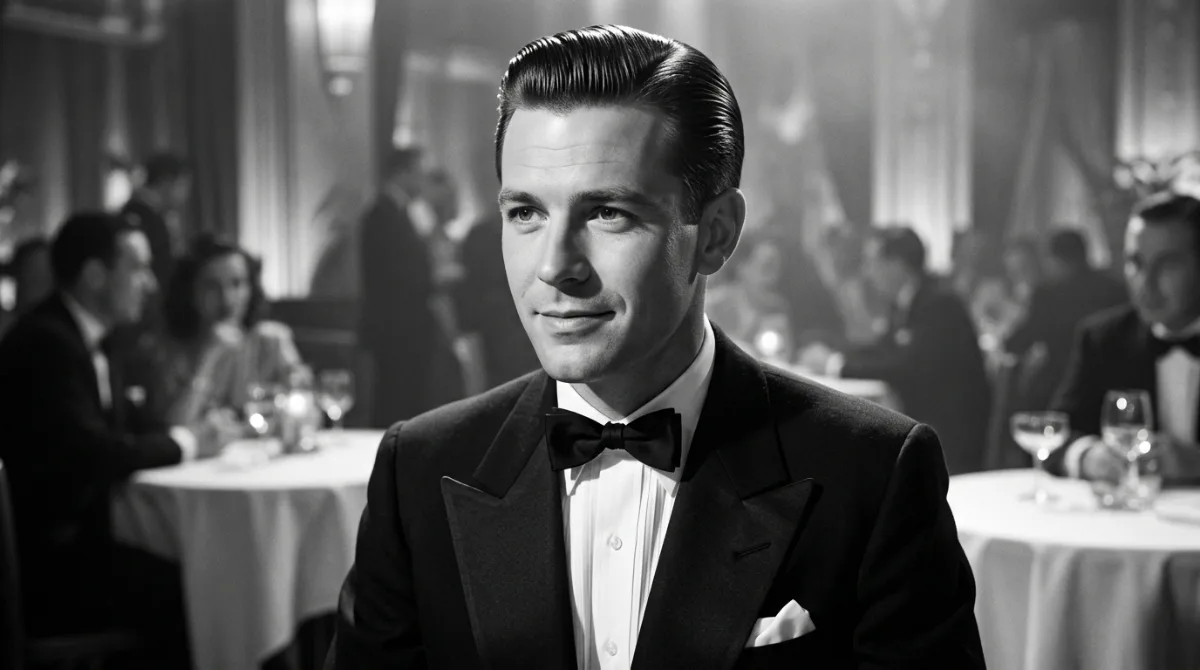
Get it today: You need 3–4 inches on top and a slightly longer crown so the hair lies flat. Apply pomade to damp hair, comb back, then smooth with a stiff bristle brush to remove comb lines.
3. The single-wave side part
This is a side part with one sculpted wave lifted at the front hairline. It defined the early 1940s and is the most “period-correct” look you can wear.
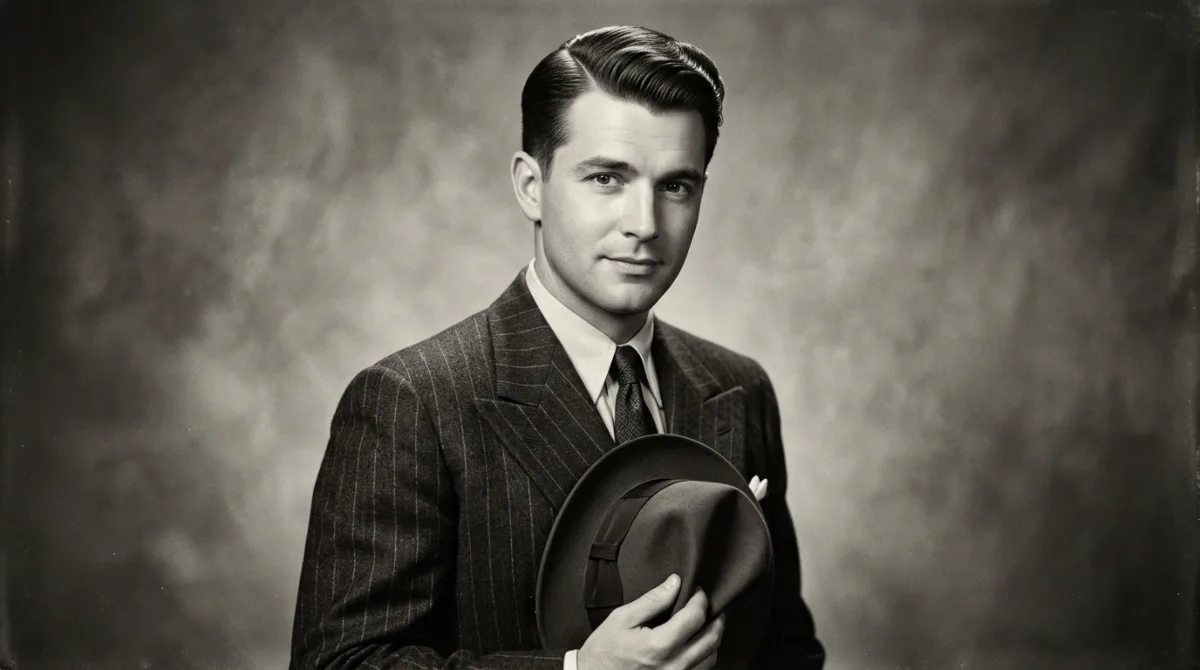
Get it today: Part where the longer top meets the shorter sides. Comb the front up and to the side, then push it slightly forward with your palm to form the wave before combing the rest back.
4. The soft wave (late 1940s)
Post-war hair kept the side part but let natural wave show through with less product. Gregory Peck and Peter Lawford are good references.
Get it today: Works best on natural waves (see our wavy hair care guide for men). Leave 3–4 inches on top, use a light cream, and let it air-dry rather than combing it flat.
5. The GI crew cut
The crew cut was the military haircut of World War II: clipped short all around, with the top slightly longer and tapered from front to back. It needed almost no product.
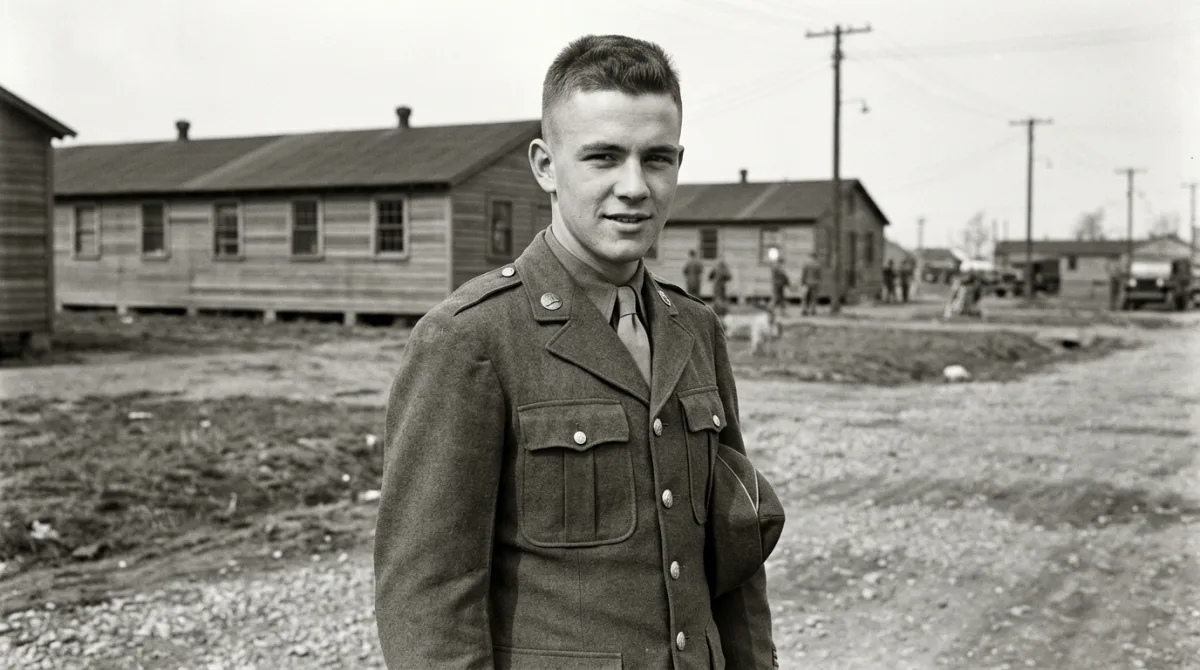
Get it today: Ask for a #2–#3 on the sides and about 1 inch on top, graduating shorter toward the crown. Keep the neckline tapered, not blocked.
6. The butch or brush cut
The butch cut is a crew cut with the top left long enough to stand straight up like a brush. Some men kept the front inch slightly longer and pushed it forward.
Get it today: About 1–1.5 inches on top, cut so it stands up. A small amount of matte paste or old-school butch wax keeps the front upright.
7. The flat top
The flat top is clipped short on the sides with the top cut into a level, square platform about 1–2 inches long. It was a military and working man’s cut that peaked in the 1950s.
Get it today: Choose a barber who is confident with a flat-top comb. Thick, straight hair holds the shape best.
8. The buzz cut
The buzz cut is one even clipper length all over the head. Inductees often received it on day one of training, and new home clippers made it easy to maintain.
Get it today: A #1–#3 guard all over. It is the lowest-maintenance 1940s cut, but the least “dapper.” For exact guard lengths, see our 2 guard buzz cut guide.
9. The low pompadour
The 1940s pompadour was modest: the front was combed up and back with some lift, but far lower than the 1950s Elvis version. It sat between a side part and a full pompadour.
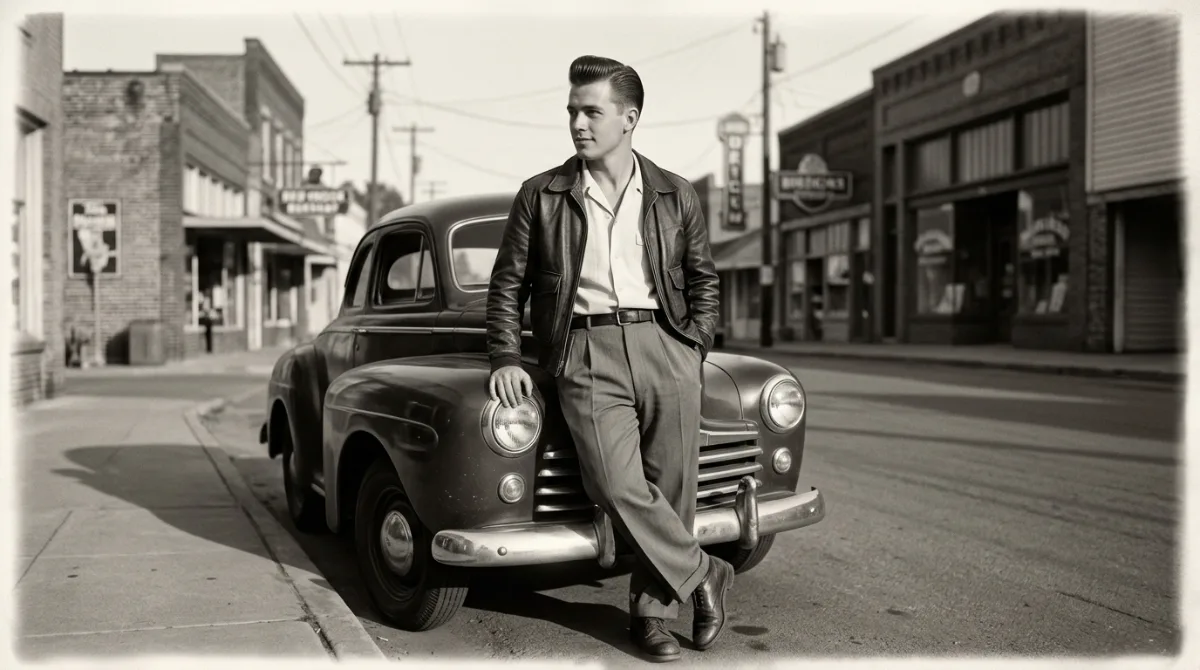
Get it today: Leave 3–5 inches at the front, blow-dry up and back, and set with a strong-hold pomade. Keep the height around one inch for an authentic look.
10. The ducktail (D.A.)
The ducktail combs long side hair back so it meets at the nape in a point, like a duck’s tail, usually under a full pompadour. It is commonly credited to Philadelphia barber Joe Cirello around 1940 and became a youth-rebel look by the end of the decade.
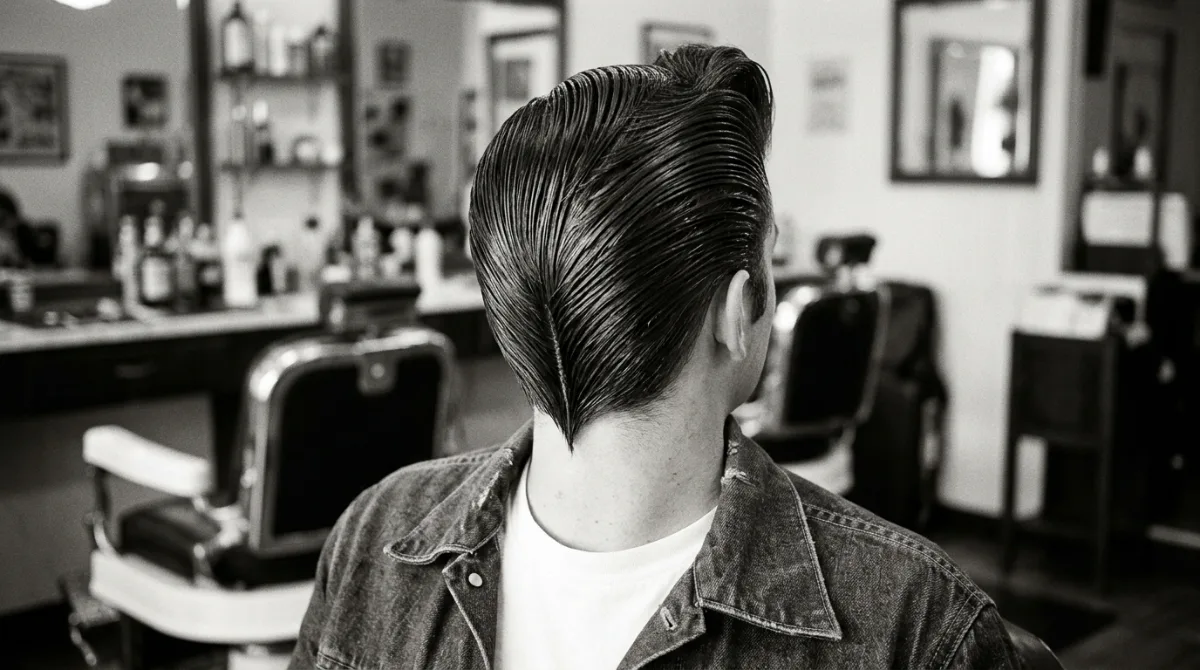
Get it today: You need length on the sides and back, not short back and sides. Comb each side back to the centre and press a centre line down the back with the edge of a comb.
11. The pachuco cut
Pachucos, young Mexican-American men in Los Angeles who wore zoot suits, favoured long, full hair swept into a high pompadour with a ducktail at the back. It was a statement of identity during the 1943 Zoot Suit Riots era.
Get it today: Treat it as a fuller version of the ducktail: long top and sides, heavy pomade, high front, and a sharp centre seam at the back.
12. The conk and short natural styles
The conk chemically straightened Afro-textured hair so it could be slicked or waved; jazz and R&B stars such as Nat King Cole wore it. Most Black men, however, wore short, even cuts with natural texture, brushed with pomade for shine.
Get it today: Skip lye-based straightening, which caused burns. A short even cut, a brush, and a pomade like Murray’s give an accurate everyday 1940s look.
Bonus: styles for thinning and grey hair
Older men wore the same cuts with less height. Men with receding hairlines kept hair flatter and combed neatly back, while grey-haired stars like Spencer Tracy and Ronald Colman proved the side part works at any age. For modern takes, see our guides to hairstyles for older men and haircuts for thin hair.
What Was NOT Among 1940s Men’s Hairstyles (Common Myths)
Many lists of “1940s men’s hairstyles” are padded with modern cuts. If you want an authentic look for a period event, film, or reenactment, avoid these mix-ups.
| Myth | Reality |
|---|---|
| Skin fades and bald fades are 1940s | Barbers tapered with scissors and hand clippers. The sharp skin fade is a much later style. |
| The disconnected undercut was the everyday 1940s cut | Short sides with a long top existed, especially in Europe, but the shaved, unblended undercut seen on modern TV is an exaggeration. Most men had blended sides. |
| The Ivy League cut was a 1940s staple | It existed, but it peaked on 1950s campuses. Use it only for a late-1940s look. |
| Big Elvis pompadours were 1940s | 1940s pompadours were low. The tall rockabilly version is 1950s. |
| Matte clay finishes | 1940s hair shone. A dry, matte texture instantly reads modern. |
| Centre parts | Out of fashion for men by the 1940s. |
| Beards were common | Most men were clean-shaven. Beards were rare outside of older or rural men. |
Modern versions of these cuts are fine for everyday wear. Just know the difference when accuracy matters.
1940s Facial Hair
Most 1940s men were clean-shaven every day. When facial hair appeared, it was almost always a neat moustache.
- The pencil moustache. A thin line following the upper lip, carried over from the 1930s. Clark Gable wore a slightly fuller version.
- The small trimmed moustache. Short, neat, and kept above the lip line. Common on older and professional men.
- The handlebar. Rare, but associated with RAF and military men; London’s Handlebar Club formed in 1947.
- Full beards. Uncommon, mostly seen on older men, naval officers, or actors playing historical roles.
Daily shaving with a safety razor or straight razor was the norm, followed by aftershave lotion. For an authentic look, a clean shave matters as much as the haircut.
Products for 1940s Men’s Hairstyles: Then vs Now
1940s men used oils, creams, and petroleum-based pomades. Several original brands are still sold, but water-based pomades now give the same shine with an easy washout.
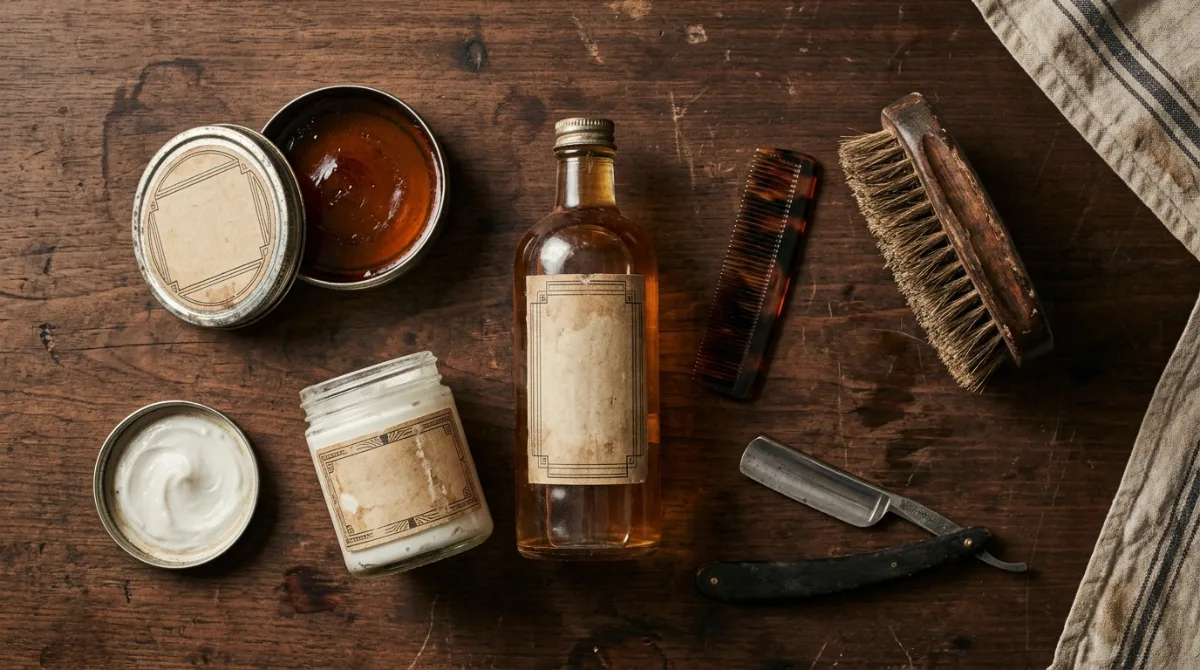
| 1940s product | What it did | Best for | Modern equivalent |
|---|---|---|---|
| Brylcreem | Light cream, soft hold, natural shine | Side parts, soft waves | Brylcreem (still made) or a styling cream |
| Wildroot Cream-Oil | Non-sticky cream applied to wet hair | Everyday neat look | Light hair cream or leave-in |
| Brilliantine | Oil or gel for high gloss | Slick backs | Hair oil or high-shine pomade |
| Vitalis hair tonic | Alcohol-based liquid, light hold, scalp tonic | Groomed, non-greasy finish | Vitalis (still made) or a grooming tonic |
| Murray’s / Royal Crown pomade | Very strong petroleum hold | Pompadours, ducktails, Afro-textured hair | Same brands, or a firm oil-based pomade |
| Butch wax | Stiff stick wax | Making crew-cut fronts stand up | Matte paste or butch wax stick |
Tip: Oil-based pomade gives the most authentic look but needs a degreasing shampoo to wash out. Water-based pomade is the practical choice if you style every day. Our roundup of the best hair styling products for men compares modern options.
Product history: Vintage Dancer.
What to Tell Your Barber
Most barbers today default to a skin fade, so be specific. Use these words for an authentic 1940s cut:
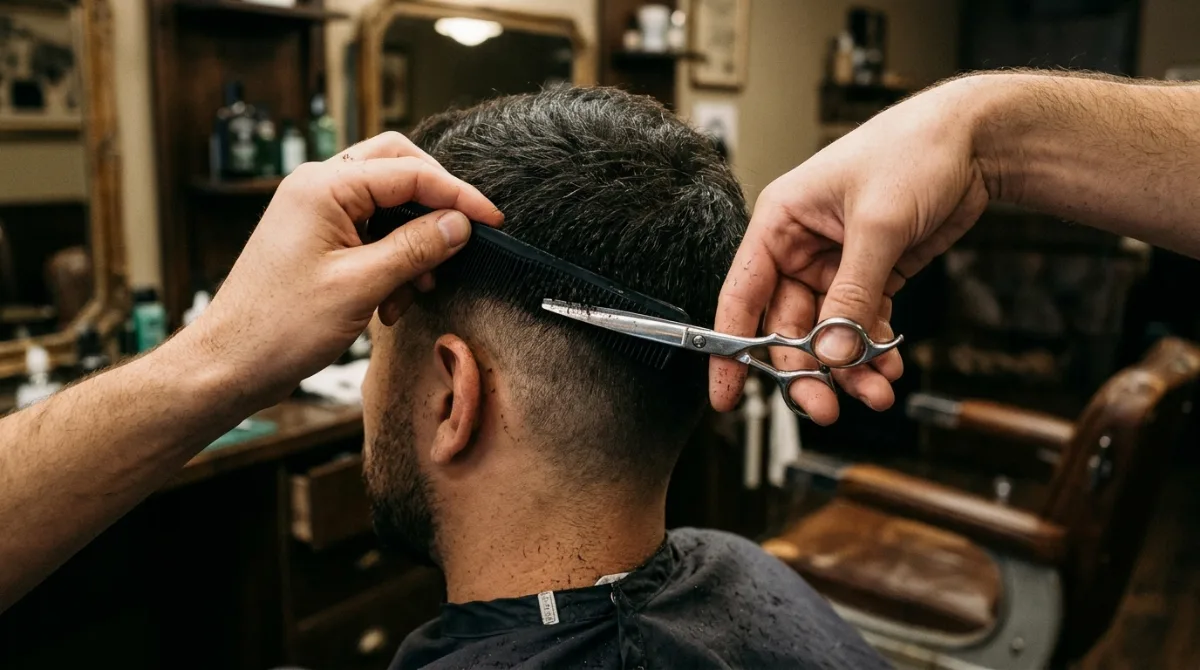
“I’d like a classic 1940s taper. Scissor-over-comb or a #3–#4 on the sides, tapering to a #1–#2 at the neckline, no skin. Keep 2–3 inches on top, longer at the front. Natural side part on the [left/right], tapered neckline, not squared.”
Adjust it for your chosen style:
- Slick back: add “leave 3–4 inches on top and keep weight at the crown.”
- Low pompadour: add “leave 4–5 inches at the front, graduating shorter to the crown.”
- Crew cut: say “#2 on the sides, about an inch on top, shorter toward the back.”
- Ducktail: say “keep length on the sides and back so I can comb it to the nape.”
Bring a reference photo from the 1940s, not a modern version. A photo of a film still or an old yearbook gives the barber the exact shape.
Which 1940s Men’s Hairstyles Suit Your Hair Type
Your natural texture decides how easy each look will be. Match the cut to your hair instead of fighting it every morning.
| Hair type | Best 1940s cuts | Product | Watch out for |
|---|---|---|---|
| Straight, fine | Side part, slick back | Light cream or water-based pomade | Heavy oil flattens fine hair |
| Straight, thick | Pompadour, flat top, slick back | Strong-hold pomade | Needs regular thinning to lie flat |
| Wavy | Single-wave side part, soft wave | Light cream | Too much product kills the wave |
| Curly | Short curly side part, crew cut | Curl cream or light oil | Long tops frizz without product |
| Afro-textured | Short even cut, brushed natural, low pompadour | Murray’s or similar pomade, brush | Avoid lye straightening |
| Thinning or receding | Short side part, crew cut, flat slick back | Matte-to-low-shine cream | High gloss shows scalp |
How to Style a 1940s Side Part at Home
You can style the signature 1940s side part in about five minutes with a comb, a brush, and pomade.
- Start with towel-damp hair. Damp hair takes product evenly and holds a comb line.
- Work in product. Rub a fingertip of cream or pomade between your palms and spread it from roots to ends.
- Find your part. Use the comb’s tail to draw a straight line where the longer top meets the shorter side, usually above the outer edge of the eyebrow.
- Comb the small side down. Comb hair below the part flat and slightly back.
- Comb the top over and back. Lift the front up and across, then push it forward slightly with your palm to form a wave.
- Smooth with a brush. A stiff bristle brush removes comb lines for the polished 1940s finish.
- Let it set. Wait a few minutes before putting on a hat.
Hats and 1940s Men’s Hairstyles
Most 1940s men wore a fedora or cap outdoors, and styles were cut to survive it. Short sides do not crush, and pomade lets the top be combed back into place after the hat comes off.
Carry a pocket comb, the true 1940s accessory. Let oily products dry before wearing a vintage hat, because grease stains the sweatband.
A 15-Minute 1940s Look for Events
For a swing dance, themed wedding, or costume party, you do not need a new haircut. Most men can fake it with what they have.
- Short hair (under 2 inches): comb it into a neat side part with pomade and add a pocket square.
- Medium hair: slick it back or form a single front wave.
- Long hair: tuck the sides behind your ears, slick the top back, and wear a fedora to hide the length.
- Finish: a clean shave or thin moustache, and no matte products.
How to Maintain a 1940s Haircut
Most 1940s men’s hairstyles depend on clean edges, so trims are frequent.
| Cut | Trim every | Daily styling |
|---|---|---|
| Crew cut, buzz cut, flat top | 2–3 weeks | Little or none |
| Side part, single wave | 3–4 weeks | 3–5 minutes |
| Slick back, pompadour | 4–5 weeks | 5–10 minutes |
| Ducktail, pachuco | 4–6 weeks | 10+ minutes |
Wash out oil-based pomade with a clarifying shampoo once or twice a week to prevent buildup on the scalp.
Frequently Asked Questions
What was the most popular men’s hairstyle in the 1940s?
The side part was the most popular 1940s men’s hairstyle. It combined short, tapered back and sides with 2–3 inches on top, parted on one side and combed over with pomade or cream. Civilians, office workers, and film stars all wore versions of it, often with a single wave at the front.
Did men have long hair in the 1940s?
No, not by modern standards. Men kept the back and sides short and the top moderately long, around 2–4 inches. Longer hair was limited to youth subcultures such as pachucos and ducktail wearers, and even then it was combed tightly back with heavy pomade.
What did men use in their hair in the 1940s?
Men used hair creams, oils, tonics, and pomades. Popular brands included Brylcreem, Wildroot Cream-Oil, Vitalis, brilliantine, Murray’s, and Royal Crown pomade. Each gave shine; the difference was hold, from soft cream to rock-hard petroleum pomade.
What was the WW2 army haircut called?
US soldiers in World War II mostly wore the crew cut or a short buzz cut, often called a GI cut. Hair was clipped short on the sides and back with a little more length on top. It was practical for helmets, hygiene, and field conditions.
Did men have fades in the 1940s?
Not in the modern sense. Barbers created a gradual taper with scissors over comb and hand clippers, but the side never went down to bare skin. If you want an authentic look, ask for a taper without a skin fade. Compare today’s version in our low taper fade guide.
How do I get a 1940s haircut today?
Ask your barber for a classic taper with scissor-over-comb or a #3–#4 on the sides, 2–3 inches on top, and a natural side part. Bring a 1940s photo as a reference. Style it with a shiny cream or pomade, not matte clay.
What is the difference between 1940s and 1950s men’s hairstyles?
1940s hair was lower, neater, and more conservative, built around the side part and slick back. 1950s styles took the late-1940s pompadour and ducktail and made them taller and bolder, leading to the rockabilly and greaser looks. Our 1950s men’s hairstyles guide covers the next decade in detail.
Final Thoughts
1940s men’s hairstyles were built on one idea: short, neat sides and a controlled, shiny top. Pick the cut that fits your hair type, use the barber script above, and finish with a product that shines. That is the whole secret to looking like you stepped out of 1945.
Ready for your 1940s cut? Screenshot the barber script above and take it to your next appointment. Then keep exploring the decades with our 1950s men’s hairstyles guide and the gentleman haircut guide.
Save this guide for later: pin the image below to your Pinterest hair inspiration board.