
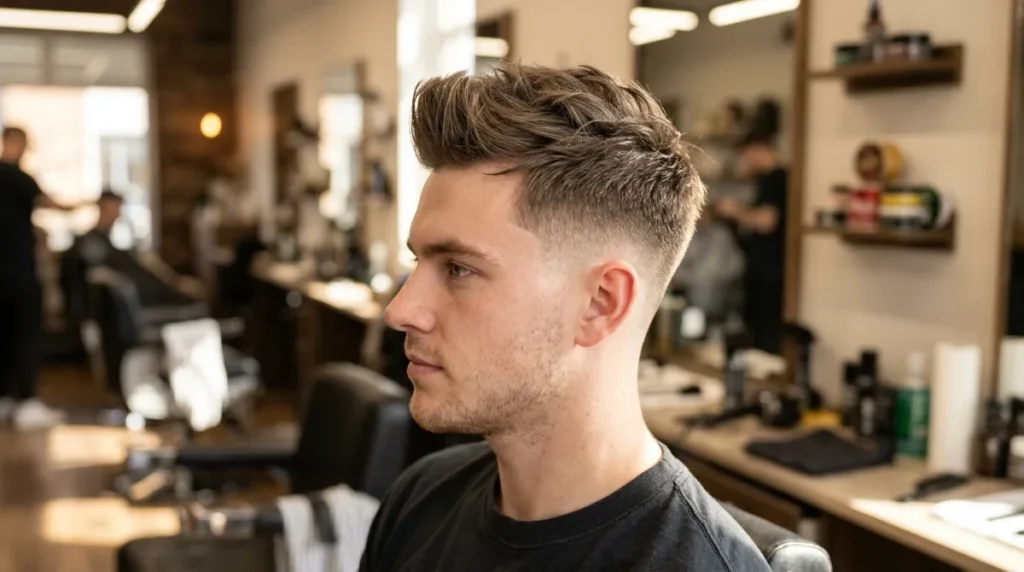
A textured quiff is a men’s haircut with short sides and a longer top that is lifted up and back at the front, finished with a messy, separated texture instead of a smooth, combed shape. It gives you the height of a classic quiff without the stiff, “just-styled” look.
It’s one of the easiest statement cuts to wear daily. But most guys get one of three things wrong: the cut, the product, or the blow-dry. This guide fixes all three, with a barber script you can screenshot, a 5-minute routine, and a troubleshooting table for when your quiff collapses by lunch.
Table of Contents
What Is a Textured Quiff?
A textured quiff is a modern take on the classic quiff. The front is still swept upward and back, but the ends are point-cut and styled with a matte product so the strands separate and move naturally. It grew out of the classic quiff popular since the 1950s, and our quiff hairstyles for men guide covers the other versions.
Think of it as the middle ground between a neat, polished quiff and a messy crop. The key features:
- Sides: short — usually a fade or taper
- Top: roughly 2–4 inches, longest at the front
- Finish: matte, piecey, slightly undone
- Styling time: about 5 minutes once you know the routine
Because the texture hides small imperfections, it forgives a rushed morning far better than a sleek style does.
Textured Quiff vs Classic Quiff vs Pompadour vs French Crop
The main difference is direction and finish. A textured quiff goes up and back with a matte, messy finish; a classic quiff is smoother; a pompadour is taller and fully swept back; a French crop goes forward, not up.

| Style | Top length | Direction | Finish | Effort |
|---|---|---|---|---|
| Textured quiff | 2–4 in | Up and back at the front | Matte, piecey | Low–medium |
| Classic quiff | 3–5 in | Up and back | Smooth, some shine | Medium |
| Pompadour | 4–6 in | Fully back, high volume | Glossy, sculpted | High |
| French crop | 1–2.5 in | Forward, short fringe | Matte, textured | Very low |
If you’re growing out a French crop, the textured quiff is the natural next step — you just need an extra inch or so at the front. Our French crop haircut guide shows where you would be starting from.
Is a Textured Quiff Right for Your Face Shape?
The textured quiff suits almost every face shape — you only need to adjust the height of the quiff and the height of the fade. Not sure of your shape? Use our men’s haircuts for your face shape guide first.
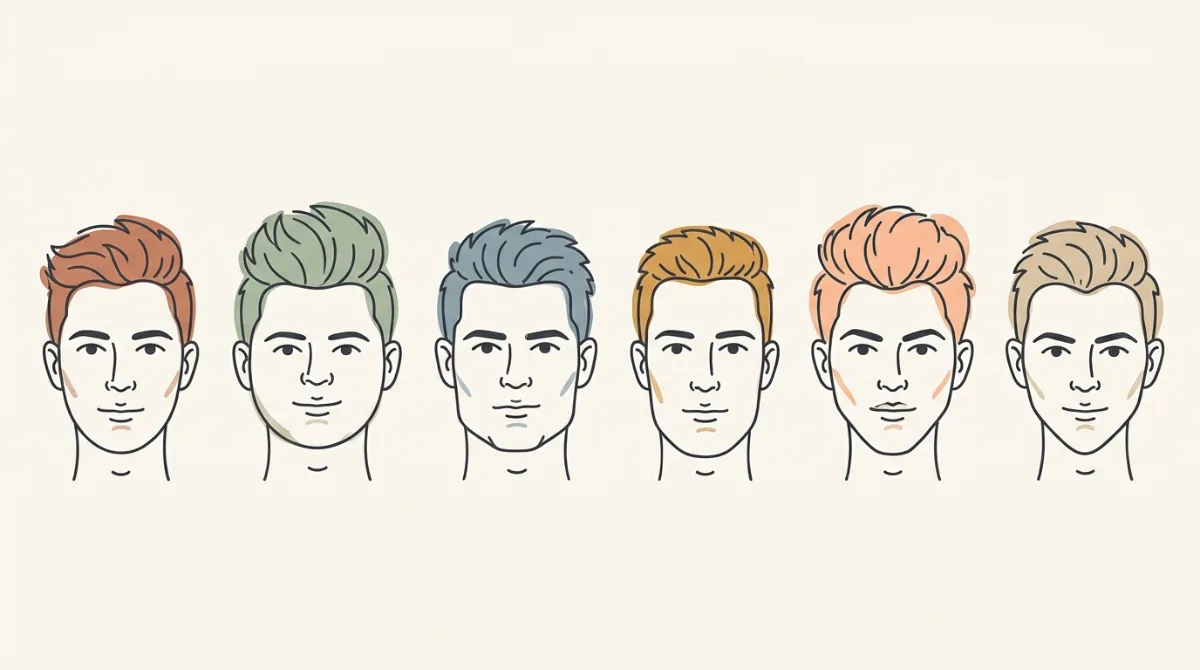
| Face shape | Quiff height | Fade | Why |
|---|---|---|---|
| Oval | Any | Any | Balanced proportions; experiment freely |
| Round | High | Mid to high | Height and tight sides make the face look longer |
| Square | Medium | Low to mid | Softens a strong jaw without exaggerating it |
| Oblong / long | Low, pushed slightly forward | Low or taper | Too much height makes the face look even longer |
| Heart | Medium | Low taper | Wide forehead — avoid a very tall front |
| Diamond | Medium | Taper (keep some side fullness) | Fills out narrow temples |
| Triangle (wide jaw) | Medium–high | Taper, slightly fuller at temples | Adds width at the top to balance the jaw |
Not sure of your face shape? Pull your hair back, look straight into a mirror, and compare forehead width, cheekbone width and jaw width. The widest point tells you most of what you need.
Will It Work With Your Hair Type?
Yes — but each hair type needs a slightly different cut and product. This is where most guides stop at “straight, wavy, curly.” Here’s the detail.
Fine or thin hair
Keep the top shorter (2–2.5 inches) so it doesn’t collapse under its own weight. Ask your barber not to use thinning shears on top — fine hair doesn’t need weight removed. Use a volumising mousse or sea salt spray before drying, then finish with a texture powder or light clay. Avoid heavy pomades; they clump strands and show scalp. More ideas in our haircuts for thin hair guide.
Thick, straight hair
Thick, straight hair (very common in South Asian and East Asian hair) is heavy and tends to drop flat or stick out sideways. Ask your barber to remove bulk with point cutting from inside the top. Blow-drying is non-negotiable here, and you’ll want a strong-hold matte clay or fibre.
Wavy hair
The easiest type for this cut. Your waves create the texture for you. Use sea salt spray, rough-dry, and finish with a small amount of light clay. Don’t over-brush or you’ll lose the wave.
Curly or coily hair
Let the curl be the texture. Keep the top a little longer (curls shrink), use a curl cream or light defining gel on damp hair, and diffuse upward on low heat. For tighter coils, an afro pick lifts the front into shape. Skip matte clay on very curly hair — it can make curls frizzy and dry. Our curly hair routine for men covers wash day.
Receding hairline
Don’t sweep everything straight back — that exposes the temples. Instead, push the front up and slightly forward with a messy finish, and ask for a taper rather than a high skin fade so the temples don’t look bare.
How Long Does Your Hair Need to Be?
You need about 2 inches on top at minimum, with 3–4 inches at the front for a proper lift. The sides can be as short as you like.
Hair grows roughly half an inch (about 1.25 cm) per month on average. So your timeline depends on where you’re starting:
| Starting point | Time to a textured quiff | What to do meanwhile |
|---|---|---|
| Buzz cut | 5–6 months | Keep sides trimmed every 3–4 weeks; only tidy the top |
| Short crop (~1 in on top) | 3–4 months | Wear it as a French crop, then switch direction |
| Short back and sides (~2 in top) | 1–2 months | Ask the barber to leave the front longer |
| Long top (5+ in) | Same day | Ask for the top to be shortened and texturised |
Tip: Tell your barber you’re growing into a quiff. Otherwise they’ll “tidy” the top every visit and you’ll never get there.
How to Ask Your Barber for a Textured Quiff
Show a photo and give clear instructions. A photo alone isn’t enough, because your barber has to adjust the cut to your hair density and head shape.
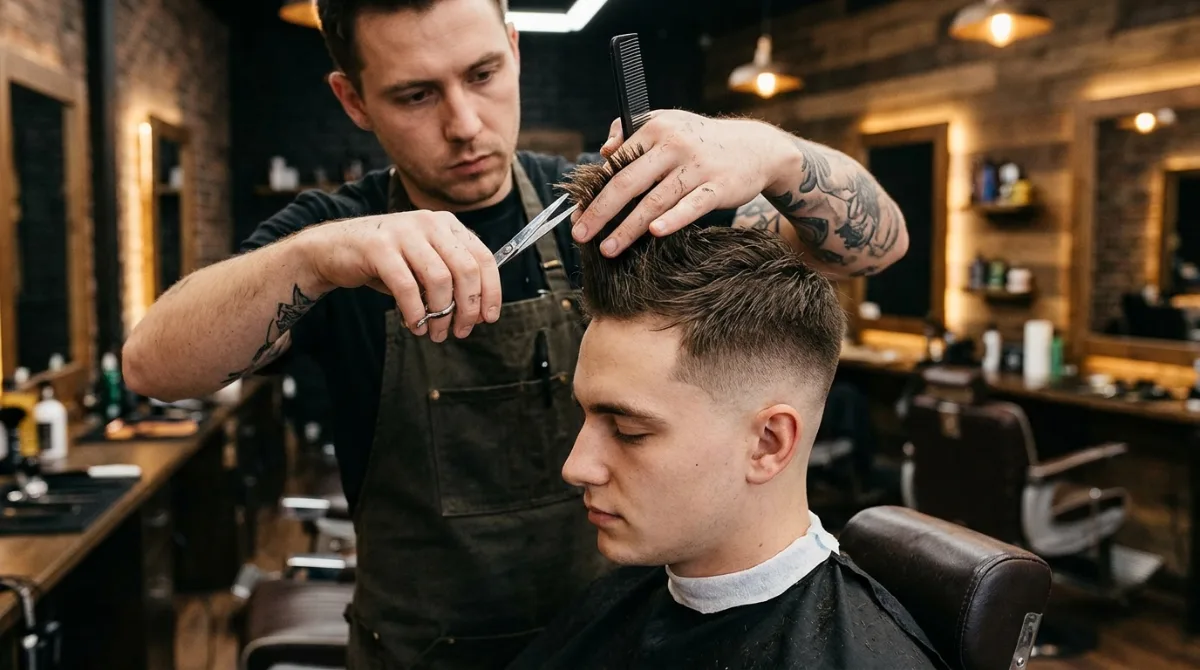
Barber script (screenshot this)
“Mid fade on the sides and back — start with a #1 at the bottom and blend up to a #3. Leave about 3 inches on top at the front, tapering to around 2 inches at the crown. Point-cut the top so it’s choppy, not blunt, and keep the fringe slightly longer so it can lift. Please don’t thin out the front too much.”
Clipper guard reference:
| Guard | Length |
|---|---|
| #0 (no guard) | ~1/16 in (1.5 mm) |
| #1 | 1/8 in (3 mm) |
| #2 | 1/4 in (6 mm) |
| #3 | 3/8 in (10 mm) |
| #4 | 1/2 in (13 mm) |
Which fade should you choose?
| Side option | Look | Best for |
|---|---|---|
| Low fade | Subtle, clean | Offices, oblong faces |
| Mid fade | Balanced, modern | Most guys — the safe default |
| High / skin fade | Sharp, high contrast | Round faces, bold look |
| Taper | Soft, grows out cleanly | Thin hair, receding hairline, less frequent barber visits |
| Scissor-cut sides | Fuller, natural | Wide heads, conservative workplaces |
Still deciding? Our low vs mid vs high fade guide compares them side by side.
How to Style a Textured Quiff in 5 Minutes
The secret is the blow-dry, not the product. Product only holds the shape you create while drying.
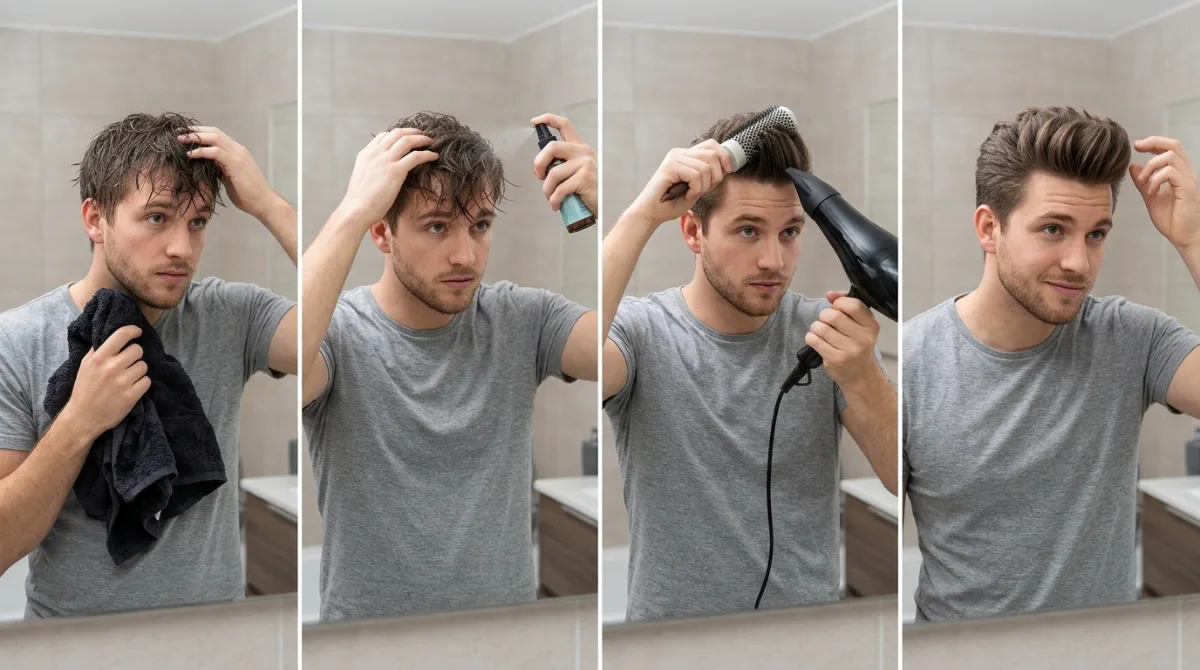
- Towel-dry to about 70%. Rub the hair roughly — you want it slightly messy, not combed flat.
- Add a pre-styler. 3–5 sprays of sea salt spray (or a golf-ball amount of mousse for fine hair) across the top, focusing on the roots at the front.
- Blow-dry up and back. Medium heat. Point the dryer at the roots of the front section and push the hair up with your fingers. Dry the sides down and flat. Dry the hair 100% — damp hair will drop.
- Hit the cool shot. 10 seconds of cold air on the front locks the lift in place.
- Apply product to dry hair. A pea-sized amount of matte clay (fingertip-sized for thick hair). Rub it between your palms until it’s invisible, then work it into the roots from back to front.
- Shape with fingers, not a comb. Lift the front up and back, then twist and pinch a few pieces at the front to create separation.
- Optional: A light mist of hairspray from 30 cm away if you need it to survive wind or a long day.
How to Style It Without a Hair Dryer
Yes, you can — it just holds less height. This works best for wavy hair or a shorter textured quiff.
- Towel-dry to about 70% and apply sea salt spray.
- Push the front up and back with your fingers, holding each section for a few seconds.
- Let it air-dry fully with no hat or hood on.
- Once dry, add a texture powder at the roots for lift, then a small amount of clay to define.
On dry, second-day hair, a dry shampoo or texture powder at the roots will restore most of the lift in under a minute.
Best Products for a Textured Quiff (By Hair Type)
Use a matte, medium-to-strong hold product for most hair. Shine products like pomade work against the “textured” look. See our gel vs pomade vs clay comparison if you are unsure which to buy.
| Product | Hold | Finish | Best for | Amount |
|---|---|---|---|---|
| Matte clay | Medium–strong | Matte | Most hair types, thick straight hair | Pea to fingertip size |
| Fibre / paste | Strong, pliable | Low shine | Thick or coarse hair | Fingertip size |
| Texture powder | Light–medium | Matte, volumising | Fine/thin hair, second-day lift | A few shakes at the roots |
| Sea salt spray | Light | Matte, gritty | Pre-styler for all; finish for wavy hair | 3–5 sprays |
| Mousse | Light | Natural | Pre-styler for fine hair | Golf-ball size |
| Curl cream / light gel | Light–medium | Natural, defined | Curly and coily hair | Almond size |
| Water-based pomade | Medium–strong | Shine | Avoid unless you want a sleek quiff | — |
Rule of thumb: start with less product than you think and add more. Too much product is the number one reason a textured quiff looks greasy and flat.
Why Your Quiff Falls Flat (and How to Fix It)
If your quiff drops within a few hours, the cause is almost always one of these:
| Problem | Likely cause | Fix |
|---|---|---|
| Falls flat by noon | Hair not fully dried, no pre-styler, no cool shot | Dry 100%, use sea salt spray, finish with cold air |
| Looks greasy | Too much product or a shine product | Switch to matte clay, use half the amount, apply to dry hair |
| Looks stiff / helmet-like | Combed through, too much hold | Style with fingers only and rework the clay |
| Front won’t lift | Cowlick or front cut too short | Blow-dry against the cowlick first; ask the barber for more front length |
| Scalp shows through | Fine hair over-thinned | Ask for no thinning shears; use texture powder instead of clay |
| Sides puff out | Fade has grown out | Book a side touch-up every 2–3 weeks |
| Itchy, flaky scalp | Product build-up | Use a clarifying shampoo once a week |
Maintenance Schedule
A textured quiff stays sharp with a simple routine: For washing frequency, the American Academy of Dermatology’s healthy hair tips suggest matching it to how oily your scalp gets.
| Task | How often |
|---|---|
| Fade / sides touch-up | Every 2–3 weeks (skin fade) or 3–4 weeks (taper) |
| Full cut including top | Every 4–6 weeks |
| Shampoo | 2–4 times a week — daily washing dries hair out |
| Conditioner | Every wash, mid-lengths and ends only |
| Clarifying shampoo | Once a week if you use clay daily |
| Restock product | A typical 75–100 g pot lasts 2–3 months at pea-size use |
Popular Textured Quiff Variations
Same top, different sides and length — choose based on your lifestyle and face shape.
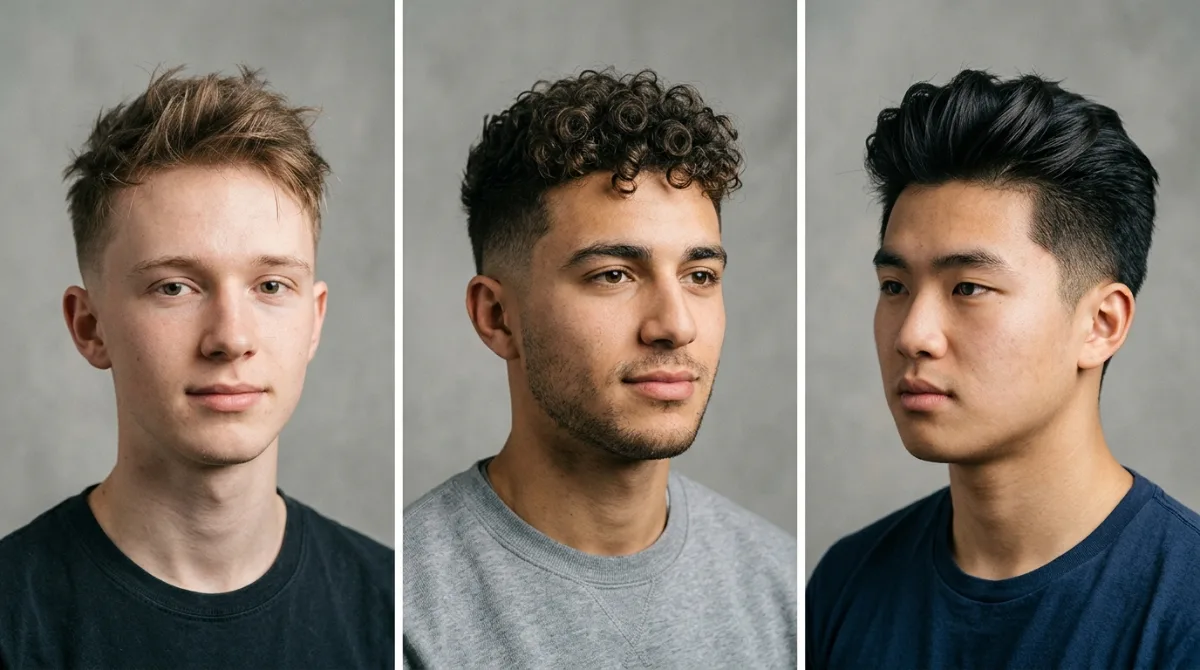
- Short textured quiff: 2–2.5 inches on top, low maintenance, ideal for beginners and fine hair.
- Textured quiff with low fade: the most office-friendly version.
- Textured quiff with mid or high skin fade: sharper contrast, popular with younger guys and round faces.
- Textured quiff with taper: grows out gracefully, so you can stretch barber visits.
- Curly textured quiff: a longer, defined curly top with tight sides.
- Long messy quiff: 4–5 inches on top, more movement, needs more styling time.
- Side-swept textured quiff: pushed up and slightly to one side — good for cowlicks and oblong faces.
- Textured quiff with a beard: a full or short boxed beard balances the height on top, especially for round and oblong faces.
FAQs
What is the difference between a textured quiff and a French crop?
Direction. A textured quiff is styled up and back at the front, while a French crop is pushed forward into a short fringe. A textured quiff also needs more length on top — about 3 inches at the front versus 1–2 inches for a crop. Both use a matte, textured finish.
How long should my hair be for a textured quiff?
Aim for at least 2 inches on top and 3–4 inches at the front. The sides can be faded as short as you like. If you’re starting from a buzz cut, it takes about 5–6 months to grow enough length.
Can I get a textured quiff with thin hair?
Yes. Keep the top shorter (around 2–2.5 inches), ask your barber to avoid thinning shears, and choose a taper instead of a high skin fade. Use mousse or sea salt spray before drying and a texture powder to finish. Avoid heavy pomades.
What is the best product for a textured quiff?
A matte clay with medium-to-strong hold works for most hair types. Fine hair does better with texture powder, thick coarse hair with a fibre or paste, and curly hair with a curl cream. Always use a pre-styler like sea salt spray before blow-drying.
How do I keep my textured quiff up all day?
Dry your hair completely, use a pre-styler, finish the blow-dry with 10 seconds of cold air, and apply product to dry hair — not wet. A light hairspray mist adds extra insurance on windy or humid days.
Is a textured quiff professional enough for work?
Yes. Choose a low fade or taper, keep the height moderate, and use slightly less product for a neater finish. It looks polished in an office and relaxed at the weekend.
How often should I get my textured quiff trimmed?
Touch up the sides every 2–4 weeks depending on your fade, and cut the top every 4–6 weeks to keep the shape and texture.
Conclusion
The textured quiff works because it’s flexible: tidy enough for the office, relaxed enough for the weekend, and forgiving on a rushed morning. Get three things right — a cut with enough length at the front, a full blow-dry with a pre-styler, and a pea-sized amount of matte product — and it will hold all day.
Ready to try it? Screenshot the barber script above, take it to your next appointment, and check our best hair styling products for men guide to pick the right product for your hair type.