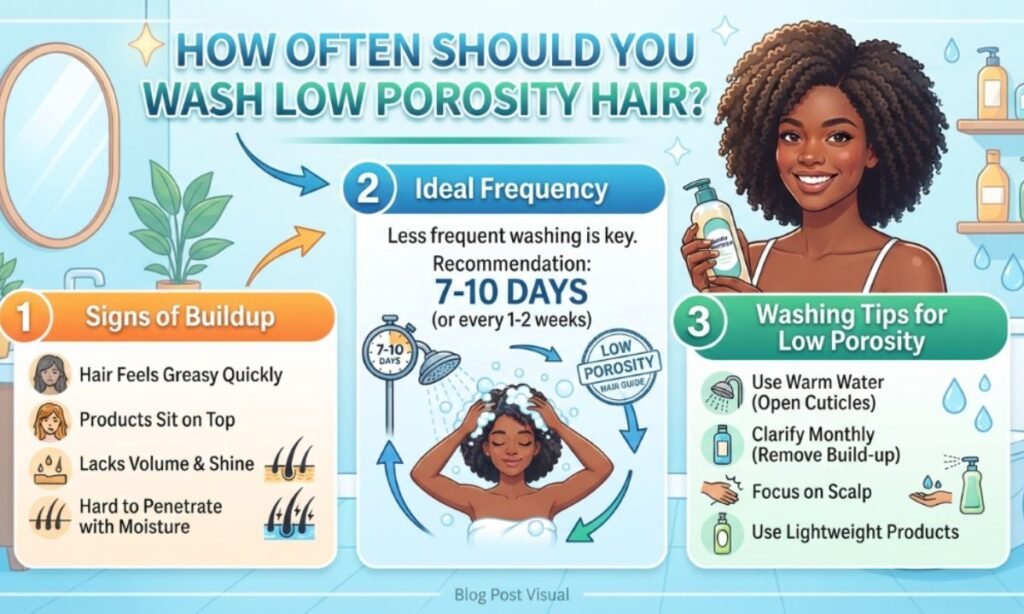
How often should you wash low porosity hair? Most people should wash every 4 to 7 days, and clarify every 2 to 4 weeks. Low porosity strands have tightly closed cuticles, so products sit on top instead of soaking in. That means buildup, not dirt, is usually the real reason your hair feels heavy, dull or hard to moisturize.
The exact number depends on your scalp, your hair texture and how many products you use. In this guide you will learn how to find your ideal wash schedule, what a good low porosity wash day looks like, and the signs that tell you it is time to wash.
Table of Contents
What Makes Low Porosity Hair Different?
Low porosity hair has cuticle layers that lie flat and overlap tightly. Water and products struggle to get in, but once moisture is inside, it also struggles to get out.
This affects washing in three ways:
- Buildup happens fast. Heavy butters, oils and silicones sit on the surface and collect over a few days.
- Hair takes longer to get wet and dry. Water beads on the strands at first, and air drying can take hours.
- Moisture lasts longer once it is in. You do not need to re-wet or re-moisturize as often as high porosity hair.
Hair porosity is mostly shaped by genetics, but heat, color and chemical treatments can raise it over time. If you are not sure of your type, the signs of low porosity hair include products that sit on top, slow drying and hair that resists color. Note that the popular “float test” in a glass of water is not reliable, because oils and product residue can change the result.
How Often Should You Wash Low Porosity Hair?
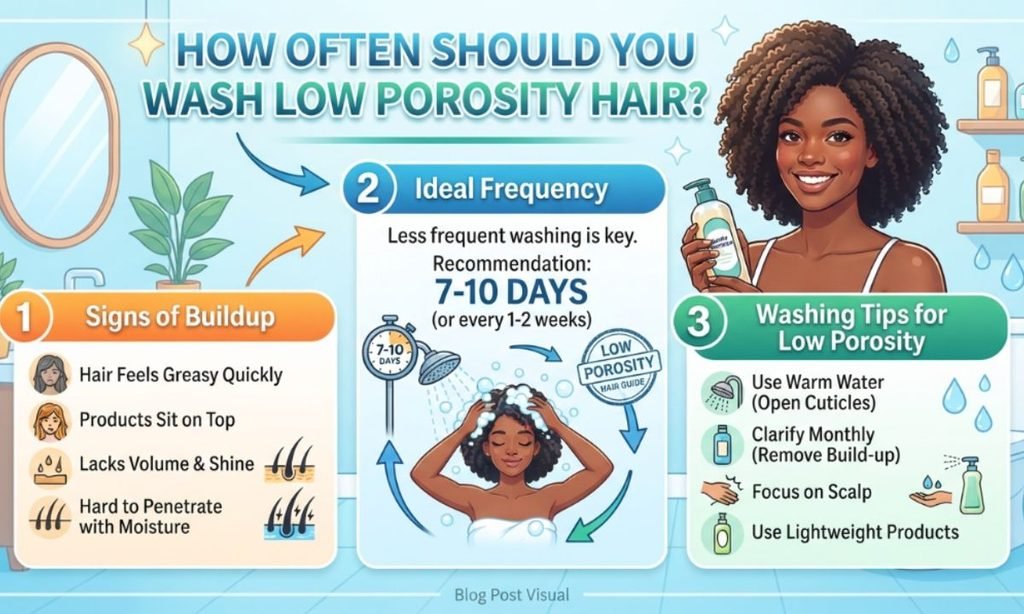
So, how often should you wash low porosity hair? For most people, once every 4 to 7 days is the sweet spot. Wash more often if your scalp gets oily or itchy, and less often if your hair is very coily and dry.
The American Academy of Dermatology advises basing wash frequency on how oily your scalp is, not on a fixed rule. Low porosity hair adds one more factor: product buildup. Even if your scalp is not oily, heavy products can make your hair feel coated after a few days.
Straight and wavy low porosity hair
Oil from the scalp travels down straight strands easily, so hair can look greasy faster. Every 2 to 4 days works well for most people with this texture.
Curly and coily low porosity hair
Scalp oil moves slowly down curls and coils, so the lengths stay drier. Every 5 to 7 days is common, with a mid-week scalp rinse or co-wash if needed. The AAD also notes that people with tightly coiled hair often do well washing once a week or every other week.
Low Porosity Wash Schedule by Hair Type and Lifestyle
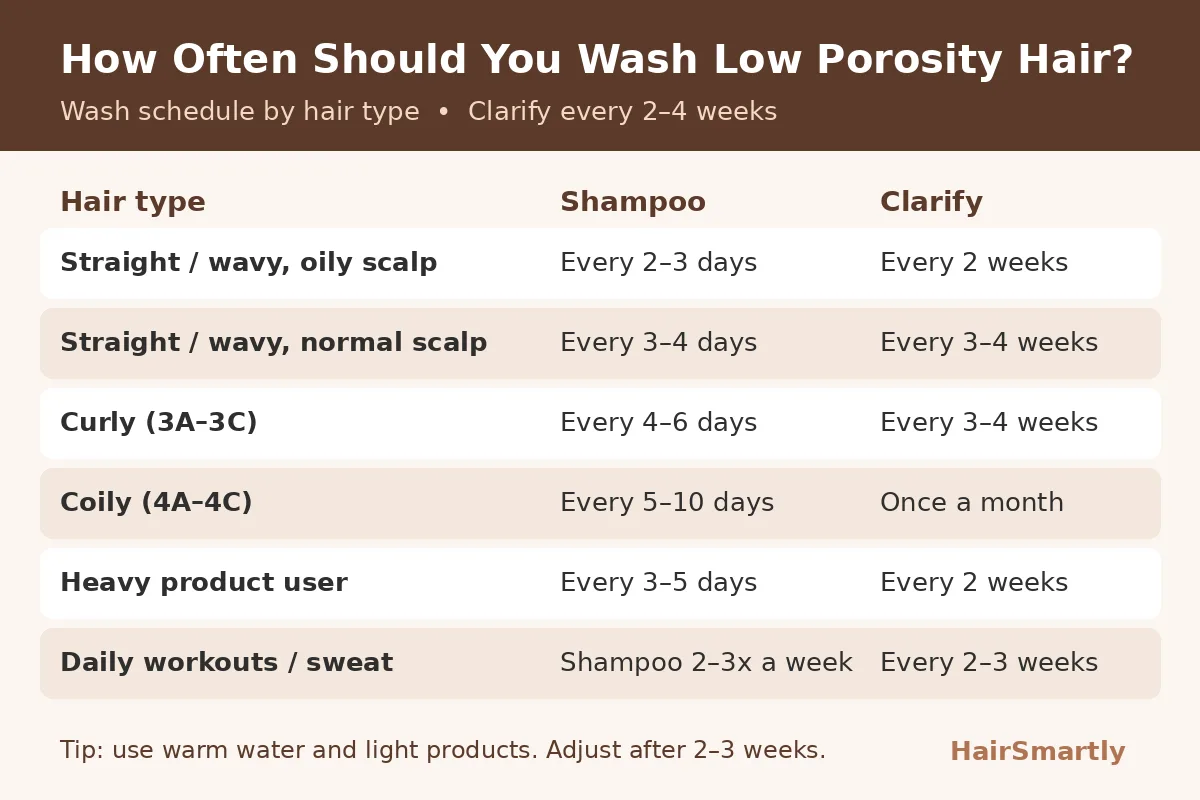
Use this table as a starting point, then adjust for two to three weeks based on how your hair and scalp feel.
| Hair type / situation | Wash with shampoo | Clarify | Deep condition |
|---|---|---|---|
| Straight or wavy, oily scalp | Every 2–3 days | Every 2 weeks | Every 2 weeks |
| Straight or wavy, normal scalp | Every 3–4 days | Every 3–4 weeks | Every 2 weeks |
| Curly (3A–3C) | Every 4–6 days | Every 3–4 weeks | Weekly |
| Coily (4A–4C) | Every 5–10 days | Once a month | Weekly |
| Heavy product user (gels, butters) | Every 3–5 days | Every 2 weeks | Weekly |
| Daily workouts or sweating | Rinse or co-wash after workouts, shampoo 2–3 times a week | Every 2–3 weeks | Every 2 weeks |
Signs You Need to Wash (or Wash Less)
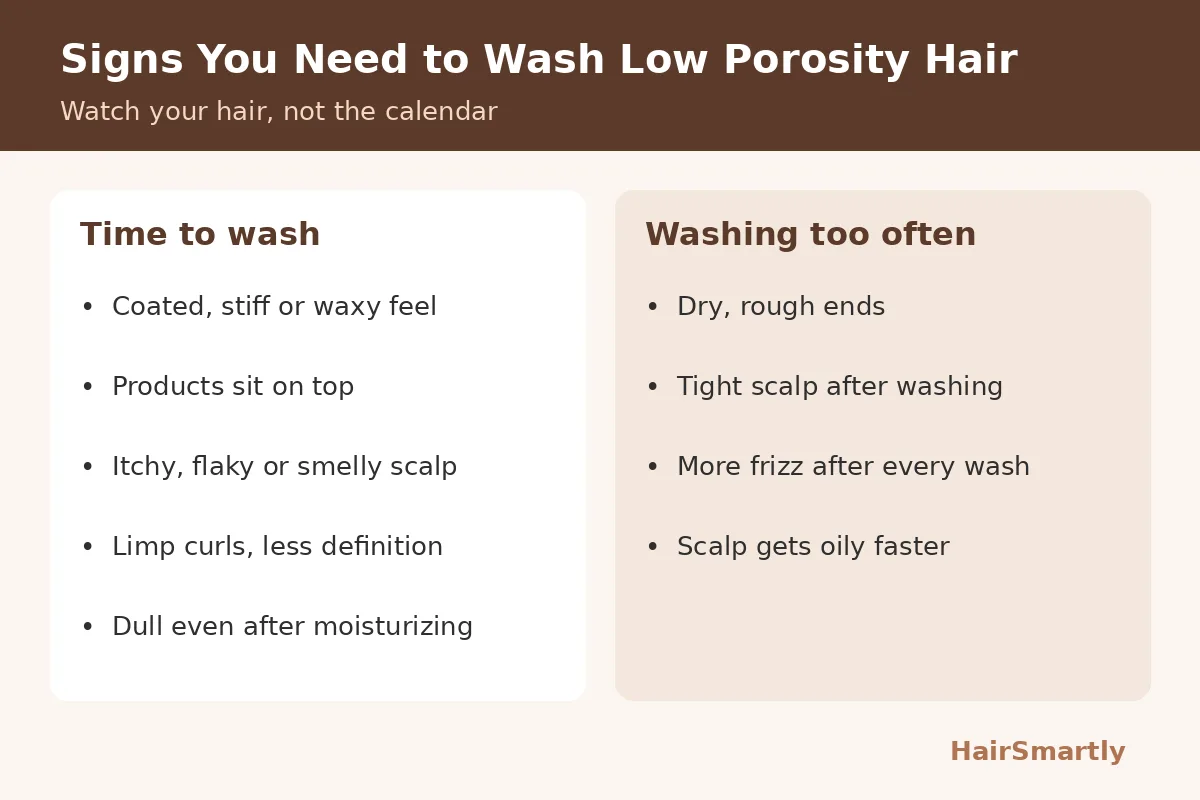
The most reliable answer to how often should you wash low porosity hair comes from your hair itself. It gives clear signals. Watch for these instead of sticking to a strict calendar.
Signs it is time to wash
- Hair feels coated, stiff or waxy
- Products stop absorbing and sit on top
- Scalp is itchy, flaky or smells
- Curls lose definition or look limp
- Hair looks dull even after moisturizing
Signs you are washing too often
- Ends feel dry and rough
- Scalp feels tight after washing
- Frizz increases after every wash
- Your scalp gets oily faster than before
A Simple Low Porosity Hair Wash Routine
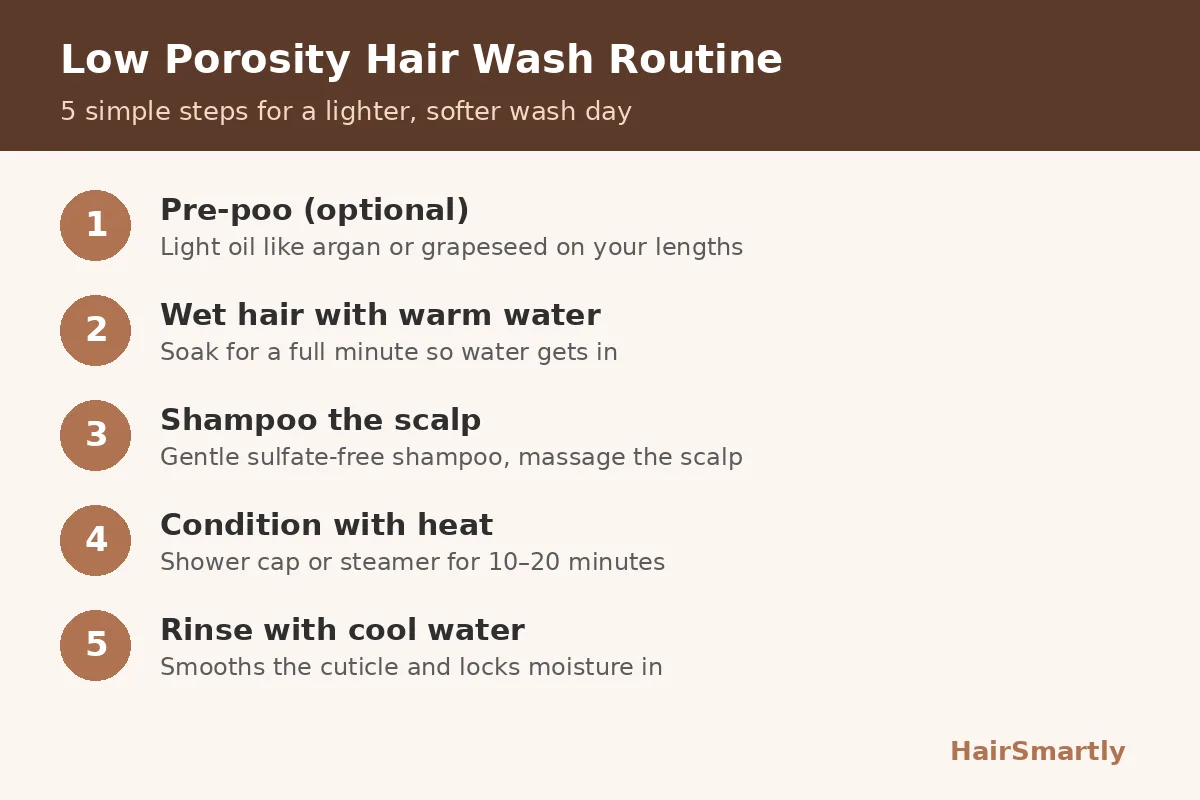
A good low porosity hair wash routine is built on warmth, lightweight products and less layering. The key is warmth, lightweight products and less layering. Warmth helps the cuticle lift slightly, so moisture can get in.
- Pre-poo (optional): Apply a light oil like argan or grapeseed to your lengths for 15–30 minutes to reduce dryness from shampoo.
- Wet hair with warm water: Soak for a full minute. Low porosity hair needs extra time to get fully wet.
- Shampoo the scalp: Use a gentle sulfate-free shampoo and massage the scalp with your fingertips. Let the suds rinse through the lengths.
- Condition with heat: Apply a lightweight conditioner, cover with a shower cap and sit for 10–20 minutes. A warm towel or hooded dryer helps it absorb.
- Rinse with cool water: This helps smooth the cuticle and lock moisture in.
- Style on damp hair: Use a water-based leave-in and a light layer of styler. Skip heavy butters or use them only on the ends.
Want more help with curls? Browse our curly hair care guides for day-by-day routines.
How Often to Clarify Low Porosity Hair
Clarify every 2 to 4 weeks. A clarifying shampoo removes the buildup that regular shampoo leaves behind, which is the most common problem for low porosity hair.
Clarify more often if you use heavy products, live in an area with hard water or swim in chlorinated pools. Always follow a clarifying wash with a deep conditioner, since clarifiers can leave hair feeling dry.
Common Mistakes to Avoid
Even a good low porosity hair wash routine can fall short if you make these common mistakes.
- Using heavy butters and oils daily: Shea butter and castor oil can sit on low porosity hair and cause buildup fast.
- Layering too many products: The LOC or LCO method often works better for high porosity hair. Try just a leave-in and one styler.
- Applying products to dry hair: Products absorb far better on damp, warm hair.
- Skipping clarifying: Without it, your moisturizers stop working over time.
- Washing only when it “looks dirty”: Buildup can stop moisture from getting in long before hair looks greasy.
Frequently Asked Questions
How often should you wash low porosity hair if you work out daily?
Rinse with water or co-wash after workouts and shampoo two to three times a week. This keeps sweat and oil off the scalp without stripping your hair. Clarify every 2 to 3 weeks, because sweat, salt and extra product build up faster on low porosity strands.
Is it bad to wash low porosity hair every day?
For most people, yes. Daily shampooing can strip the scalp and dry out the ends. If you sweat daily, rinse with water or co-wash instead, and shampoo two to three times a week.
Should low porosity hair be washed with hot or warm water?
Use warm water, not hot. Warm water helps lift the cuticle so moisture can get in, while very hot water can dry out the scalp. Finish with a cool rinse to seal moisture in.
Is co-washing good for low porosity hair?
Co-washing can work between shampoo days, but it should not fully replace shampoo. Co-washes contain conditioning agents that can add to buildup on low porosity hair.
How do I know if I have buildup on my hair?
Signs of buildup include hair that feels waxy or stiff, products that sit on top, dullness and curls that will not clump. A clarifying wash usually makes a clear difference in one session.
Does hard water affect low porosity hair?
Yes. Minerals in hard water can build up on the hair surface, making it feel rough and harder to moisturize. A monthly chelating or clarifying shampoo helps remove mineral deposits.
What is the best low porosity hair wash routine?
The best low porosity hair wash routine is simple: shampoo with warm water, apply a lightweight conditioner, cover your hair with a shower cap or use gentle heat for 10 to 20 minutes, then rinse with cool water. Use light leave-in products and clarify every 2 to 4 weeks to prevent buildup.
Final Thoughts
So, how often should you wash low porosity hair? There is no single perfect number, but every 4 to 7 days with a monthly clarify is a strong starting point for most low porosity hair. Watch for buildup, use warmth when you condition, and keep your products light.
Give a new low porosity hair wash routine two to three weeks before judging it. Your hair needs time to adjust.
Next step: Read more hair care tips to build a full routine, or browse all HairSmartly guides.