
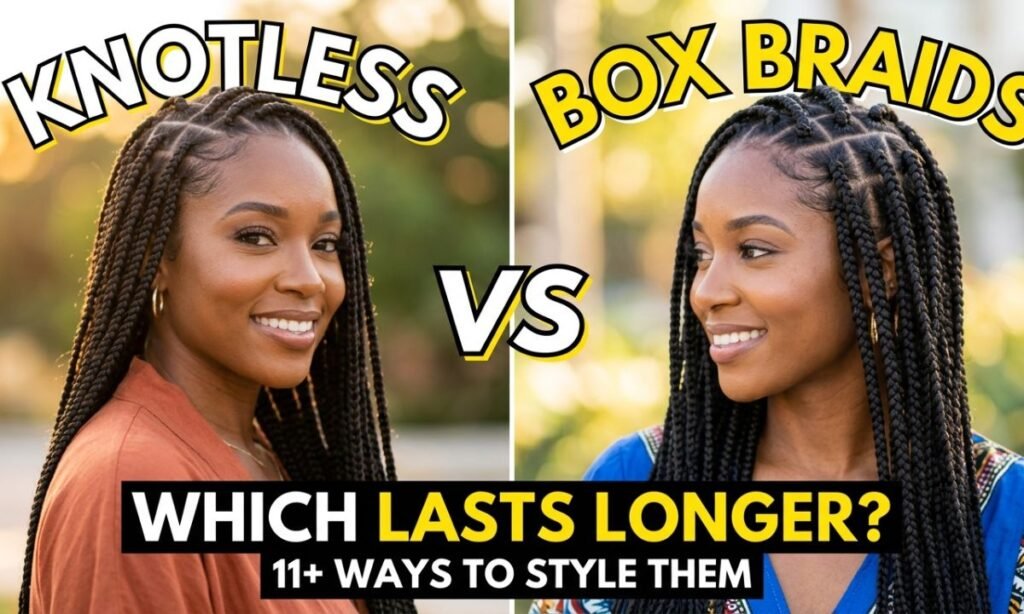
Knotless braids vs box braids comes down to one thing: how the extension hair is attached at the root. Box braids start with a knot. Knotless braids start with your own hair and feed the extension in gradually. That one difference changes the comfort, the price, how long the style lasts, and how soon you can pull it into a ponytail.
This guide answers the comparison first, then shows 11 ways to style knotless braids, with separate sections for school and weddings.
Table of Contents
What does knotless braids mean?
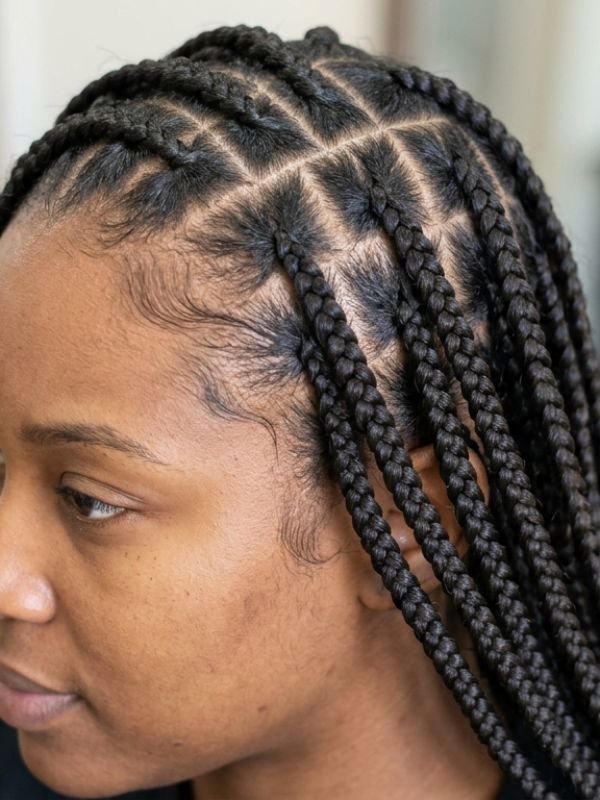
Knotless braids are box braids installed without a knot at the scalp. The braider starts each braid with your natural hair only, then feeds small pieces of extension hair in as the braid goes down. This is called the feed-in method.
The result is a braid that lies flat against the head, feels lighter, and moves freely from day one. Traditional box braids wrap the extension hair around your own hair at the root, which leaves a small bump and more tension on the scalp.
What are regular knotless braids?
“Regular knotless braids” means the classic version: square or triangle parts, medium size, straight braided ends, and no curly pieces left out. Stylists use the word “regular” to separate it from add-on versions such as boho, goddess, or bob knotless.
If you book “regular knotless” at a salon, expect medium braids at waist or mid-back length unless you say otherwise. Always confirm size and length before the appointment, because both change the price.
Knotless vs box braids: the differences at a glance
Choose knotless braids for comfort and easy styling. Choose box braids for longer wear and a lower price. Both use square parts and both protect your natural hair, so the choice is about feel, budget, and how many weeks you want from one install.
| Factor | Knotless braids | Box braids |
|---|---|---|
| How the root starts | Your own hair first, extension fed in | Extension knotted at the scalp |
| Scalp tension | Low | Higher, especially in week 1 |
| Look at the root | Flat and natural | Raised, with a visible knot |
| Install time | Longer | Shorter |
| Typical price (US, hair not included) | $99 to $250 | $75 to $450 |
| Typical wear | 4 to 6 weeks | Up to 8 weeks |
| Styling on day 1 | Flexible straight away | Stiff for the first few days |
| Take-down | Quicker | Slower |
| Best for | Sensitive scalps, tender edges, lots of updos | Longest wear, tighter budgets |
Price ranges are from StyleSeat; wear times are from Hair.com by L’Oreal. At the same size and length, knotless usually costs a little more because the install takes longer.
Knotless braids vs box braids: which last longer?
Box braids last longer. Expect up to 8 weeks from box braids and 4 to 6 weeks from knotless braids with good care. The knot at the root of a box braid holds new growth in place, so the style stays neat for more weeks.
Knotless braids have no knot to grip the root. Your own hair starts to frizz and slip out sooner, and the grow-out shows earlier.
Why some guides say knotless last just as long
You will find articles claiming knotless braids last as long as box braids. The braid itself can stay in that long. What fades first is the neat root, and that is the part people see.
Three things decide how many weeks you really get:
- Size. Small braids outlast large ones in both styles.
- Your hair texture. Soft or fine hair slips out of knotless roots faster.
- Night care. Braids worn under a satin bonnet stay smooth far longer.
How to make knotless braids last longer
- Sleep in a satin scarf or bonnet every night.
- Cleanse the scalp, not the lengths, to avoid frizz.
- Smooth roots with a light mousse, then tie down with a scarf for 10 minutes.
- Book a touch-up of the first 2 to 3 rows around the hairline at week 3 or 4.
- Keep high, tight ponytails for occasions, not every day.
Do not keep either style in past about 8 weeks. Matting at the root and breakage cost more than a new install.
What does knotless boho braids mean?
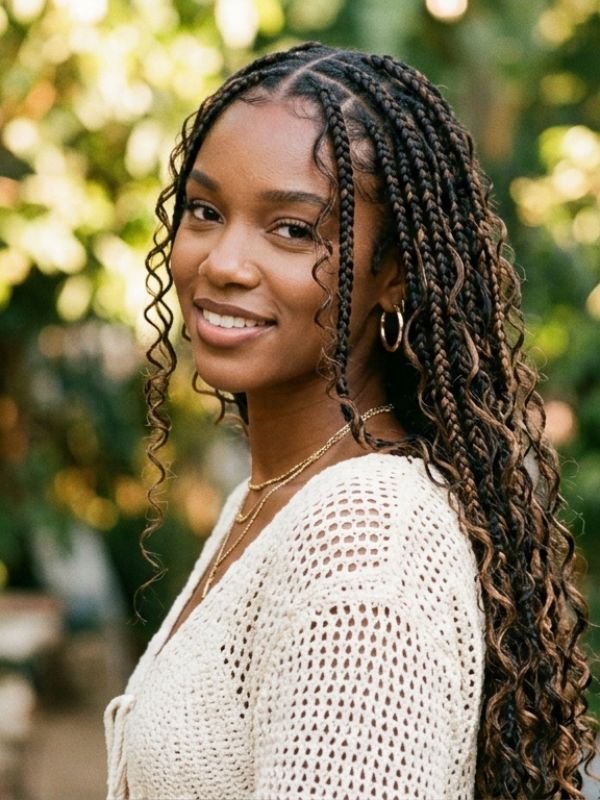
Knotless boho braids are knotless braids with loose curly strands left out on purpose. The curls sit along the length of the braids and at the ends, which gives a soft, full, undone look. “Boho” is short for bohemian.
The base is the same feed-in method as regular knotless. The only change is the curly hair added between or inside the braids.
| Regular knotless | Boho knotless | |
|---|---|---|
| Ends | Braided to the tip | Loose curls |
| Curly pieces along the braid | None | Yes |
| Daily upkeep | Very low | Curls need detangling and mousse |
| Stays fresh | Longer | Shorter, because curls tangle |
| Best for | School, work, sport | Holidays, weddings, events |
Two things to settle before you book:
- Curl hair type. Human hair curls cost more but tangle less than synthetic curls.
- What your braider means by boho. Some add a few curls, some leave half of each braid loose. Show a photo.
You will also see the same look called bohemian braids or goddess knotless braids.
11 ways to style knotless braids
Knotless braids can go straight into a ponytail, bun, or half-up style because the roots are flat and flexible. Every style below takes under 10 minutes and needs only a scrunchie, a few large bobby pins, and edge control.
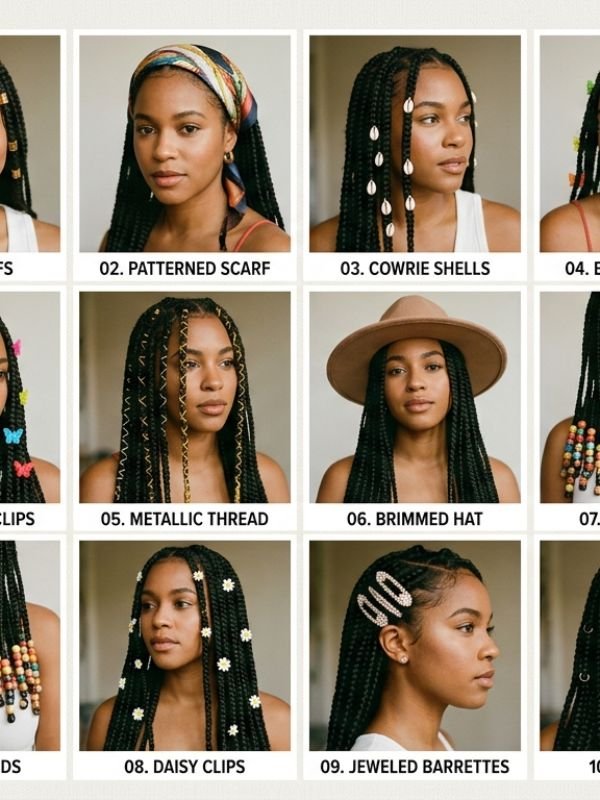
- Half-up, half-down. Gather the top half from ear to ear and tie it at the crown. It keeps hair off the face and still shows length.
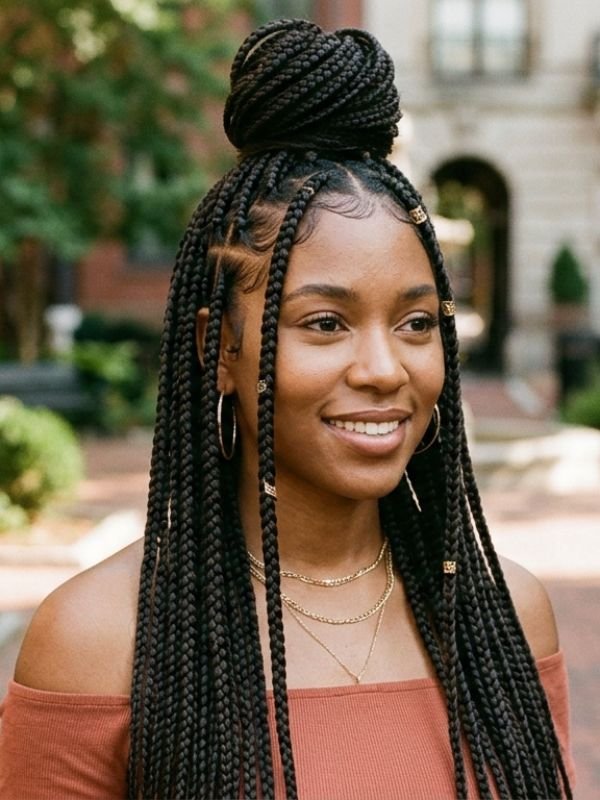
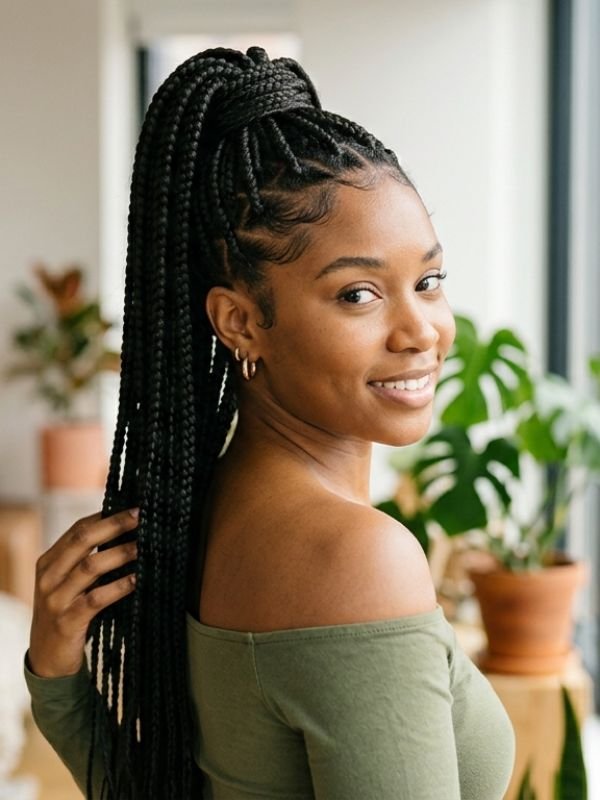
- High ponytail. Sweep everything to the crown and wrap one braid around the base as the tie. Keep it loose at the hairline.
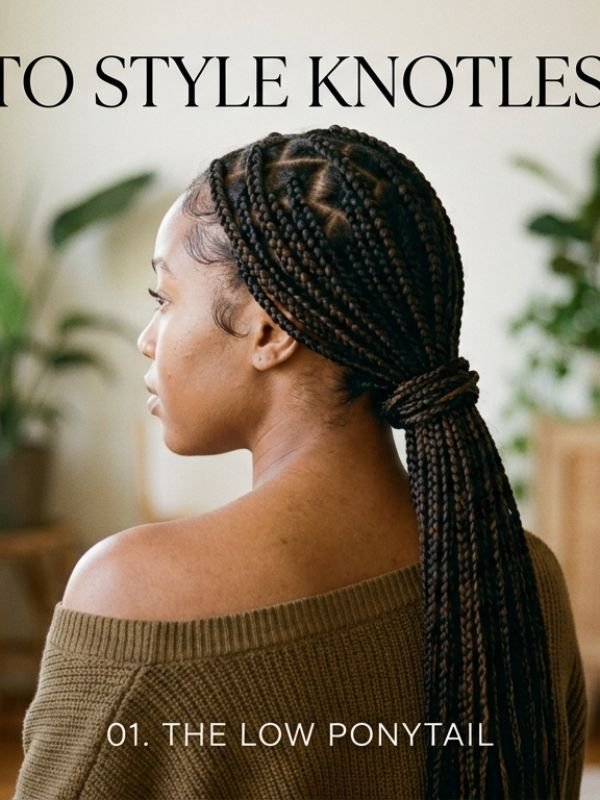
- Low ponytail. Tie at the nape with a scrunchie. This is the lowest-tension style, so it suits daily wear.
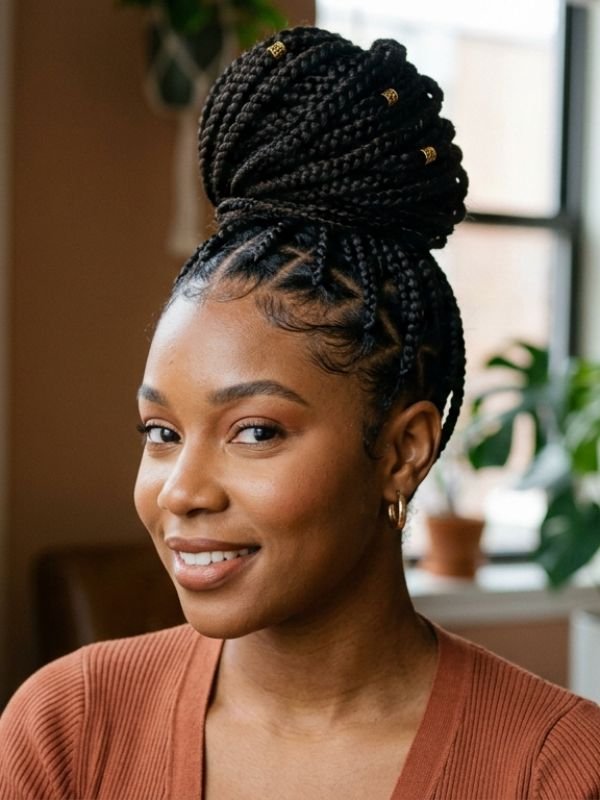
- Top knot bun. Make a high ponytail, twist the lengths, coil them, and tuck the ends under. Pin in two places.
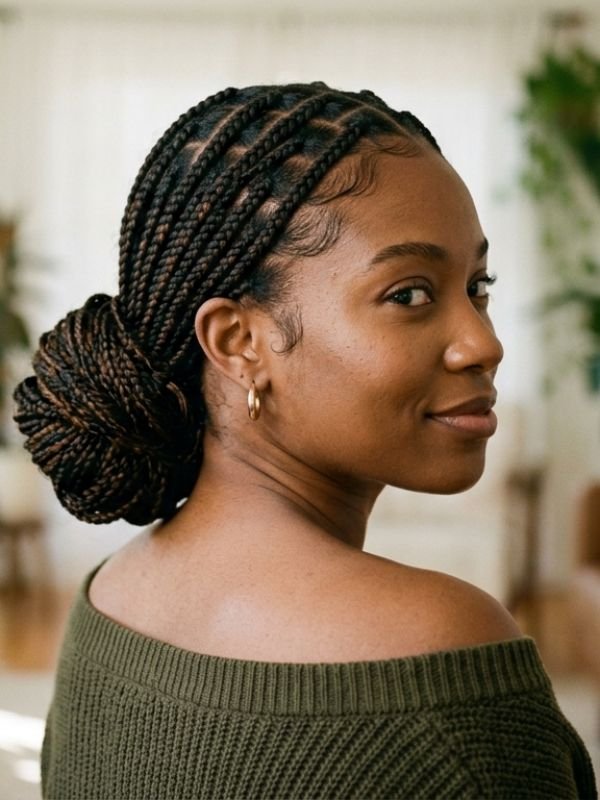
- Low bun. Twist the braids at the nape into a flat coil. Neat enough for work, interviews, and formal events.
- Two space buns. Part down the middle and coil each side high on the head. Leave two braids out at the front.
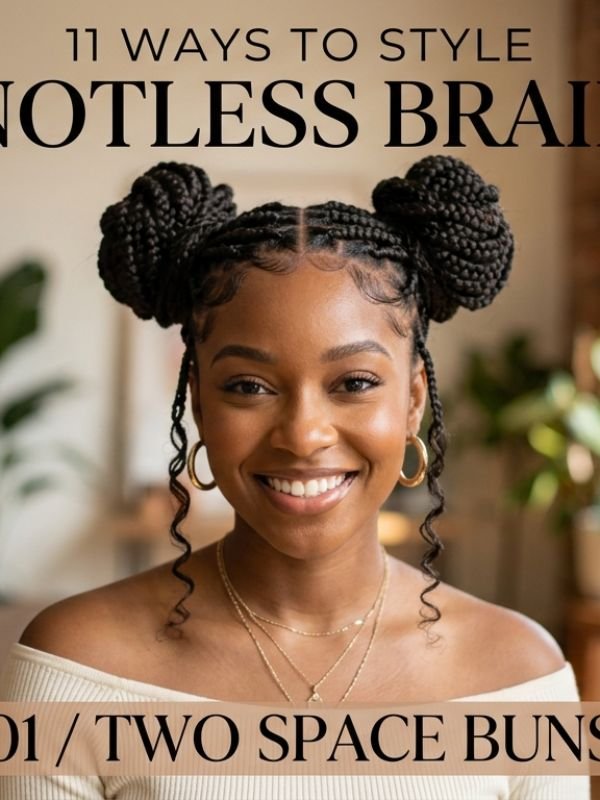
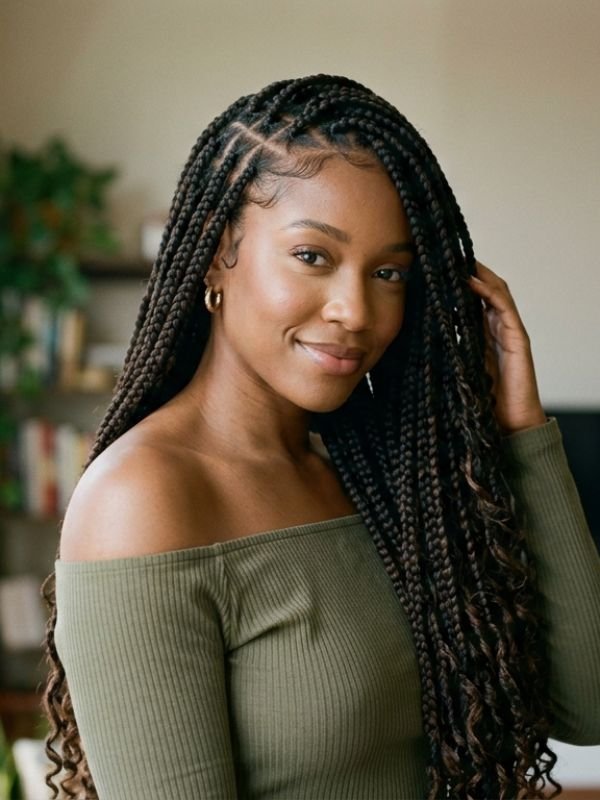
- Flip-over side sweep. Flip all the braids over to one side from a deep side part. No tie needed, and it adds volume at once.
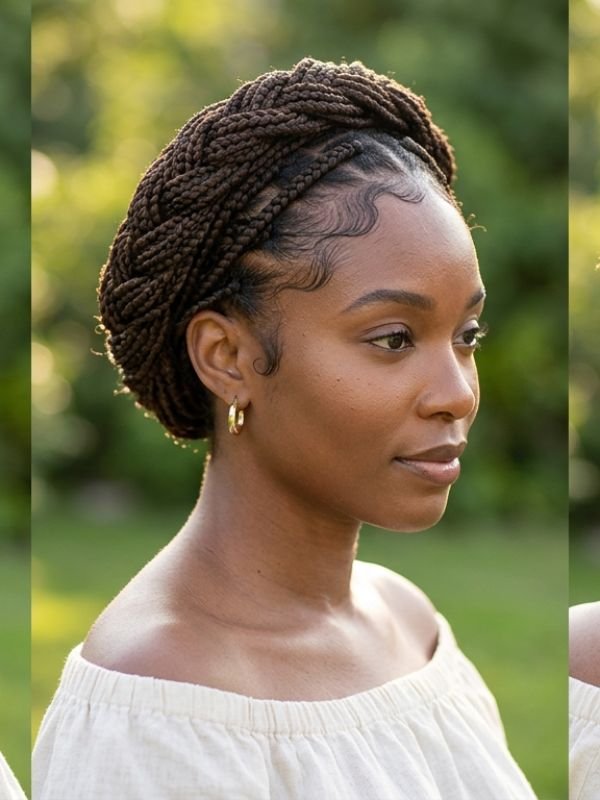
- Halo crown. Split the braids in two, cross them over the top of the head, and pin the ends under. Best on mid-back length or longer.
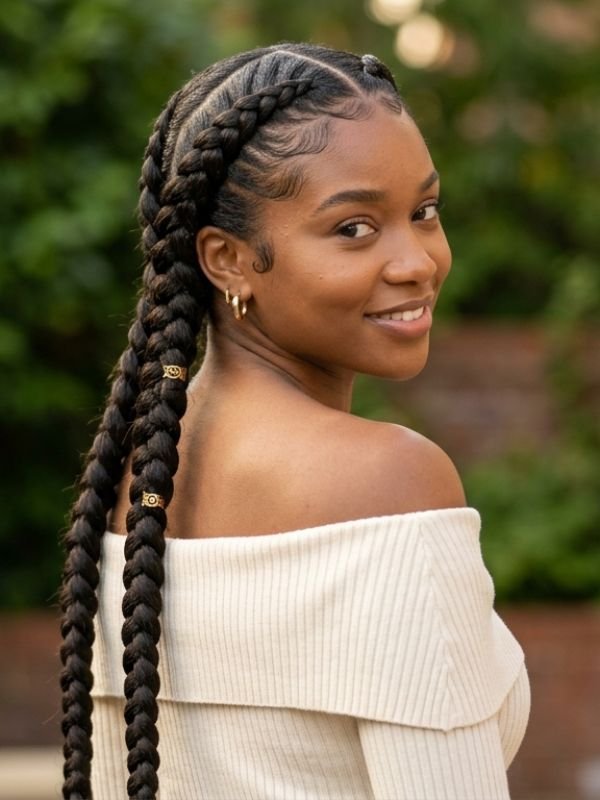
- Two jumbo braids. Part in the middle and plait each half into one thick braid. Good for the gym and for sleeping.
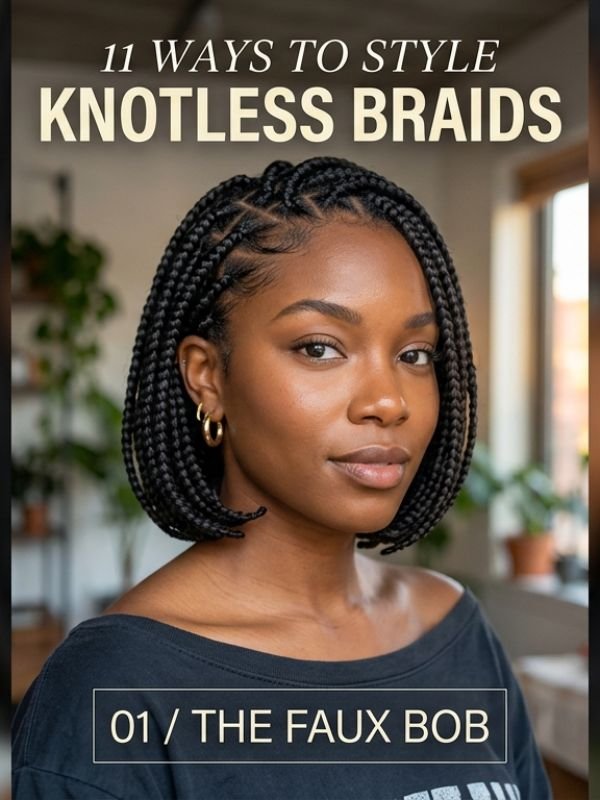
- Faux bob. Fold long braids under at the nape and pin them to shorten the look to shoulder length.
- Worn down with accessories. Add gold cuffs, beads, or wrap string on five to ten braids near the face.
If a style pulls at your hairline or gives you a headache, loosen it. Flat roots do not protect edges from a tight ponytail. For more face-flattering ideas, see our guide to the best hairstyles for a double chin.
How to style knotless braids for school
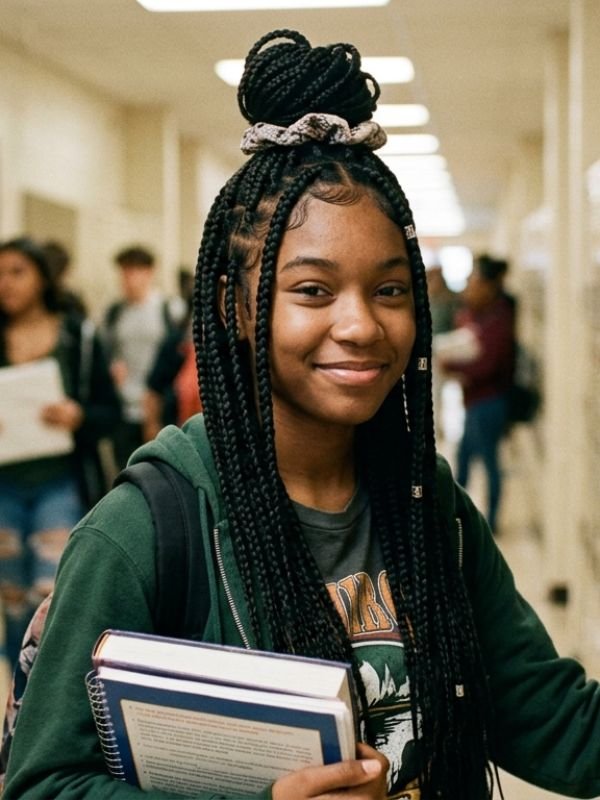
For school, pick styles that take under 5 minutes, stay out of your face, and survive PE. A low ponytail, a half-up tie, and two jumbo braids cover the whole week.
| Day | Style | Time | Why it works |
|---|---|---|---|
| Normal class day | Half-up, half-down | 2 min | Hair off the face while writing |
| PE or sports day | Low bun or two jumbo braids | 3 min | Nothing swings or hits your face |
| Running late | Low ponytail with a scrunchie | 1 min | No mirror needed |
| Picture day | Flip-over side sweep with cuffs | 3 min | Volume and length in the photo |
| End of the week | Two space buns | 5 min | Hides frizzy roots |
School tips that most style lists skip:
- Check the dress code first. Some schools restrict bright colors, beads, or very long lengths.
- Choose medium size at mid-back length. Waist-length braids catch in backpack straps and chair backs.
- Use scrunchies, not thin elastics. Thin bands dent the braids and pull on edges.
- Prep at night. Tie braids into a loose low ponytail under a bonnet so the morning takes one minute.
- Skip heavy beads for sport. They swing and can hurt during running or ball games.
Regular knotless is the better school choice than boho. Loose curls need daily detangling, and school mornings rarely have time for it.
How to style knotless braids for a wedding
For a wedding, a low bun or a half-up style in small knotless braids looks the most polished and holds for a full day. Smaller braids fold into updos more smoothly, and a low shape leaves room for a veil, comb, or pins.
Bridal looks
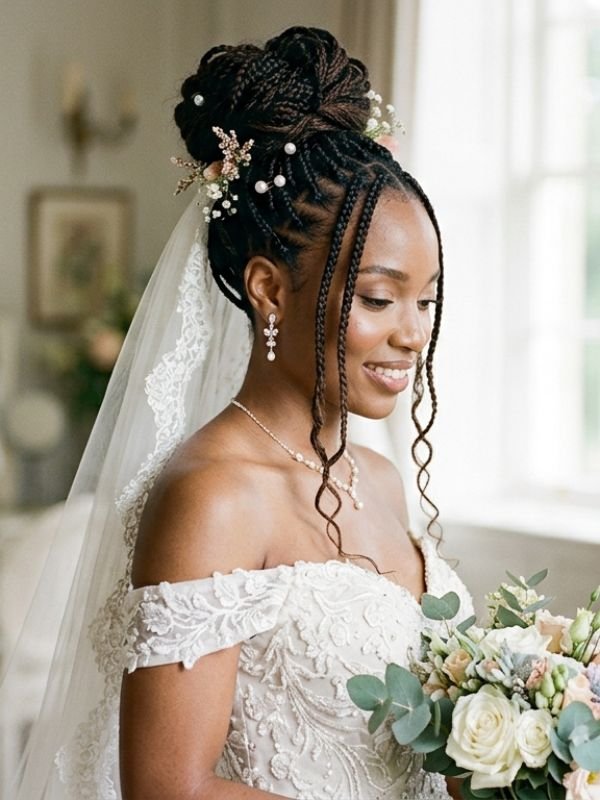
- Low chignon. Coil the braids at the nape and pin. A veil comb slides in just above the bun.
- Half-up with pearls. Pin the top half back and add pearl pins or gold cuffs along the front braids.
- Side-swept down. Deep side part, all braids over one shoulder, one decorative clip behind the ear.
- Halo crown. Braids wrapped around the head, finished with fresh flowers or a hair vine.
- Boho knotless updo. A loose high bun with curls left out to frame the face.
Guest and bridesmaid looks
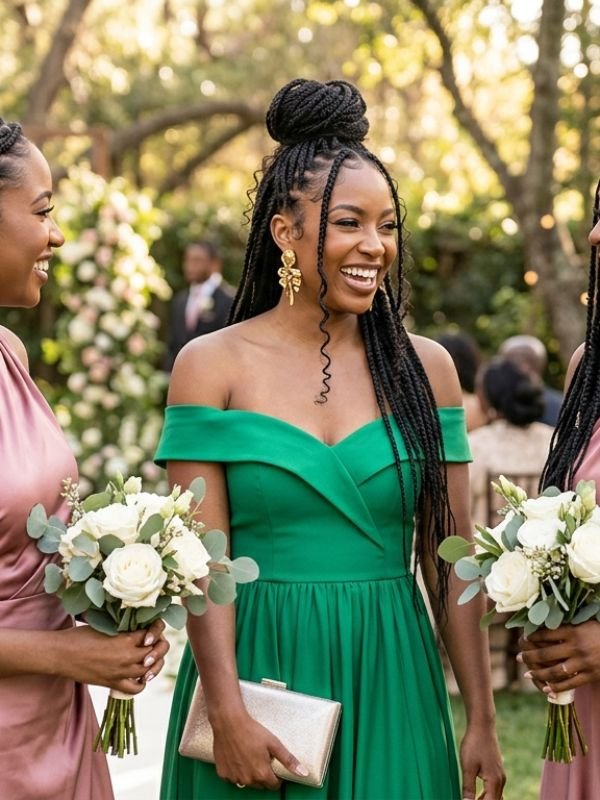
A sleek low ponytail, a half-up top knot, or braids worn down with a few cuffs all work. Match the metal of your accessories to your jewelry.
Wedding timing and prep
- Install 3 to 7 days before. The roots stay neat for photos, and any first-day tightness has passed.
- Do a trial run. Test the updo with the veil or headpiece at least once.
- Decide on boho early. If you want curls, use human hair so they stay soft through the day.
- Refresh the morning of. Mousse on the roots, scarf for 10 minutes, then edge control.
- Pack spare pins. Large bobby pins hold braids. Small ones slide out.
If the wedding is more than a week away, book a hairline touch-up instead of a full new install.
Knotless braids FAQs
Are knotless braids better than box braids?
Knotless braids are better for comfort, a natural-looking root, and easy styling from day one. Box braids are better for longer wear and a lower price. Neither is better for every head. A sensitive scalp points to knotless. A tight budget or an 8-week plan points to box braids.
Do knotless braids hurt?
Knotless braids should not hurt. There is no knot pulling at the root, so most people feel little or no soreness after the install. Pain usually means the braids are too tight or too heavy for the section size. Tell your braider during the appointment, not after.
How long do knotless braids take to install?
Most sets take between about 3 and 9 hours, depending on size, length, and the braider’s speed. Large braids sit at the low end and small waist-length braids at the high end. Knotless takes longer than box braids at the same size.
Can I wash knotless braids?
Yes. Wash every 2 to 3 weeks with diluted shampoo applied to the scalp. Squeeze the lather down the lengths instead of rubbing, rinse well, and dry fully. Damp braids left tied up can smell and cause itching. For wash-day timing on your natural hair between installs, read how often you should wash low porosity hair.
Are knotless braids good for thin or fine hair?
They can be, because the low tension is kinder to fragile strands. The flat root also shows more scalp than a knotted box braid. Ask for smaller parts and lighter braids so the hair is not carrying too much weight.
Can you put knotless braids in a ponytail right away?
Yes. Knotless roots are flexible from the first day, unlike box braids, which stay stiff for a few days. Keep the ponytail low and loose during the first week so the fresh parts are not pulled.
Which should you choose?
Pick knotless braids if you want comfort, a natural root, and a style you can wear ten different ways from the first day. Pick box braids if you want the most weeks for the least money. For school, go with regular medium knotless. For a wedding, go with small knotless and book the install 3 to 7 days ahead.
Next step: save the 11 styles above, show your braider the look you want, and confirm size, length, and price before you book. Still deciding on a look? Browse more hairstyle guides on HairSmartly.
Sources
- Box Braids vs. Knotless Braids: What’s the Difference?, Hair.com by L’Oreal. Wear times, touch-up advice, take-down.
- Knotless Braids vs. Box Braids, StyleSeat. Price ranges, install time, day-one flexibility.
Styling steps, school tips, and wedding timing are general braiding practice, not taken from a single source.