

A high taper fade is the cut you notice from across the room. The sides and back start shortening up near the temples, blend down tight toward the neckline, and leave the top long enough to actually do something with. It looks sharp on day one, works on almost every hair texture, and still passes in an office.
The catch? “High taper fade” means slightly different things to different barbers. Ask for it without details and you might walk out with a full high fade, a skin finish you didn’t want, or a blend that sits lower than your reference photo. This guide fixes that. You’ll get the styles, the exact guard numbers, what it really costs to keep up, how it grows out week by week, and a word-for-word script to read to your barber.
Table of Contents
What Is a High Taper Fade?
A high taper fade is a men’s haircut where the sides and back start getting shorter high up, around the temples, and keep blending shorter until they’re tight at the sideburns and neckline. The top stays noticeably longer. The result is strong contrast without the harsh, shaved look of a full skin fade.
Think of it as three zones. The top holds your length and style. The blend is the gradual transition where no single guard line should be visible. The fade zone is the shortest part, sitting at the temples, around the ears, and at the nape.
The cut grew out of the military short back and sides. It picked up its modern shape in 80s and 90s barbershops and hip-hop culture, and today you’ll see it on footballers, office workers, and teenagers alike.
Where Exactly Does a High Taper Start?
It starts at or just below the temple, roughly two to three inches above the top of your ear. That’s the practical answer, but every head is different, so inches aren’t the best guide.
A simpler reference many barbers use is the curve of your sideburn and temple (sometimes called the “C”). A low taper sits in the bottom third of that curve, a mid taper in the middle, and a high taper in the top third. If you point to that spot in the mirror before the cut starts, you remove most of the guesswork.
High Taper vs High Fade: The Difference Most People Miss
This is where most bad haircuts come from. A high taper keeps the shortest hair concentrated around the temples, sideburns, and nape, so the rest of the side still carries some weight. A high fade takes the short zone across the entire side and back, often down to skin, so far more scalp shows. For a side-by-side look at all three heights, see our low fade vs mid fade vs high fade guide.
| High Taper Fade | High Fade | |
|---|---|---|
| Short zone | Temples, sideburns, nape | Whole side and back |
| Side fullness | Some weight kept | Very little |
| Scalp showing | Moderate | High |
| Look | Sharp but clean | Bold and aggressive |
| Grows out | A bit softer | Fastest to look messy |
Plenty of barbers use the two names interchangeably. So don’t argue about the label; describe the coverage you want (see the barber script below).
Is a High Taper Fade Right for You? A 60-Second Check
A high taper fade suits most people, but face shape, hair density, hairline, and how often you can visit a barber decide whether it looks great or just okay. Run through this table before you book.
| Factor | Great fit | Needs a tweak |
|---|---|---|
| Face shape | Round, oval, square | Long or narrow face: keep the top shorter or add a fringe so the cut doesn’t stretch your face further |
| Hair texture | Thick, coarse, curly, coily, wavy | Very fine straight hair: ask for a softer blend so lines don’t show |
| Hair density | Medium to thick | Thin crown: keep more length on top, avoid skin at the temples |
| Hairline | Full or slightly mature | Noticeable recession: drop the taper a little lower at the front |
| Scalp | Clear, even skin | Scars, bumps, or sensitive skin: choose a shadow finish, not skin |
| Barber visits | Every 2 to 3 weeks is realistic | Monthly at best: a low or mid taper will age better |
| Work or school rules | Flexible | Strict dress code: keep the contrast soft |
One honest note on face shapes. Most style guides say high tapers flatter round and oval faces because the tight sides add vertical length. That’s true, but the same effect works against you if your face is already long. In that case, the fix is usually on top, not on the sides.
High Taper Fade Styles
The sides stay roughly the same in every version below. What changes is the top, the finish, and what the cut connects to (a beard, waves, locs). Pick the style that matches your texture first, then your taste.
Classic High Taper Fade Haircut
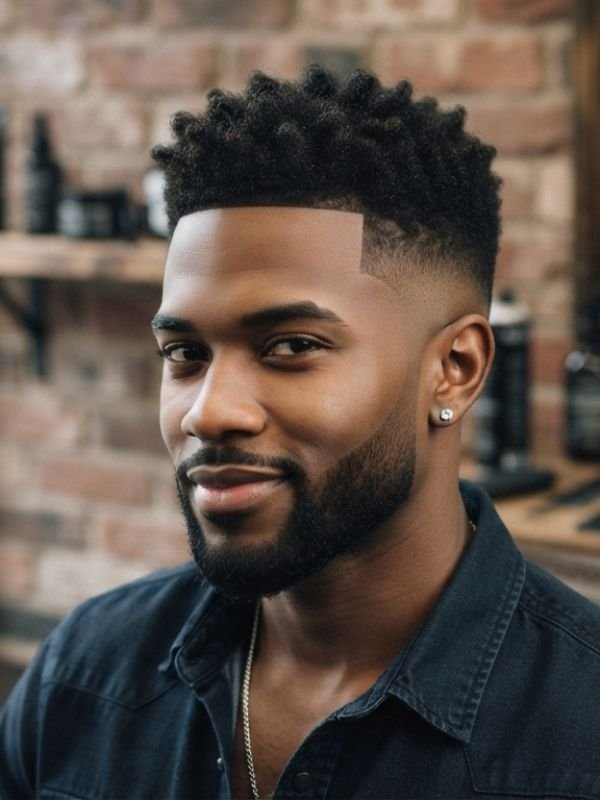
The classic version keeps two to four inches on top, enough to comb back, push to the side, or rough up with a little texture. The sides taper clean from the temple down. If you’re getting this cut for the first time, start here. It reads polished rather than edgy, and it’s easy to adjust next visit.
High Taper Fade With Beard

The key detail is the sideburn. Your barber should taper the sideburn down into the beard at the same guard, or one size longer, so hair and beard look like one continuous shape. Skip that step and you get a strange bald strip between them. A tighter taper also makes a full beard look fuller by comparison.
High Taper Fade With Curly Hair

Curls and a high taper are a natural pair. The tight sides remove the bulk that makes curly hair look wide and frizzy, and the top gets to show off its pattern. Tip: curls shrink when they dry, so ask your barber to leave the top a little longer than you think you need.
High Taper Fade Low

People search this when they want something between a high and a low taper. In practice it’s a high taper with the blend dropped slightly, so it starts just under the temple instead of at it. You still get contrast, but less scalp shows and it grows out more gracefully. Good choice for a first-timer who’s nervous about going too high.
High Taper Fade With Afro

On afro-textured hair, a high taper cleans up the sides and nape while the top keeps its full, rounded shape. Ask for a shape-up around the edges rather than heavy thinning on top, which flattens volume. Keep the top moisturised with a leave-in or curl cream so it stays soft and even.
High Taper Fade Black

This search usually refers to high tapers cut on coily or kinky hair, often finished with a crisp line-up at the hairline and temples. The sharp edge is what makes the look, but it’s also the first thing to grow out. If you get razor bumps, ask for the line-up with a trimmer instead of a razor, and a shadow finish rather than skin.
High Taper Fade With Waves
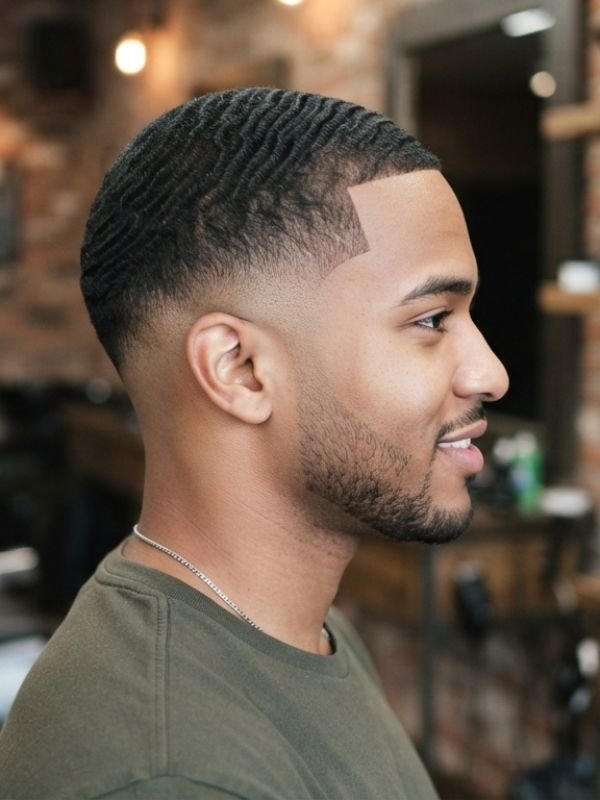
For 360 waves, a high taper frames the pattern and keeps the sides from competing with it. The trade-off is that you lose some of the wave pattern on the sides, so if your waves are still developing, a mid taper may protect more of your progress. Brush daily and wear a durag at night to keep the pattern sharp.
Short Hair High Taper Fade

Here the top is kept to about half an inch to an inch. It’s the lowest-effort version: towel dry and go. Keep in mind that a short top doesn’t reduce barber visits. The fade still needs refreshing on the same schedule, because the fade, not the top, is what grows out first.
High Taper Fade for Straight Hair (Asian and European Hair)
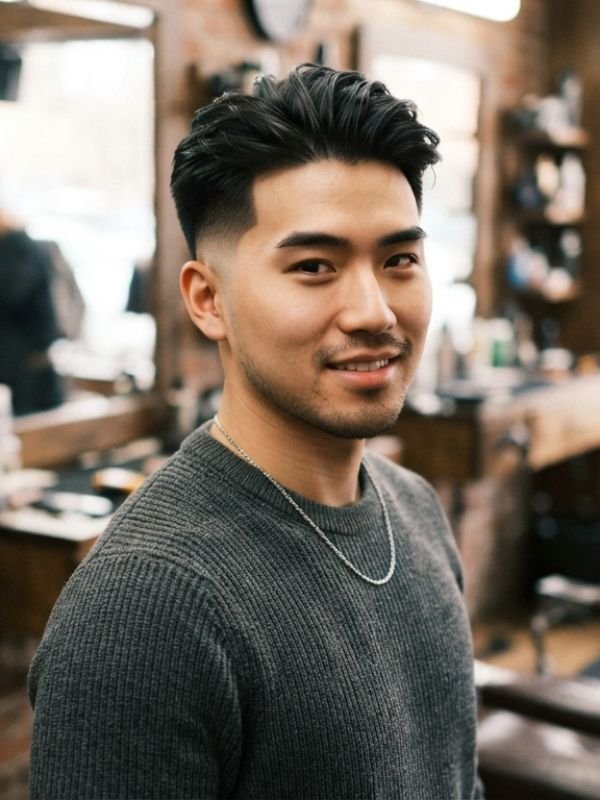
Straight hair shows every blend line, so this is where barber skill really shows. Ask for a soft, gradual transition rather than a sharp one. On straight, thick hair that tends to stick out at the sides, a high taper solves the “puffy sides” problem instantly. Style the top with a matte clay or a light paste for texture.
High Taper Fade With Textured Crop or Fringe

A choppy, textured top pushed forward into a short fringe is one of the most popular modern pairings. It’s low-effort, hides a slightly high forehead, and works well on long faces because the fringe breaks up the length. A little sea salt spray before blow-drying gives it grip. Want more relaxed options for the top? Browse these messy hairstyles for men that pair well with a high taper fade.
High Taper Fade With Locs, Twists or Braids

Here the taper only works the perimeter: temples, around the ears, and the nape. The parts and foundation of your locs or braids stay untouched. If your braider and barber are two different people, tell your barber exactly where your part lines sit so the taper doesn’t cut into them.
High Taper Fade vs Low Taper Fade
The difference comes down to where the blend starts. A high taper starts near the temple and creates bold contrast. A low taper starts just above the ear and stays subtle. Here’s how they stack up against the mid taper too.
| Feature | High Taper Fade | Mid Taper Fade | Low Taper Fade |
|---|---|---|---|
| Starting point | Near the temples, 2 to 3 inches above the ear | Mid-way, around the top of the ear | Just above the ear and neckline |
| Contrast | Bold | Balanced | Subtle |
| Scalp showing | Most | Some | Least |
| Best for | Statement looks, thick or curly hair, round faces | Almost everyone, first fade | Conservative offices, long faces |
| Touch-up interval | Every 2 to 3 weeks | Every 3 weeks | Every 3 to 4 weeks |
| Grow-out | Most noticeable | Moderate | Least noticeable |
Neither is better. If you want your haircut to be noticed, go high. If you want people to say “you look sharp” without knowing why, go low.
High Taper vs Mid Taper: Which One If You Can’t Decide?
Go mid first. A mid taper can always be taken higher at the next visit, but a high taper can’t be brought back down until it grows out, which takes around three to four weeks. Try the mid, live with it for a week, then decide if you want more contrast.
Skin, Zero or Shadow? Choosing How Short the Fade Goes
How high the taper starts and how short it goes are two separate decisions. Most people only think about the first. The shortest point can be bare skin, a zero, a half guard, or a light shadow, and each looks and grows out differently. For a full breakdown of every clipper size, see our 8 guard buzz cut guide.
| Guard | Length | Look | Best for |
|---|---|---|---|
| Skin (foil shaver or razor) | 0 | Brightest contrast, scalp fully visible | Clear skin, weekly or biweekly visits |
| #0 (no guard, lever closed) | About 1/32 inch | Near-skin, faint shadow | Sharp look with less irritation than a razor |
| #0.5 | 1/16 inch | Visible dark shadow | Most people; the safest “tight” finish |
| #1 | 1/8 inch | Soft shadow | Sensitive or bump-prone skin, lighter hair |
| #2 | 1/4 inch | Clearly hair, low contrast | Conservative workplaces, first-timers |
| #3 to #4 | 3/8 to 1/2 inch | Blend zone toward the top | The upper part of the taper |
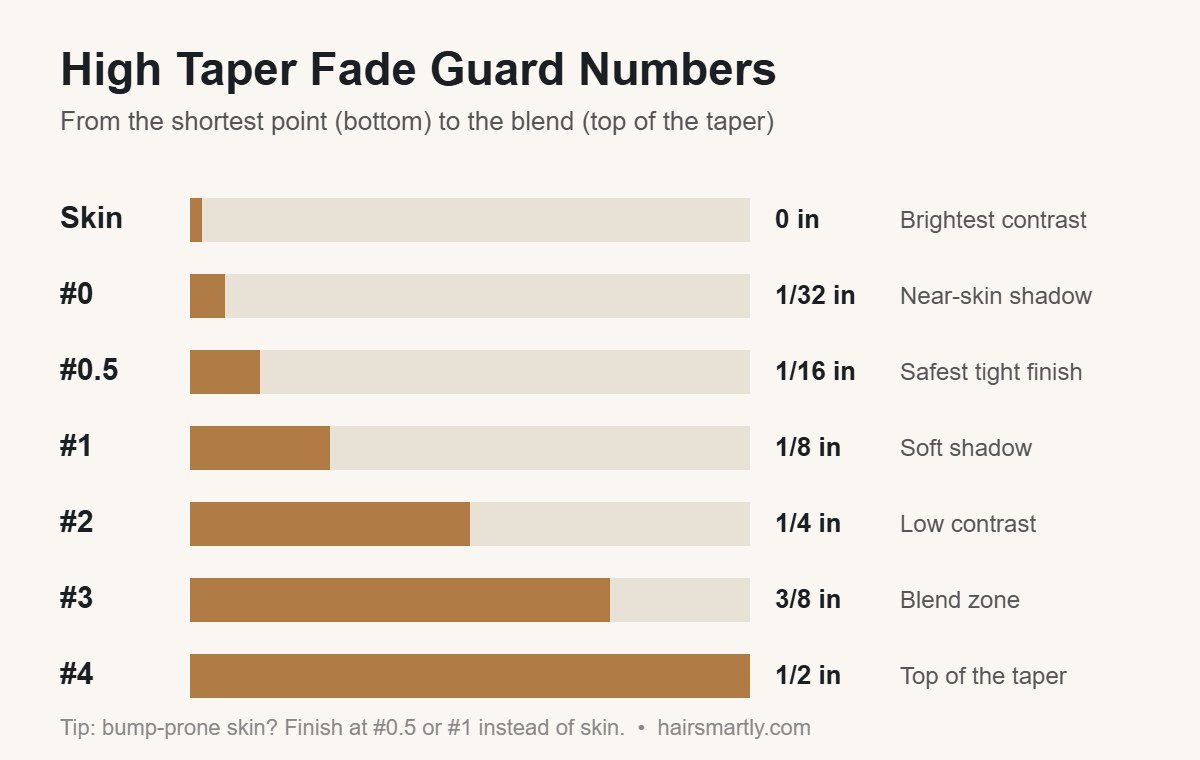
A simple rule: the closer the finish, the faster it loses its crisp look. A skin finish looks like a #1 after about a week of growth, because hair grows roughly an eighth of an inch per week. A #0.5 shadow holds its look noticeably longer.
How to Get a High Taper Fade Cut
The best way to get a high taper fade is to book a barber who does fades daily, bring photos from three angles, and describe the height, shortest length, and top style before the clippers turn on. Here’s how that plays out in the chair.
At the Barber Shop
A good barber will first check your head shape, growth pattern, and any cowlicks near the crown. They’ll set a guideline at the temples with a short guard, then work upward with longer guards, using the taper lever and clipper-over-comb to erase lines. Expect a final pass with a trimmer on the hairline, sideburns, and neckline, and a check from several angles in the mirror.
If the shop has several barbers, ask who specialises in fades. Fades are a skill-heavy cut, and the difference between an average and a great barber is obvious in this style.
What Should You Ask For
Don’t just say “high taper fade” and sit back. Cover these five points:
- Height: point to where you want the blend to start on your temple
- Coverage: localised at the temples and nape, or across the whole side
- Shortest length: skin, #0, #0.5, or #1
- Top: length in inches and how you style it
- Edges: natural or sharp line-up, and how the sideburns meet your beard
Here’s a script you can read straight off your phone:
“I’d like a high taper starting here [point to temple], kept mostly around the temples and neckline, not a full high fade. Shortest length a half guard, no skin. Leave about three inches on top so I can push it back. Natural hairline, and blend the sideburns into my beard.”
Show photos of someone with hair similar to yours. A curly-haired reference for straight hair (or the other way round) will never come out the same.
Time & Cost
A high taper fade usually takes 25 to 45 minutes, depending on your hair thickness and how detailed the blend is. In most US cities, expect to pay roughly $25 to $60, with premium shops charging more. Adding a beard trim or razor line-up usually adds $10 to $20. Prices vary a lot by city and country, so check a few local shops.
The Real Yearly Cost of Keeping a High Taper Fresh
The price of one cut isn’t the real number. Because a high taper needs a refresh every two to three weeks, the yearly cost adds up fast.
| Visit every | Visits per year | At $25 | At $40 | At $60 |
|---|---|---|---|---|
| 2 weeks | 26 | $650 | $1,040 | $1,560 |
| 3 weeks | 17 | $425 | $680 | $1,020 |
| 4 weeks (mid or low taper) | 13 | $325 | $520 | $780 |
Two ways to cut that cost: ask if your shop does a cheaper “edge-up” or neck clean-up between full cuts, or choose a #0.5 shadow instead of skin so each cut lasts longer.
How to Tell If Your Barber Nailed It (and What to Do If Not)
A good high taper fade looks even from the front, both sides, and the back, with no visible lines anywhere in the blend. Check it in a mirror before you pay.
Signs of a clean cut:
- The taper starts at the same height on both temples
- No dark bands or “steps” where guard sizes change
- The nape is centred and symmetrical
- The sideburns match in length and shape
If something’s off:
- Visible lines: ask the barber to blend it again with the lever or clipper-over-comb. Any good barber will fix this on the spot.
- Uneven sides: point it out before you leave, not three days later.
- Taken too high: it can’t be lowered. Wait two to three weeks, then ask for a mid taper, and let the barber blend the grown-out section down.
How to Do a High Taper Fade (At Home)
You can cut a high taper fade at home, but it’s much easier on someone else’s head than your own. The back of your head is the hard part: you can’t see it clearly, and mistakes there can only be fixed by going shorter. If it’s your first time, practise on a friend or keep to neckline clean-ups.
Tools Required
- Clippers with a taper lever and guards from #0.5 to #4
- A trimmer (T-blade) for the hairline, sideburns, and neckline
- A fine-tooth comb and a few sectioning clips
- Two mirrors: a wall mirror plus a handheld one (or a three-way mirror)
- A cape or old towel, a neck duster, and clipper disinfectant spray
Step by Step Cutting Tutorial
- Start with clean, dry, detangled hair. Wet hair clumps and hides uneven spots.
- Clip the top section out of the way so you don’t cut into it by accident.
- Take the sides and back down to a #2 all over. This is your base.
- With a #1, set your guideline at the height you want, about two to three inches above the ear at the temples, and keep it level around the back.
- Below that line, go to a #0.5, then open-lever #0 near the sideburns and nape.
- Blend the lines with a flicking, scooping motion: press in at the bottom and flick out as you move up.
- Use the lever halfway between guards (for example, a #1 with the lever open) to erase any dark bands.
- Blend the top of the taper into the longer hair with clipper-over-comb or scissors-over-comb.
- Clean up the hairline, sideburns, and neckline with the trimmer.
- Check from every angle with the handheld mirror, then fix any lines before you finish.
Key Blending Tips for a Clean High Taper Fade
- Never jump more than one guard size at a time
- Keep strokes light, short, and consistent; heavy pressure leaves holes
- Work in good, overhead light so lines don’t hide
- Stop and check both sides every few minutes for symmetry
- Go longer first; you can always take more off, never less
Beginner Mistakes That Ruin a Home Fade
- Starting the guideline too high. It’s the most common error and the hardest to undo. Start lower than you think and raise it later.
- Uneven guideline around the back. Check it level with the mirror before you blend anything.
- Using a #0 or skin without practice. Mistakes at that length show immediately.
- Cutting the neckline too high. A squared nape cut above the natural hairline looks off for weeks.
- Dull or dirty blades. They pull hair, cause irritation, and leave patchy spots.
Maintenance And Styling
A high taper fade needs a barber refresh every two to three weeks and about two to five minutes of styling a day, depending on your top. The sides take care of themselves; the top is where your daily effort goes.
Touch-Up Compared to Low & Mid Tapers
High tapers show regrowth first because the short zone is larger and sits higher, where people look. Most guys need a touch-up every two to three weeks, compared to around three weeks for a mid taper and three to four weeks for a low taper. The line-up usually goes soft before the blend does, so if only your edges look messy, a quick edge-up can buy you another week.
Week-by-Week: How a High Taper Fade Grows Out
Hair grows about half an inch a month on average, roughly an eighth of an inch a week. Here’s what that means for a cut finished at skin or a #0.5.
| Time after the cut | What you’ll see |
|---|---|
| Days 1 to 3 | Sharpest contrast, crisp edges, scalp clearly visible at the temples |
| Week 1 | Skin areas now look like a #1 shadow; line-up starts to soften |
| Week 2 | Blend still looks decent, but the neckline and sideburns look fuzzy |
| Week 3 | Contrast mostly gone; the cut now looks like a mid or low taper |
| Week 4+ | Sides look bulky, especially on thick or curly hair; time for a full cut |
If the week-two stage bothers you, a skin finish isn’t worth it for you. Switch to a #0.5 or #1 and your cut will look “fresh” for longer.
Washing
Wash two to three times a week with a gentle, sulfate-free shampoo. Because more scalp is exposed, it dries out faster, so don’t overwash. Use a clarifying shampoo once every week or two if you use heavy pomades or clays, as buildup is easy to see on short sides. If your curls are low porosity, follow this guide on how often to wash low porosity hair instead.
Recommended Products
| Your top | Product | Why |
|---|---|---|
| Textured crop or fringe | Matte clay or paste | Hold and separation without shine |
| Side part, quiff, slick back | Water-based pomade | Smooth hold and a clean shine |
| Curly or coily | Curl cream or leave-in conditioner | Defines curls, fights frizz |
| Afro | Leave-in plus light oil | Keeps the shape soft and even |
| Waves | Wave pomade or cream + durag | Holds the pattern overnight |
| Short top or buzz | Nothing, or a scalp moisturiser | The fade does the work |
For any style, a light scalp moisturiser or a few drops of oil on the faded area helps with dryness and flaking.
Quick Morning Styling Routine
- Dampen the top slightly with water or a spray bottle.
- Add a pre-styler (sea salt spray or leave-in) if your top is longer than two inches.
- Blow-dry in the direction you want the hair to sit, for lift at the roots.
- Warm a pea-sized amount of product between your palms.
- Work it through from back to front, then shape with your fingers or a comb.
- Keep product off the faded sides, where it clumps and shows.
Razor Bumps, Itchy Necklines and Scalp Care
Close fades can irritate skin, especially on coarse or curly hair. When very short, curly hairs grow back, they can curl into the skin and cause red, itchy razor bumps. The simplest fix is to not cut as close.
- Ask for a #0.5 or #1 finish instead of skin or a razor
- Ask for the line-up with a trimmer rather than a straight razor
- Don’t scratch or pick at bumps on the nape
- Use a gentle, fragrance-free moisturiser on the faded area after the cut
- Make sure the barber disinfects clippers between clients; it’s a fair thing to ask
If bumps on the back of your neck keep coming back, get worse, or start to leave firm scars, see a dermatologist. Some conditions in that area, like acne keloidalis nuchae, look like razor bumps but need proper treatment.
High Taper Fade With Thinning or Receding Hair
A high taper can work with thinning hair, but it needs adjustments. Tight sides make the top look fuller by contrast, which helps. The risk is at the temples: a high, sharp taper next to a receding hairline can make the recession more obvious.
- Drop the taper slightly lower at the front and keep the high part at the back
- Choose a shadow finish over skin so less scalp shows
- Skip the sharp line-up; a natural hairline hides recession better
- Keep the top short and textured rather than long and slicked back, which exposes thin spots
If you’re thinning at the crown, mention it. A good barber will leave a little more weight there so the blend doesn’t expose it.
Frequently Asked Questions
Is a high taper fade the same as a high fade?
Not quite. A high taper keeps the shortest hair around the temples, sideburns, and nape, so the sides keep some weight. A high fade takes the whole side and back short, often to skin, and shows more scalp. Many barbers use the names loosely, so describe the coverage you want instead of relying on the label.
What guard number is used for a high taper fade?
There’s no single number. Most high tapers finish at skin, #0, or #0.5 at the bottom, blend through #1 and #2, and use #3 or #4 near the top of the taper. If you have sensitive or bump-prone skin, ask for #0.5 or #1 as your shortest length.
How long does a high taper fade last?
It looks its best for about one to two weeks. By week three, most of the contrast has grown out and the cut looks closer to a mid or low taper. Plan on a barber visit every two to three weeks to keep it sharp.
Does a high taper fade look good on everyone?
It works for most people. It’s especially flattering on round and oval faces and on thick, curly, or coily hair. Long faces, fine straight hair, and receding hairlines can still wear it with small tweaks, like a shorter top, a fringe, or a softer finish at the temples.
Is a high taper fade professional enough for work?
Yes, in most workplaces. Choose a shadow finish rather than skin, a natural hairline instead of a sharp line-up, and a neat top like a side part or short crop. That keeps the contrast clean without looking too bold.
Can kids get a high taper fade?
Yes, it’s a popular cut for boys because it’s neat and easy to manage. Stick to a #1 or #0.5 shortest length on young, sensitive skin, and check your child’s school dress code, as some schools restrict high-contrast styles. If he wants something more playful, a short kids mullet fade is another easy option.
Is a high taper fade hard to grow out?
It’s easier than a full high fade because the sides keep some weight. The awkward stage lasts about two to three weeks. Ask your barber to step it down to a mid taper while it grows, rather than just letting it go.
What is the difference between a taper and a fade?
A taper gradually shortens the hair and usually leaves some length at the bottom, mostly around the sideburns and neckline. A fade blends the hair much shorter, often to bare skin, across a larger area. A “taper fade” is a mix of both.
Conclusion
A high taper fade gives you sharp contrast around the face while keeping a clean, blended finish. It works on curls, coils, waves, straight hair, and beards, and it’s versatile enough for both the office and the weekend.
The secret to getting it right isn’t the name. It’s three decisions you make before sitting down: how high the taper starts, how short the shortest part goes, and what stays on top. Bring photos, use the script above, and match your barber schedule to how much contrast you want to keep.
Not sure a high taper is for you yet? Start with a mid taper, see how you like the contrast, and step up to a full high taper fade next time. Found this helpful? Explore more cuts in our men’s hairstyles guides before your next barber visit.
Pingback: Long Hair Taper Guide: 3 Best Taper Fades - HairSmartly
Pingback: 2 Guard Buzz Cut: Ultimate Guide to Length, Looks & Grow-Out
Pingback: Low Taper Fade for Black Men: Waves, Curls & Straight Hair
Pingback: French Crop Haircut: 7 Best Types, Fades & Barber Script
Pingback: Beard for Long Face: 6 Best Styles That Add Width
Pingback: Haircuts for Thick Wavy Hair Men: 17 Best Cuts by Wave Type