
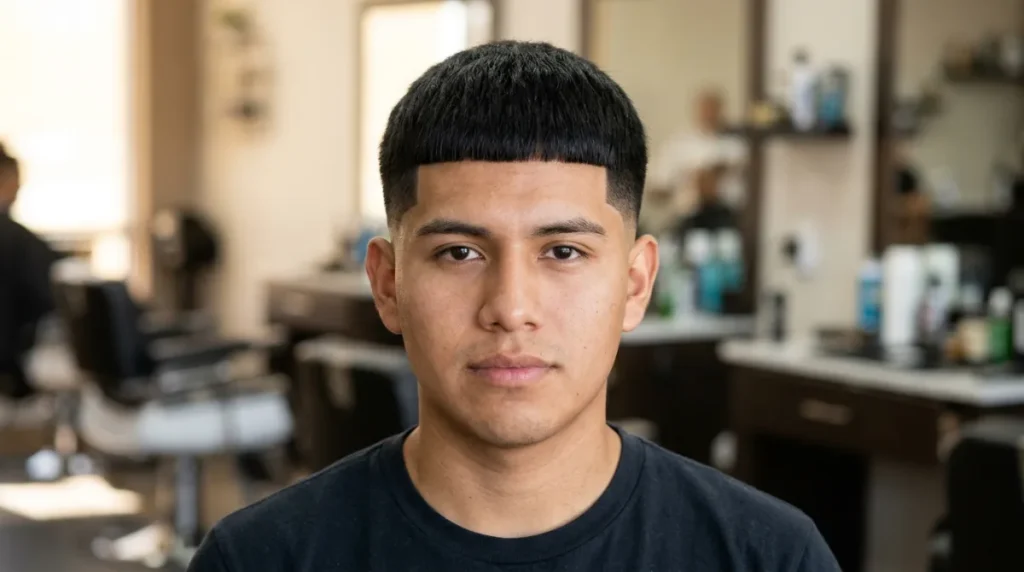
An Edgar cut is a men’s haircut with a straight, blunt fringe across the forehead, a sharp line-up, and tapered or faded sides. It grew out of Mexican-American youth culture in Texas and the US Southwest and went viral on TikTok in the early 2020s.
Most Edgar cut guides show you 30 photos and stop there. This one helps you decide. You’ll learn which version suits your hair and face, the exact words to give your barber, how often to go back, and how to grow it out when you’re done.
Quick answer: Ask for a blunt, straight-across fringe at mid-forehead, a crisp line-up, and a mid or high taper on the sides. Keep 2–3 inches on top. Plan on a trim every 2–3 weeks.
Table of Contents
What Is an Edgar Cut?
The Edgar cut is a short crop with a heavy, straight fringe and tight sides. Picture a bowl cut, then add a sharp hairline and a fade. Wikipedia describes it as straight front bangs with tapered sides, wearable with straight, wavy or curly hair.
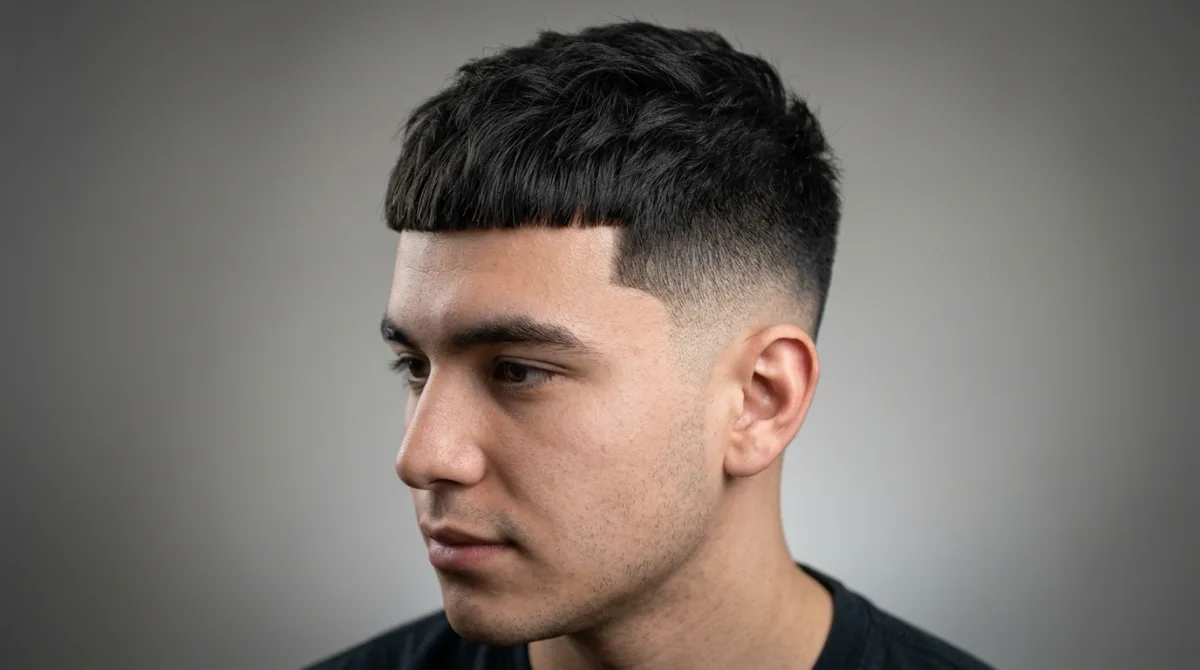
It goes by other names too. In Texas’ Rio Grande Valley people call it the “cuh,” and it’s often called the “takuache cut.”
Every Edgar has four parts. Know them and you can talk to any barber:
| Part | What it looks like | Typical spec |
|---|---|---|
| Fringe | Straight, blunt line across the forehead | Mid-forehead to just above the brows |
| Line-up | Sharp edge at the temples and front corners | Done with a trimmer or razor |
| Sides and back | Taper or fade, short to skin | Starts at #0–#1, blends up to #2–#3 |
| Top | Even length, flat or textured | 2–3 inches classic; 3–4 inches for a “fluffy” Edgar |
Where the Edgar Cut Came From
Nobody knows for sure where the name came from. The style itself first caught on in US border states: Texas, New Mexico, Arizona and California. The Wikipedia entry on the Edgar cut sums up the main theories.
Here’s what’s known:
- The Takuache link. The look ties into takuache culture, a Mexican-American scene built around trucks, cowboy boots and corridos. Know Your Meme notes it was called the “Takuache haircut” before “Edgar” took over.
- The Edgar Martínez story. A popular story credits former Seattle Mariners star Edgar Martínez. Wikipedia calls this a misattribution that spread in early 2019.
- Indigenous roots. Historians have pointed out how much it looks like hairstyles of Indigenous peoples such as the Jumano, who lived in Texas between the 1500s and 1700s.
- The viral moment. Memes started in 2019. It peaked as a TikTok trend in early 2022, and Instagram and YouTube spread it further.
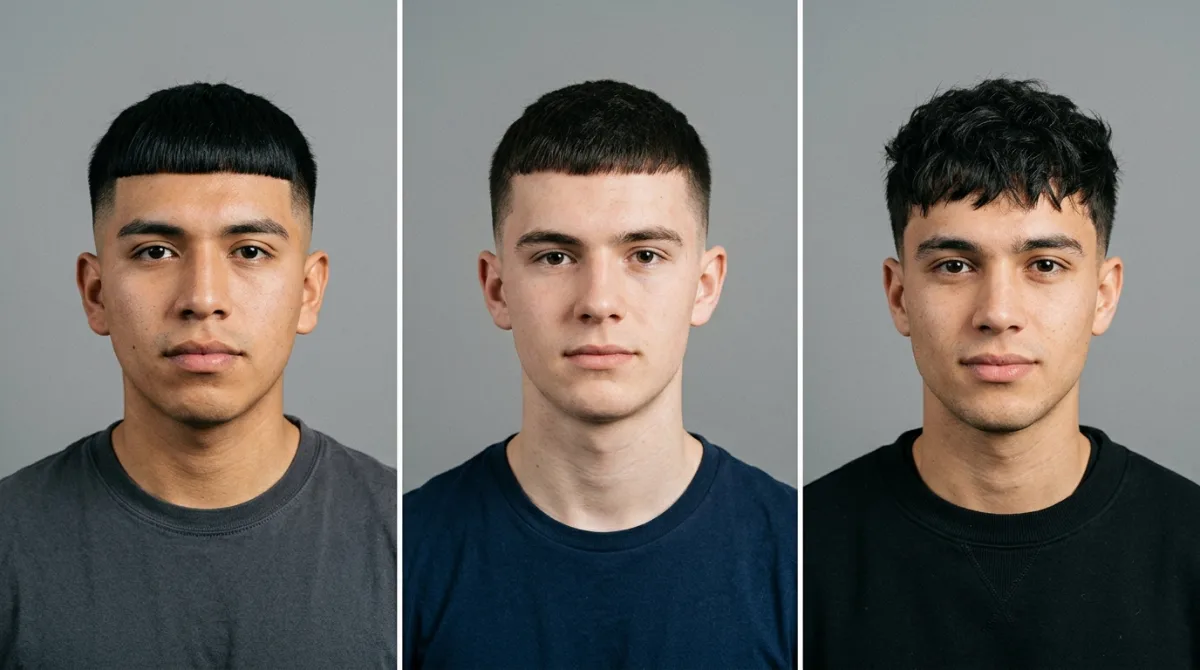
Edgar Cut vs Caesar vs French Crop vs Bowl Cut
All four have a fringe. The Edgar is the boldest of them: the straightest fringe line and the most contrast on the sides.
| Cut | Fringe | Sides | Overall vibe | Upkeep |
|---|---|---|---|---|
| Edgar | Blunt, dead straight, heavy | Sharp taper or high fade + line-up | Bold, statement | High (2–3 weeks) |
| Caesar | Short, flat, brushed forward | Even, short | Clean, classic | Low–medium |
| French crop | Textured, often choppy | Fade or taper | Modern, easygoing | Medium |
| Bowl cut | Rounded all the way around | Same length as top, no fade | Retro | Medium |
In short: want a quiet version? Get a French crop. Want people to notice? Get the Edgar.
Is the Edgar Cut Right for You?
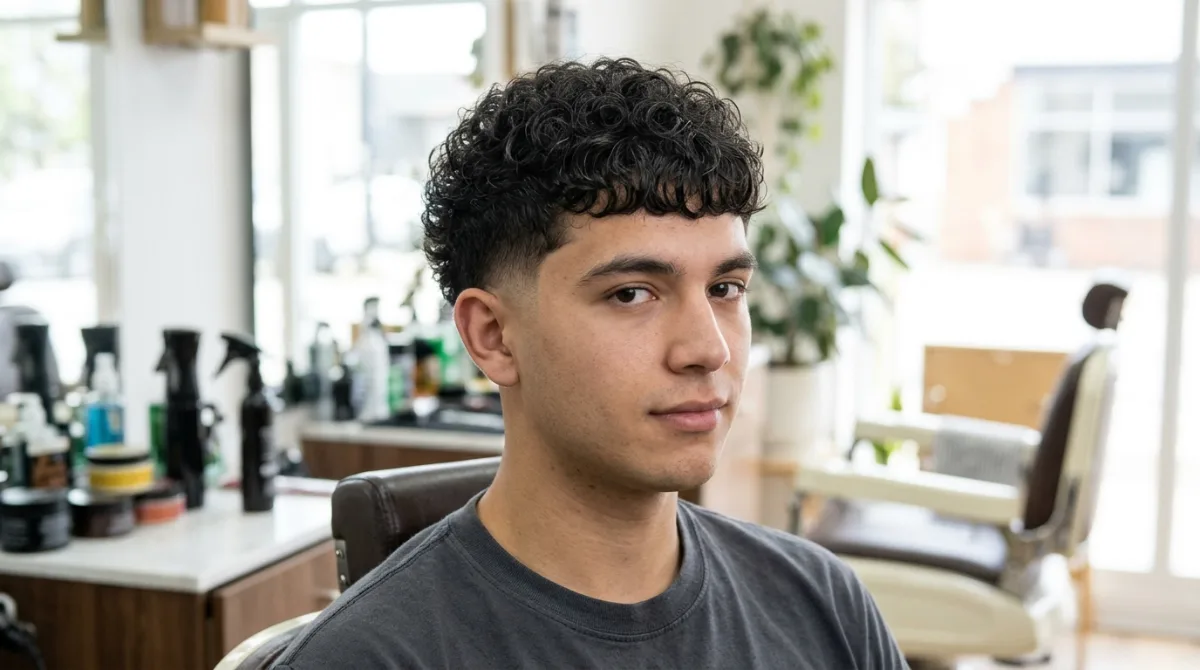
The Edgar looks best on thick, straight or coarse hair and on oval, oblong or angular faces. Wavy and curly hair works too — you just get a softer, textured fringe rather than a ruler-straight one.
| Your hair or face | Does it suit? | Ask for this version |
|---|---|---|
| Thick, straight hair | Best match | Classic Edgar, mid or high taper |
| Wavy hair | Good | Wavy Edgar, slightly longer top |
| Curly hair | Good with the right cut | Curly or fluffy Edgar, low taper, curl cream |
| Fine or thin hair | Harder | Short textured Edgar; skip the heavy fringe |
| Round face | OK with tweaks | High fade + volume on top to add height |
| Long or oblong face | Very good | Classic Edgar; the fringe shortens the face |
| Square or angular face | Very good | Any version; a softer fringe balances the jaw |
| Receding or uneven hairline | Good | Lower fringe; ask for a soft line-up, not a pushed-back one |
| Strong front cowlick | Risky | Textured Edgar; a blunt line will split |
8 Edgar Cut Styles Worth Asking For
Most lists repeat the same cut with different names. These are the eight versions that actually look different in the chair.
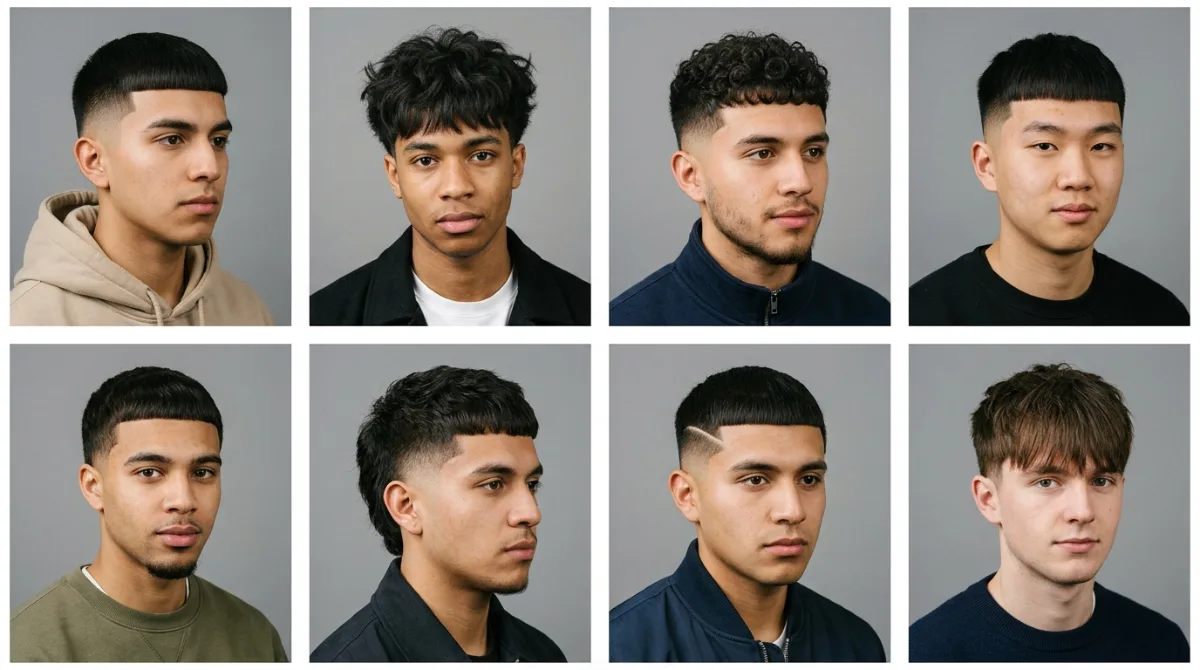
| Style | What changes | Best for |
|---|---|---|
| Classic Edgar | Blunt fringe, high taper, crisp line-up | Thick straight hair |
| Fluffy Edgar | 3–4 inch top, blow-dried for volume | Wavy hair, round faces |
| Curly Edgar | Curls kept on top, low taper | Curly hair |
| Textured / messy Edgar | Point-cut fringe instead of blunt | Cowlicks, fine hair, a softer look |
| Edgar with skin fade | Sides go to bare skin | Maximum contrast |
| Low taper Edgar | Fade only near the ears and neck | School, work, first-timers |
| Edgar with design | Lines or shapes carved in the sides or back | Making a statement |
| Edgar + beard | Fade connects into a beard | Adults wanting a grown-up version |
How to Ask Your Barber for an Edgar Cut
Bring two reference photos — one front, one side — and use these words. Clear specs stop the barber guessing.
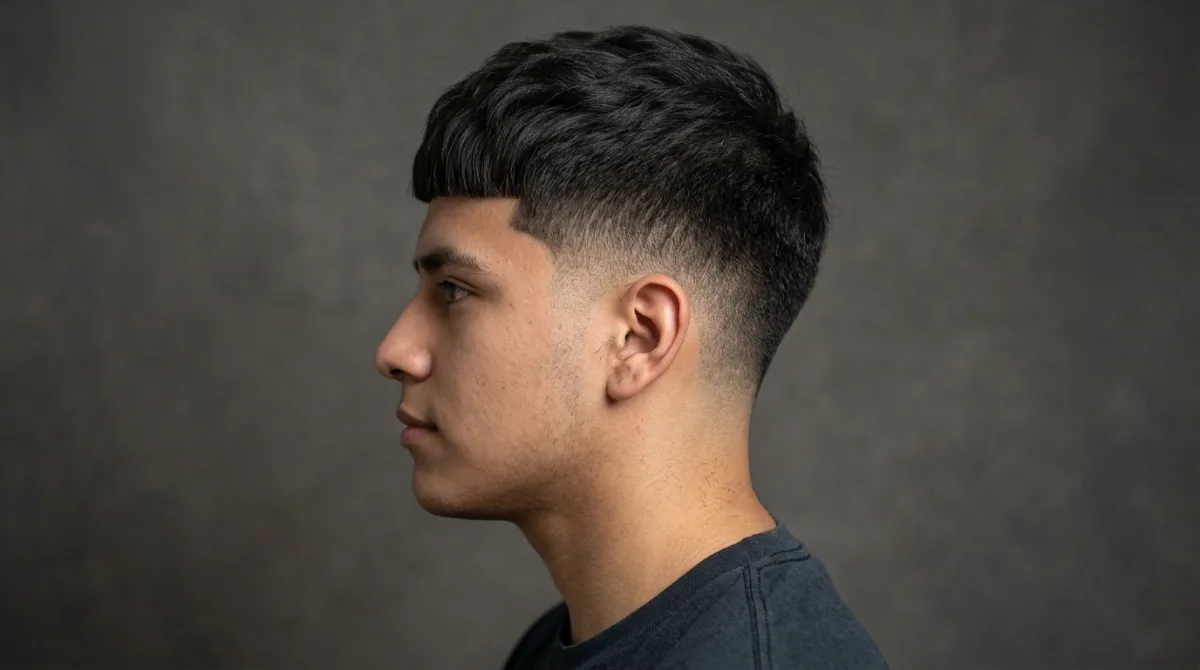
- Top: “Keep about 2–3 inches on top, all one length.” (Say 3–4 inches for a fluffy Edgar.)
- Fringe: “Cut the fringe blunt and straight across, about mid-forehead.” For curly or cowlick hair, say “point-cut, not blunt.”
- Sides: “Mid taper (or high taper / skin fade), starting at a zero or one.”
- Line-up: “Sharp line-up at the temples and front corners, but don’t push my hairline back.”
- Back: “Tapered neckline,” or “blocked” if you want a squarer finish.
- Extras: Mention any design, part line or beard blend now, not at the end.
Ask before the clippers come out: “Have you done many Edgars?” Barber Carlos Flores told NBC News that a lot of barbers struggle with this cut or won’t do it at all. An experienced barber will show you Edgar photos from their own work.
How to Style an Edgar Cut at Home
A classic Edgar takes about five minutes. The goal is a fringe that sits flat and straight, with a little texture on top.

- Towel-dry until the hair is damp, not wet.
- Blow-dry the fringe forward and down, pointing the nozzle at the forehead.
- Rub a pea-sized amount of product between your palms.
- Work it through the top first, then press the fringe into place.
- For a fluffy Edgar, lift the roots with the dryer and finish with texture powder.
| Product | Use it for | Avoid if |
|---|---|---|
| Matte clay | Thick hair, natural hold | Very fine hair |
| Matte wax / light pomade | Sharp fringe, controlled finish | You want volume |
| Sea salt spray | Texture, wavy Edgars | Dry or curly hair |
| Texture powder | Fluffy Edgar volume | Oily scalp |
| Curl cream | Curly Edgars | Straight hair |
Skip heavy shiny pomade. It flattens a fluffy Edgar and makes the fringe look greasy. Not sure which product to pick? Our gel vs pomade vs clay comparison breaks it down.
Maintenance Schedule
Plan on a trim every 2–3 weeks. The line-up and fade lose their edge first, and the fringe starts to look heavy around week three. Some people go much more often: one wearer told NBC News he refreshes his every six days.
| Time since cut | What you’ll notice | What to do |
|---|---|---|
| Week 1 | Sharp all round | Nothing |
| Week 2 | Line-up softens, fade shows stubble | Book a line-up or touch-up if you want it crisp |
| Week 3 | Fringe heavy, sides blurry | Full cut |
| Week 4+ | Starts turning into a mushroom or bowl | Re-cut, or start the grow-out plan below |
Don’t trim your own line-up. One wrong pass moves the hairline back, and it takes weeks to grow in.
6 Common Edgar Cut Mistakes
- The helmet look. Top too long and too even. Ask for weight removed through the top.
- A pushed-back hairline. Over-aggressive line-ups make the forehead look bigger. Say “follow my natural line.”
- Fighting a cowlick. A blunt fringe splits over a cowlick. Use a point-cut fringe instead.
- Fade too high for your head shape. A high skin fade can exaggerate a narrow or bumpy head. Try a mid taper first.
- Too much product. It clumps the fringe. Start with less than you think.
- Waiting too long. At five-plus weeks it reads as a grown-out bowl cut, not an Edgar.
How to Grow Out an Edgar Cut
Growing out an Edgar takes about 2–4 months, and it doesn’t have to look awkward. No top-10 guide covers this, so here is a simple path.
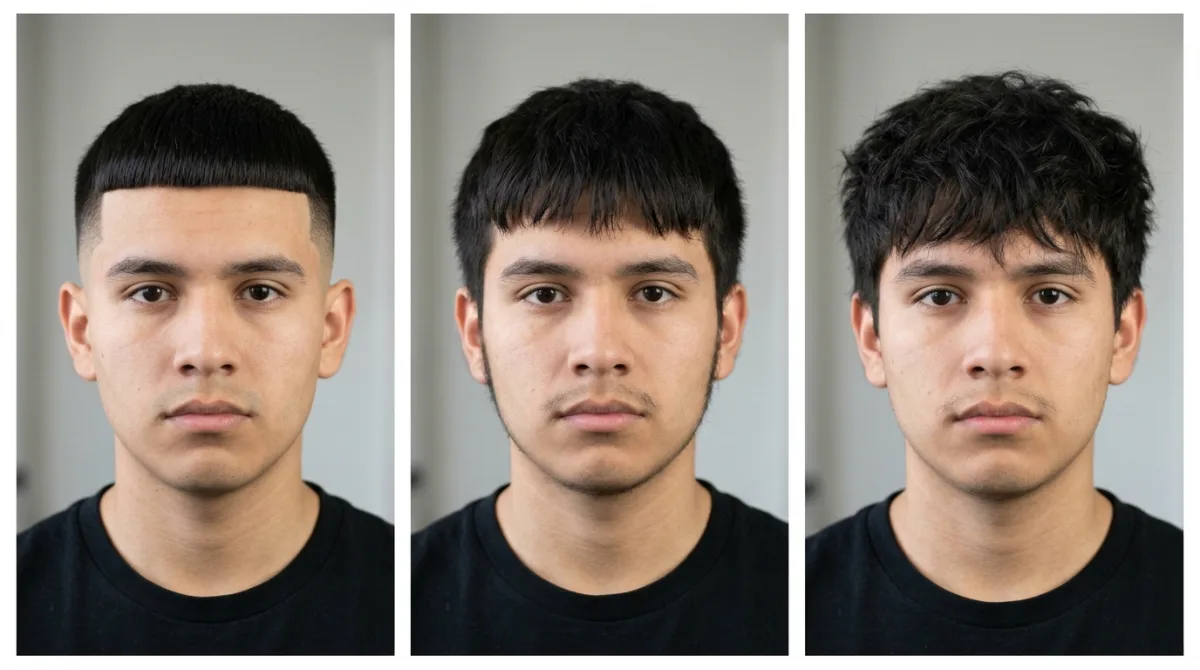
- Weeks 0–4: textured crop. Ask your barber to point-cut the blunt fringe so the line disappears. Keep the sides tapered.
- Weeks 4–8: French crop or short quiff. Let the fringe grow and push it up or to the side. Lower the taper so the sides fill in.
- Weeks 8–16: your next style. From here you can go to a textured fringe, a side part, a mullet or a medium-length cut.
The key is to stop cutting the line-up. Let the hairline grow back naturally.
The Edgar Cut, Stereotypes and School Rules
The Edgar is a style and a cultural marker at the same time, and opinions on it are split. A UTEP professor called it a defining look for this generation of teens. Others link it, often unfairly, to trouble-making.
NBC News reported on viral videos that mock young Latino men with the cut. Cal State Fullerton professor Alexandro Gradilla said much of that criticism reflects classism. He also ties the cut to Indigenous and blue-collar immigrant roots.
The pushback has real effects:
- A San Antonio restaurant owner banned it because of its gang association, per Wikipedia.
- In August 2025, El Salvador banned the haircut in public schools after a directive from Education Minister Karla Trigueros.
- In Türkiye, a similar cut has been associated with youth violence.
For parents: check your child’s school dress code before booking. If rules are strict, a low taper Edgar with a soft line-up and no designs is the safest version. It keeps the look without the hard contrast.
Edgar Cut FAQs
What does “Edgar cut” mean?
It’s the name for a haircut with a straight, blunt fringe, a sharp line-up and faded sides. The name became popular through memes from 2019 and TikTok in 2022. Online, “Edgar” also became a joking label for a type of young Latino guy who wears the cut. Many people see that label as a stereotype.
Why is it called an Edgar?
No one has confirmed it. The most shared story links it to baseball player Edgar Martínez, but Wikipedia calls that a misattribution. Before “Edgar” caught on, many people called it the Takuache haircut.
What’s the difference between an Edgar and a Caesar cut?
Both have a short forward fringe. The Edgar has a heavier, dead-straight fringe, a sharp line-up and a high-contrast fade. A Caesar is shorter and more even all over, with softer sides. The Edgar is the bolder of the two.
Does the Edgar cut work with curly hair?
Yes. Ask for a curly Edgar: keep the curls on top, use a low taper, and have the fringe point-cut rather than blunt. Style it with curl cream and diffuse on low heat. Don’t brush curls out when dry. Our curly hair routine for men covers wash day and styling.
How often should I get an Edgar cut trimmed?
Every 2–3 weeks keeps the fringe straight and the fade clean. If you only care about the sides, a line-up and fade touch-up at week two can stretch the full cut to week four.
How long does hair need to be for an Edgar cut?
You need about 2 inches on top for a classic Edgar and 3–4 inches for a fluffy one. The sides can be any length, since they get faded down.
Is the Edgar cut good for kids?
It can be, and it’s popular from about fifth grade up. Check the school dress code first. A low taper version with no designs is the most school-friendly choice. For more options, see our boys haircuts guide.
Final Thoughts
The Edgar cut works when it’s matched to your hair and kept sharp. Pick the version that fits your texture, use the barber script, and book your next trim before you leave the chair. When you’re ready for a change, follow the three-stage grow-out plan so the transition stays clean.
Next step: Save the barber script above to your phone and show it at your next appointment. Want more ideas? See our guide to taper fade haircuts or compare the French crop before you book.