

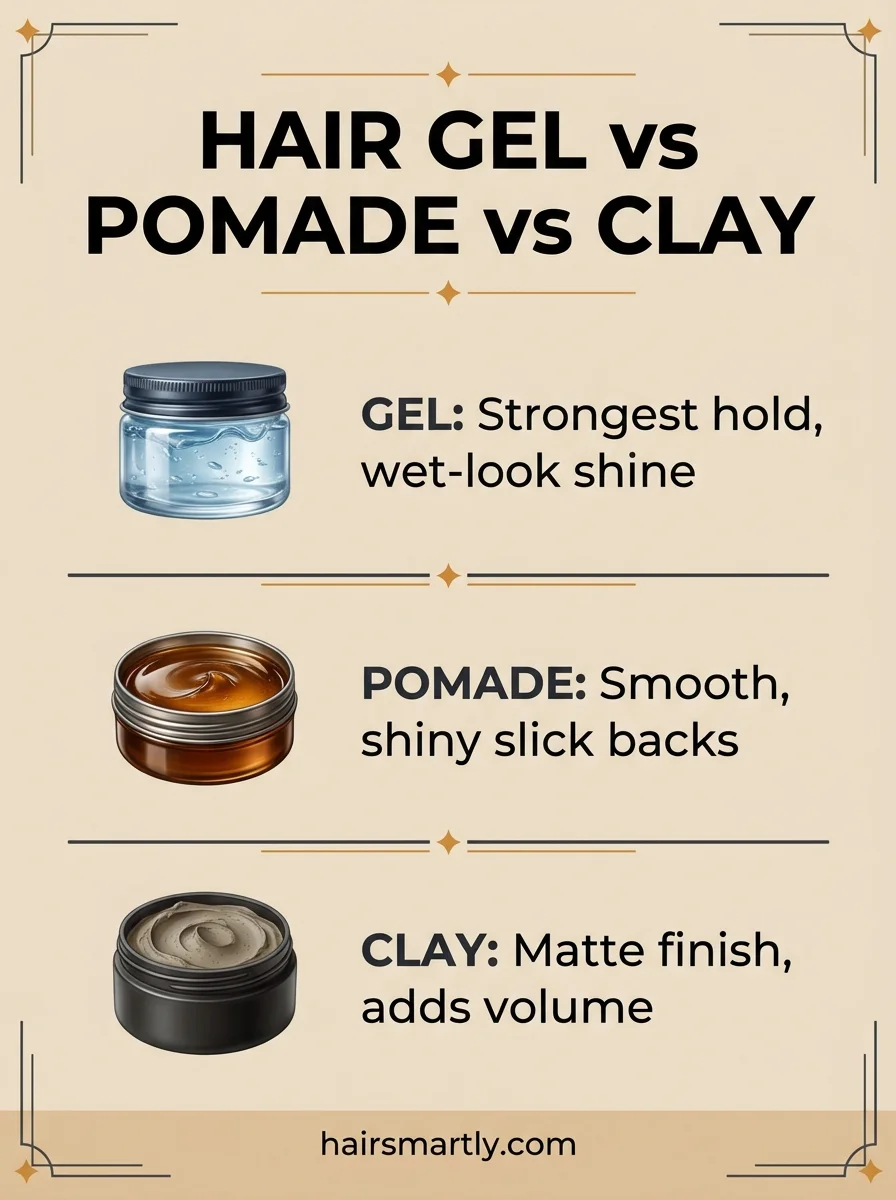
Quick answer on hair gel vs pomade vs clay: Choose hair gel for the strongest, fixed hold and a wet-look shine. Choose pomade for smooth, shiny, combed styles like slick backs and side parts. Choose hair clay for a matte, natural finish with volume and texture, especially on fine or flat hair.
The hair gel vs pomade vs clay question isn’t about which product is “best.” Each one holds hair in a completely different way. Gel forms a hard film, pomade coats the hair so it moves as one smooth unit, and clay grips individual strands to build thickness.
Pick the wrong one and you get the classic problems: crunchy spikes, greasy flat hair, or a quiff that collapses by lunch. This guide fixes that. It covers how each product works, which suits your hair type, haircut and climate, how to read the label, how to apply and wash each one out, and the myths about hair loss and acne.
Table of Contents
Hair Gel vs Pomade vs Clay: Comparison Chart
In the hair gel vs pomade vs clay matchup, gel wins on raw hold, pomade wins on shine and polish, and clay wins on volume and natural finish. Use this chart as your shortcut, then read the sections below for the details.
| Feature | Hair Gel | Pomade | Hair Clay |
|---|---|---|---|
| Hold | Strong to extra strong, sets rigid | Light to strong, flexible | Medium to strong, firm but pliable |
| Finish | High shine, wet look | Natural sheen to high gloss | Matte to low sheen |
| Feel in hair | Hard, crunchy once dry | Smooth, soft, slightly slick | Dry, thick, touchable |
| Adds volume? | No (clumps strands) | No (weighs hair down) | Yes (thickens strands) |
| Restyle during the day? | No, needs water to reset | Yes, especially water-based | Yes, with fingers |
| Washout | Very easy, water rinse | Water-based: easy. Oil-based: hard | Easy, one shampoo |
| Best hair type | Thick, coarse, curly (for definition) | Straight, wavy, thick | Fine, thin, flat, straight, wavy |
| Best styles | Spikes, wet-look slick backs, defined curls | Slick back, pompadour, side part, comb over | French crop, textured quiff, messy styles, crew cut |
| Hair length | Short to medium | Medium to long (2 to 5 inches on top) | Short to medium |
| Main downside | Flakes, stiffness, dryness | Grease, buildup, can flatten fine hair | No shine, can feel dry on coarse hair |
How Gel, Pomade and Clay Actually Hold Your Hair
The three products hold hair through three different mechanisms. Once you understand this, every other difference (shine, flakes, washout, volume) makes sense.
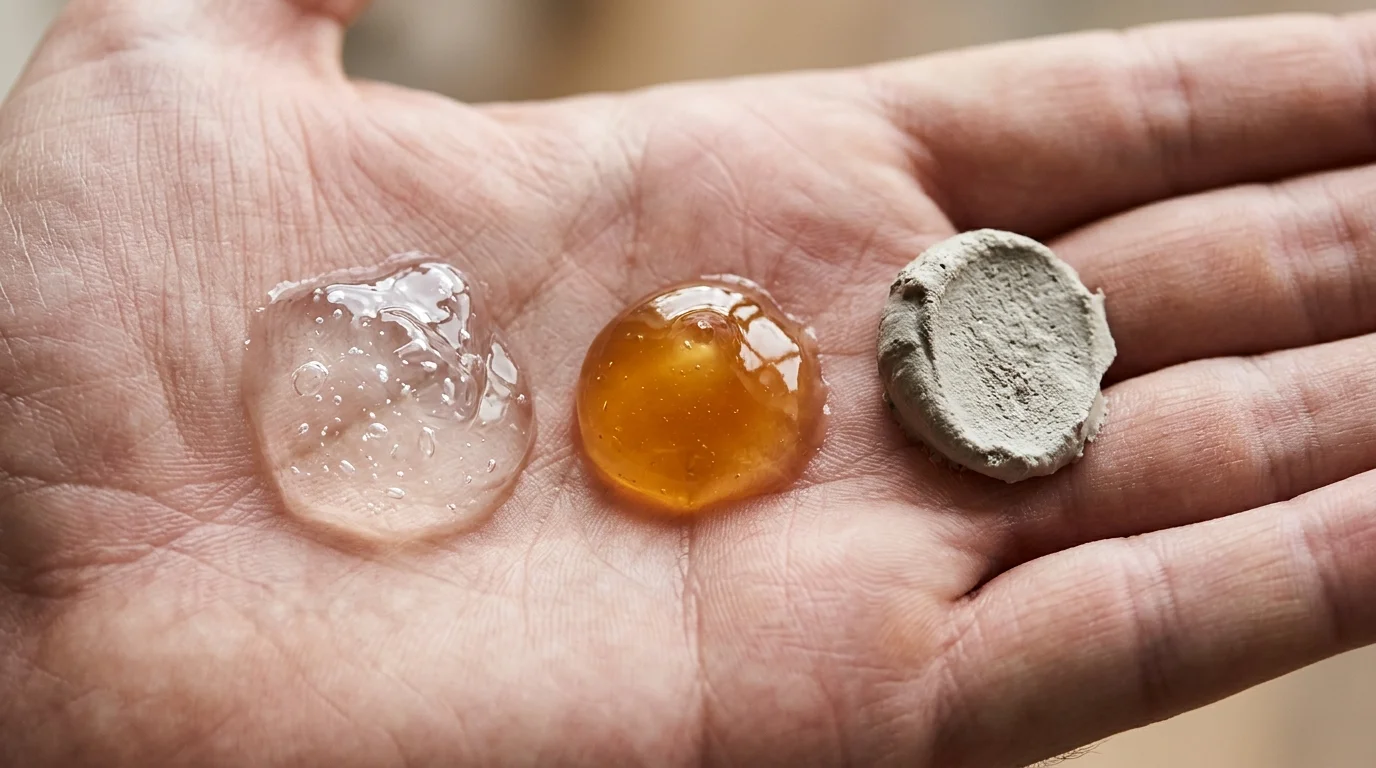
Gel: a hard polymer film
Gel is mostly water thickened with styling polymers such as PVP or carbomer. As the water evaporates, the polymers dry into a stiff, clear film that glues strands together. That film is why gel holds so hard, looks wet, and cracks into white flakes when you touch it.
Pomade: a flexible coating
Pomade coats the hair with oils, waxes or water-soluble emollients. It never fully dries, so strands stay slick and move together. That’s why pomade gives clean lines and shine, and why you can re-comb it hours later.
Clay: mineral grip
Clay uses mineral clays (usually kaolin or bentonite) mixed with waxes. The tiny clay particles add friction and bulk to each strand, so hair holds its shape and looks thicker. Clay particles scatter light instead of reflecting it, which gives the matte finish.
| Product | How it holds | What you see |
|---|---|---|
| Gel | Polymer film dries hard | Shine, rigid hold, possible flakes |
| Pomade | Coating that stays soft | Smooth lines, sheen, reworkable |
| Clay | Mineral particles add grip | Matte, volume, separation |
What Is Hair Gel?
Hair gel is a water-based styling product that dries into a hard film for maximum hold and high shine. It’s the cheapest and most widely available of the three, and still the go-to when a style must not move. That locked hold is why gel wins the pomade vs gel argument for spikes and wet looks.
Gel pros
- Strongest, longest-lasting hold of the three
- Wet-look shine for slick styles
- Defines curls and controls frizz
- Rinses out with plain water
- Low cost and sold everywhere
Gel cons
- Hair turns stiff and crunchy once dry
- No restyling without re-wetting
- Flakes if you overuse it or touch your hair
- Many formulas contain drying alcohols
- Clumps strands, so thinning areas show more scalp
Why gel flakes (and how to stop it)
Gel flakes because the dried polymer film cracks when hair bends or gets touched. Too much product, mixing gel with a leave-in or silicone product, and applying gel to dry hair all make it worse.
To stop flaking: use a coin-sized amount, apply it to damp (not dry) hair, keep your hands off once it sets, and pick an alcohol-free or “no-flake” formula. A light mist of water on dry hair can also soften old gel before you restyle.
What Is Pomade? (Oil-Based vs Water-Based)
Pomade is a smooth styling product that gives flexible hold and shine, so hair looks combed, polished and controlled. It’s the product behind classic barbershop styles like the slick back and pompadour. In pomade vs gel terms, you trade some hold for a softer, reworkable finish.
The single most important thing to know is that “pomade” covers two very different formulas.
| Oil-Based Pomade | Water-Based Pomade | |
|---|---|---|
| Main base | Petrolatum, mineral oil, lanolin, beeswax | Water plus emulsifiers and polymers |
| Shine | Very high, greaser look | Natural sheen to high shine |
| Hold | Strong, stays all day, never sets hard | Light to strong, can firm up slightly |
| Restyling | Re-comb any time, even next day | Re-comb, or reactivate with damp fingers |
| Washout | Hard, needs degreasing or several shampoos | Easy, regular shampoo or water |
| Humidity | Resists humidity well | Can soften or lose hold in heat and humidity |
| Skin risk | Higher risk of hairline breakouts | Lower risk |
| Best for | Vintage pompadours, ducktails, 360 waves | Everyday slick backs, side parts, office looks |
Pomade pros
- Smooth, polished finish with clean lines
- Flexible hold that never turns crunchy
- Restyle through the day
- Tames frizz and flyaways
Pomade cons
- Weighs down fine or thin hair
- Oil-based versions build up and are hard to wash out
- Can look greasy if overused
- Oil-based formulas can clog pores along the hairline
Watch out for naming confusion: labels like “matte pomade,” “clay pomade” or “fiber pomade” are marketing names. A matte pomade usually behaves like a clay or paste. Judge the product by its finish, hold and ingredients, not the word on the tin.
What Is Hair Clay?
Hair clay is a thick, matte styling product built on mineral clay that adds grip, volume and texture with a natural, no-product look. In the pomade vs clay choice, it’s the pick for volume. It became the modern barbershop staple as styles moved away from shine toward textured crops and messy quiffs.
How to spot a real clay
Check the ingredient list. A genuine clay names kaolin or bentonite near the top. If a “clay” lists no clay mineral, it’s really a wax or paste with a matte finish.
Clay pros
- Adds volume and makes fine hair look thicker
- Matte finish that looks like no product at all
- Strong grip with separation and texture
- Washes out with a single shampoo
- Lightweight and doesn’t shine under heat or lights
Clay cons
- No shine, so it can’t create sleek classic looks
- Can feel dry on very coarse or curly hair
- Needs warming in the palms and some technique
- Loses most of its hold on soaking-wet hair
Hair Gel vs Pomade vs Clay Head-to-Head: Hold, Shine, Volume, Restyling, Washout
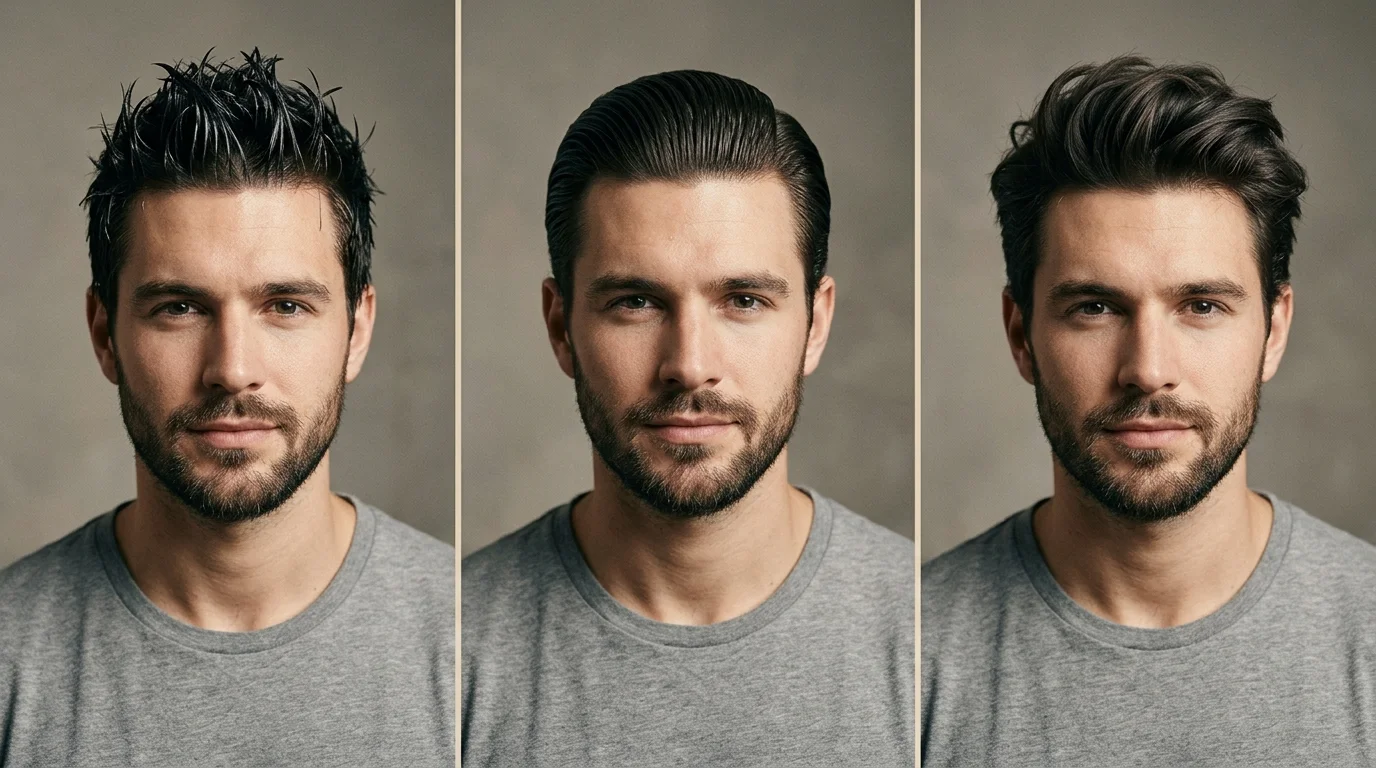
No product wins every round of hair gel vs pomade vs clay. Gel takes hold, pomade takes shine and restyling, and clay takes volume, natural finish and easy washout.
Hold strength: gel wins
Gel gives the most rigid, weather-proof hold because its film locks strands in place. Strong oil-based pomades come close but stay flexible. Clay’s hold feels strong yet movable, which suits textured styles rather than locked ones.
Shine and finish: pomade wins (if you want shine)
Pomade gives the most controllable shine, from a soft sheen to a full gloss. Gel shines too, but it can look plastic or wet. Clay is the only true matte option, so it wins if you want hair that looks unstyled.
Volume and thickness: clay wins
In the pomade vs clay matchup, clay is the only one that makes hair look fuller. Gel clumps strands together, and pomade smooths them flat, so both can make fine hair look thinner.
Restyling during the day: pomade wins
On restyling, pomade vs gel isn’t close. Water-based pomade reactivates with damp fingers, and oil-based pomade can be re-combed any time. Clay can be reshaped with fingers but firms up over the day. Gel can’t be restyled once set.
Washout: gel and clay tie
Gel rinses out with water, and clay comes out with one shampoo. Water-based pomade is easy too. Oil-based pomade is the hardest product to remove and often needs a degreasing routine.
Price and how long a tin lasts
Gel is the cheapest per jar but you use more of it. Clay and pomade cost more upfront, but a pea-to-dime-sized amount per use means a standard tin typically lasts one to three months of daily use.
| Round | Winner | Runner-up |
|---|---|---|
| Hold | Gel | Oil-based pomade |
| Shine control | Pomade | Gel |
| Natural matte finish | Clay | Matte pomade or paste |
| Volume | Clay | None |
| Restyling | Pomade | Clay |
| Easy washout | Gel and clay | Water-based pomade |
| Lowest cost | Gel | Water-based pomade |
Best Product for Your Hair Type
In any hair gel vs pomade vs clay decision, match the product to your hair first and your style second. Fine hair needs lift, thick hair needs control, and curly hair needs definition without grease. Pair your product with the right cut, too: our guide to haircuts for thin hair and our curly hair routine for men cover the next step.
| Hair type | Best choice | Why | Avoid |
|---|---|---|---|
| Fine or thin | Clay | Thickens strands and adds body | Gel and heavy oil-based pomade |
| Thinning or receding | Light clay | Lifts hair so less scalp shows | Gel (clumps strands and exposes scalp) |
| Thick or coarse | Strong pomade or gel | Enough grip to control dense hair | Light clay alone (may not hold) |
| Straight | Any (choose by style) | Pomade for sleek, clay for texture | Too much product, which goes flat |
| Wavy | Clay or water-based pomade | Clay keeps waves, pomade smooths them | Heavy gel that crunches waves |
| Curly | Gel or clay | Gel defines curls, clay separates them | Oil-based pomade (greasy, heavy) |
| Coily or Afro-textured | Gel for edges and definition, pomade for waves | Moisture plus control; pomade is classic for 360 waves | Drying clays on their own |
| Oily scalp | Clay or water-based products | Clay absorbs some oil | Oil-based pomade |
Best Product for Your Haircut
Your haircut usually decides the product for you. Shiny, combed styles need pomade; textured, messy styles need clay; locked or spiky styles need gel. For cut ideas, see our quiff hairstyle guide and French crop haircut guide.
| Haircut or style | Best product | Finish |
|---|---|---|
| Slick back | Pomade (gel for a wet look) | Shiny |
| Pompadour | Oil-based or strong water-based pomade | High shine |
| Side part or comb over | Water-based pomade | Natural sheen |
| Ivy League or business cut | Water-based pomade or light clay | Low to medium shine |
| Textured quiff | Clay | Matte |
| French crop or textured fringe | Clay | Matte |
| Crew cut or short taper | Clay | Matte |
| Faux hawk or spikes | Gel or strong clay | Shiny (gel) or matte (clay) |
| Curly top with fade | Gel or curl-friendly clay | Defined |
| Wet-look slick style | Gel | High shine |
| Medium flow or longer hair | Light pomade or cream | Soft, natural |
Best Product for Heat, Humidity, Sweat and Your Routine
Climate and lifestyle change which product survives the day. In heat and humidity, matte clay and oil-based pomade usually hold up better than water-based products, which can soften as they absorb moisture.
| Situation | Best pick | Tip |
|---|---|---|
| Hot, humid climate (Gulf, South Asia, Southeast US) | Clay or strong oil-based pomade | Skip high-shine gel, which looks greasy in sweat |
| Dry heat | Clay | Matte finish doesn’t glare in sunlight |
| Gym or sports | Gel or strong clay | Wash out after training to protect the hairline skin |
| Office and long workdays | Water-based pomade or clay | Restyle at lunch with damp fingers |
| Helmets, caps or headgear | Clay | Easiest to reshape after hat hair |
| Night out or events | Pomade or gel | Photo-ready shine and all-night hold |
| Moving between heat and air-conditioning | Clay or water-based pomade | Both can be reshaped instead of redone |
| Minimal-effort mornings | Clay | Rough-dry, apply, finger-style, done |
How to Read the Label Before You Buy
The first three ingredients tell you what a product really is, whatever the front of the tin says. Ingredients are listed from highest to lowest amount.
| If the first ingredients include | It behaves like | What to expect |
|---|---|---|
| Water (aqua) + PVP, PVP/VA copolymer or carbomer | Gel | Hard hold, shine, easy rinse |
| Alcohol denat. high on the list | Gel or spray | Fast drying, can dry out hair |
| Petrolatum, mineral oil, lanolin | Oil-based pomade | High shine, hard to wash out |
| Water + emulsifiers (e.g. PEG or ceteareth compounds) | Water-based pomade | Sheen, easy washout |
| Kaolin or bentonite | Clay | Matte, volume, grip |
| Beeswax, carnauba or candelilla wax | Wax-heavy clay, paste or pomade | Flexible hold, slight shine |
Two quick checks: if “aqua” is first, it washes out easily. If petrolatum or mineral oil is first, plan on a degreasing wash.
How to Apply Gel, Pomade and Clay
The biggest application rule: gel goes on damp hair, clay goes on dry hair, and pomade works on either depending on the finish you want.
| Product | Hair state | Amount (short / medium hair) | Tool |
|---|---|---|---|
| Gel | Damp | Coin-sized / two coins | Fingers, then comb |
| Water-based pomade | Damp for soft finish, dry for more shine and hold | Pea / dime | Fingers, then fine comb |
| Oil-based pomade | Dry | Pea / dime | Comb |
| Clay | Dry or towel-dried | Pea / dime | Fingers, blow-dryer for volume |
Applying hair gel
- Towel-dry hair until damp, not dripping.
- Rub a coin-sized amount between your palms.
- Work it from roots to ends, back to front.
- Comb or shape the style.
- Let it set and stop touching it to avoid flakes.
Applying pomade
- Start with damp hair for a softer look or dry hair for more shine (oil-based on dry hair only).
- Scoop a pea-sized amount and warm it in your palms until it melts.
- Spread it evenly from the back of the head forward.
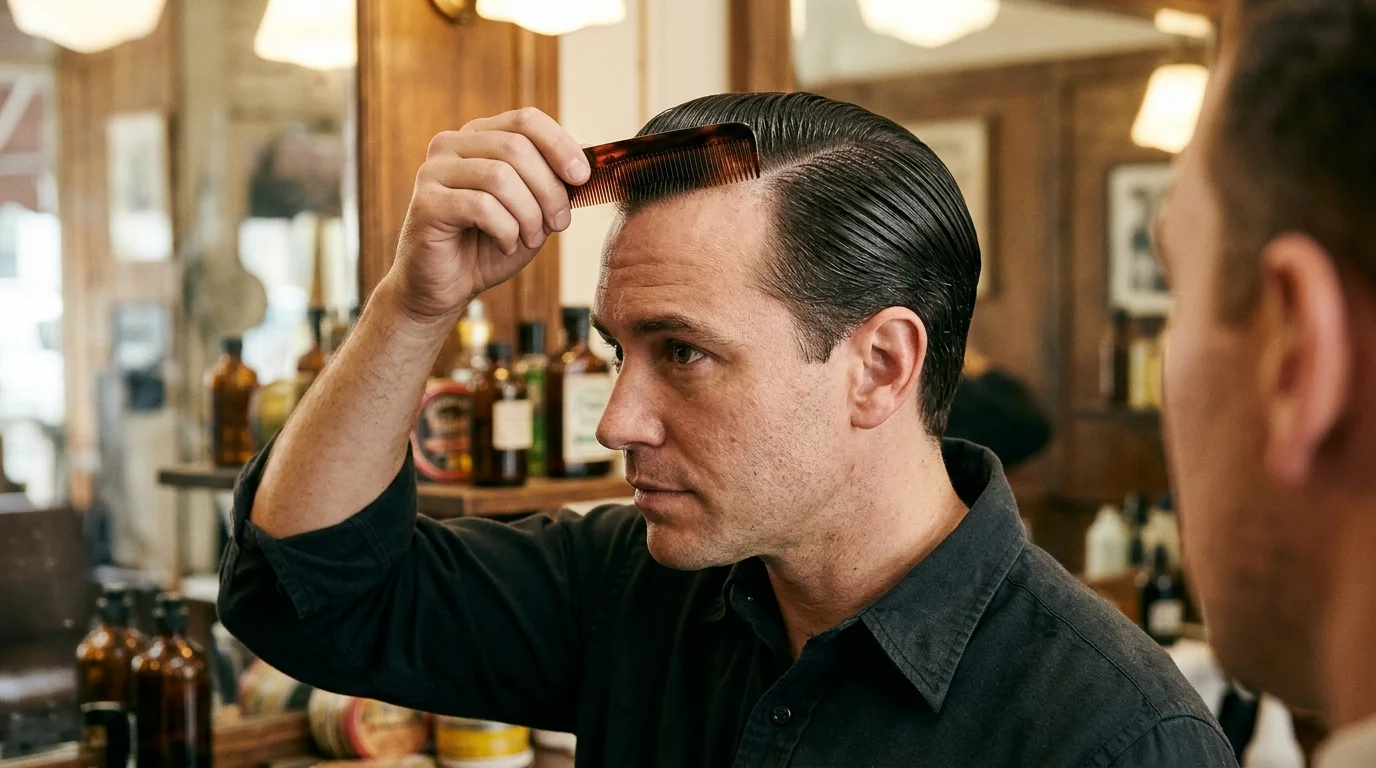
- Comb into shape, then smooth the surface with a fine-tooth comb.
- Add a little more only if you need extra hold.
Applying hair clay
- Towel-dry or blow-dry hair. For more volume, blow-dry the roots upward first.
- Scoop a pea-sized amount and rub your palms until it turns soft and invisible.
- Work it into the roots first, then pull through to the ends.
- Shape with your fingers for texture, twisting a few pieces for separation.
- Build in small amounts. Too much clay looks dull and heavy.
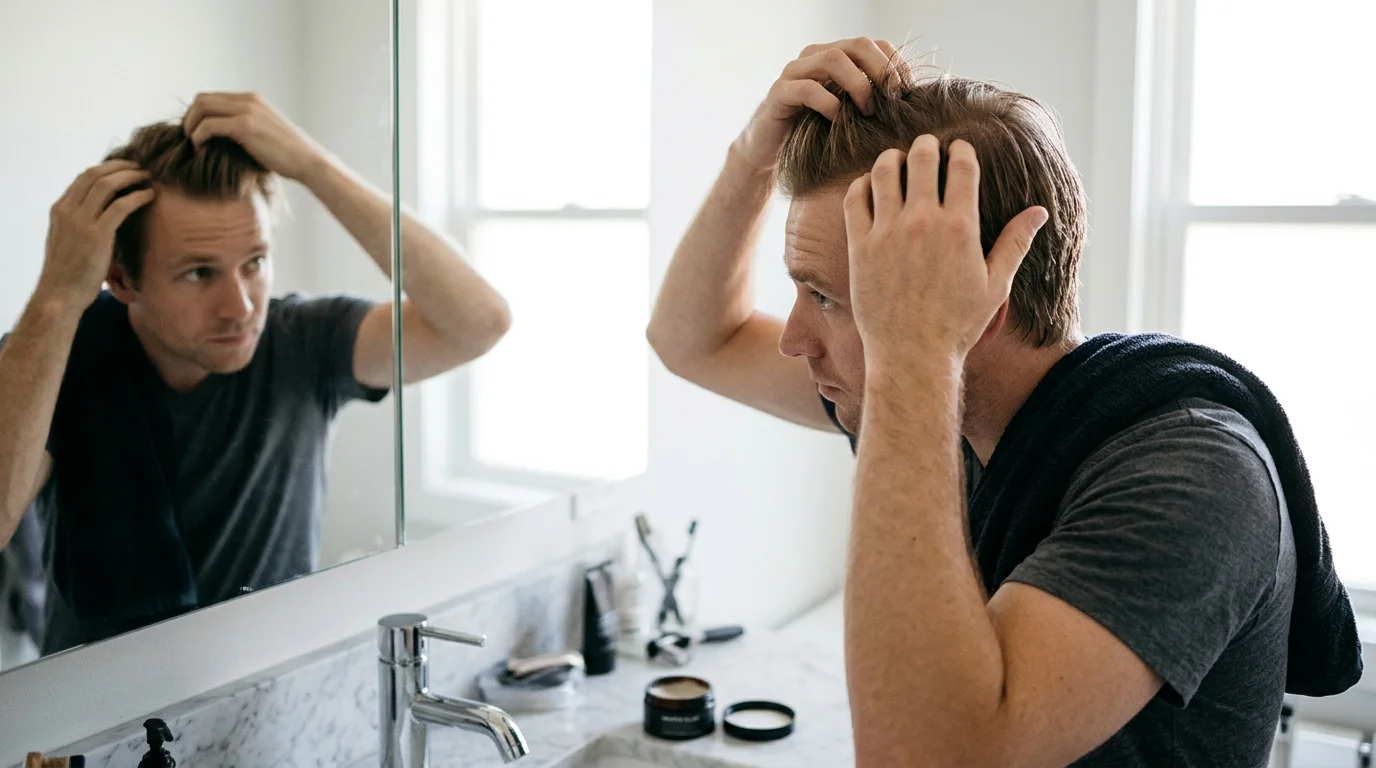
Hairline tip for all three: apply product at least two finger-widths behind your hairline, then comb it forward. This keeps product off your forehead and lowers the risk of breakouts.
Can You Mix Them?
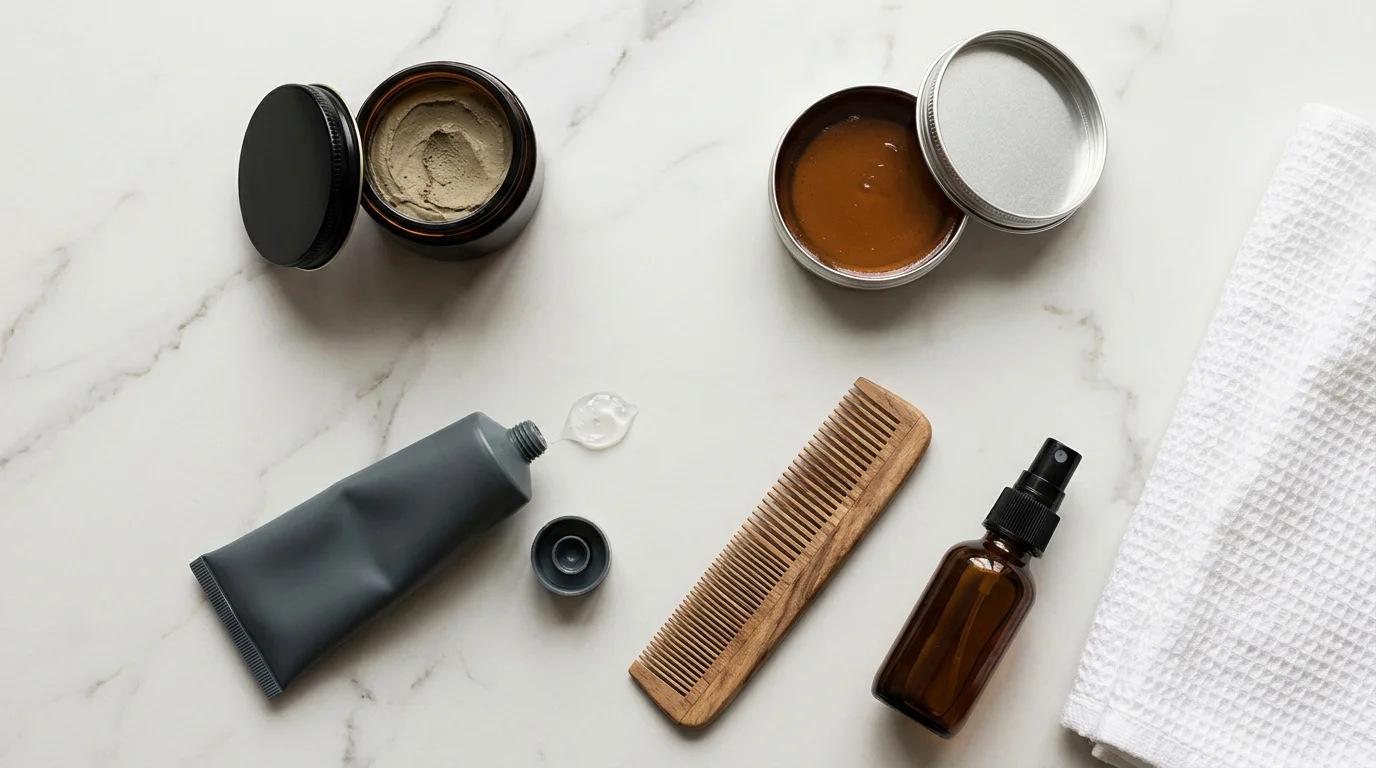
Yes, and many barbers do. Layering lets you borrow one product’s strength to cover another’s weakness.
| Combo | Order | Result |
|---|---|---|
| Clay + pomade | Clay first, a tiny bit of pomade on top | Texture and volume with a soft sheen |
| Sea salt spray + clay | Spray on damp hair, blow-dry, then clay | Maximum volume, less clay needed |
| Gel + clay | Thin layer of gel on damp roots, clay on dry hair | Strong lift with a matte finish |
| Pomade + hairspray | Pomade first, light mist to finish | Classic shine with all-night hold |
Pomade under clay rarely works, because the pomade’s slickness cancels the texture clay is meant to create. Avoid gel mixed with oil-based pomade, which turns greasy and flaky at the same time.
How to Wash Each One Out
Gel and clay wash out with a normal shampoo. Oil-based pomade needs a different method because water alone slides off the oils.
- Gel: rinse with warm water, then shampoo once.
- Clay: one round of shampoo; a second only after heavy use.
- Water-based pomade: warm water plus one shampoo.
- Oil-based pomade: work a degreasing shampoo or plain conditioner into DRY hair first, massage for a minute, then add water and lather. Repeat if needed. Use a clarifying shampoo once a week if you wear it daily.
Wash product out before bed. It protects your pillowcase, your skin and your scalp from buildup.
Hair and Skin Health: Myths vs Facts
None of these three products causes baldness, but any of them can cause breakouts along the hairline if it sits on the skin. Here’s what’s true and what’s marketing.
| Claim | Verdict | The facts |
|---|---|---|
| “Gel causes hair loss” | Myth | Gel sits on the hair shaft, not the follicle. Hair loss in men is mostly genetic. Stiff, gel-coated hair can snap if you comb it hard, which is breakage, not balding. |
| “Pomade causes acne” | Partly true | Dermatologists recognize “pomade acne” (a type of acne cosmetica): small bumps along the hairline and forehead caused by oily products clogging pores. Oil-based pomades carry the highest risk. |
| “Clay makes your hair grow” | Unproven | Some brands claim clay nourishes the scalp or promotes growth. There’s no solid evidence for this. Clay’s benefit is cosmetic: it makes hair look thicker. |
| “Gel dries out your hair” | Often true | Formulas high in drying alcohol can leave hair brittle with daily use. Alcohol-free gels reduce this. |
| “Product must be washed out every night” | Good practice | Not strictly required for water-based products, but it prevents buildup, pillow transfer and hairline breakouts. |
| “Tight styling can cause hair loss” | True (but not the product) | Repeated tight pulling can cause traction alopecia. That’s from the tension of the style, not the gel, pomade or clay. |
If you get bumps along your hairline: switch to a water-based or oil-free product, apply it away from the hairline, wash your face after styling and before bed, and change your pillowcase often. If breakouts continue after you stop using the product, see a dermatologist, because the cause may be something else. Research published in the Journal of Drugs in Dermatology links hair care products to hairline acne, and Acne.org explains how leave-in products can trigger breakouts.
Common Mistakes to Avoid
Most bad hair days come from using the right product the wrong way. These are the mistakes barbers see most.
- Using too much. Start with a pea-sized amount. Adding is easy; removing means rewashing.
- Clay on soaking-wet hair. Water stops the clay from gripping, and you lose most of the hold.
- Gel on dry hair. It spreads unevenly and flakes faster.
- Skipping the warm-up. Clay and pomade must be rubbed in your palms until soft, or they clump.
- Applying only to the top layer. Get product to the roots for lift and lasting hold.
- Pomade on fine hair. It flattens hair and can make it look thinner.
- Never clarifying. Oil-based pomade users need a weekly deep clean to stop buildup.
- Choosing by brand name, not finish. Decide on hold and shine first, then pick a product.
- Product on the hairline. It raises your breakout risk and makes the front look greasy.
3-Question Decision Guide
Still stuck on hair gel vs pomade vs clay? Answer three questions and you’ll have your product in under a minute.
1. Do you want shine?
- Yes, wet look and locked hold → Gel
- Yes, smooth and polished → Pomade
- No, natural matte → Clay (go to question 3)
2. If pomade: how easy should it be to wash out?
- Easy every day → Water-based pomade
- Don’t mind extra effort for vintage shine and humidity resistance → Oil-based pomade
3. If clay: is your hair fine or thick?
- Fine or flat → Light to medium-hold clay (add sea salt spray for extra volume)
- Thick or coarse → Strong-hold clay, or a clay with a little pomade on top
FAQs
Pomade vs gel: which is better?
Pomade is better if you want a flexible, touchable style you can restyle during the day. Gel is better if you need the strongest possible hold that won’t move in wind or sweat. For most everyday classic styles, a water-based pomade looks more natural and avoids gel’s crunch and flakes.
Is clay better than gel for natural-looking hair?
Yes. Clay gives a matte, no-product look with movable hold, while gel dries into a shiny, rigid shape. Gel still wins when you need a style locked in place, such as spikes or a wet-look slick back.
Which is best for thin or thinning hair: gel, pomade or clay?
Clay is best for thin or thinning hair. It thickens each strand and lifts the roots, so less scalp shows. Gel and heavy pomade clump or flatten hair, which can make thinning areas more visible.
Which gives the strongest hold?
Gel gives the strongest hold because it dries into a hard film. Strong oil-based pomades and high-hold clays come next, but both stay flexible. If you need hold plus a natural finish, use a strong clay and finish with a light mist of hairspray.
Can I use pomade or clay every day?
Yes. Water-based pomade and clay are fine for daily use and wash out easily. If you use oil-based pomade every day, add a clarifying or degreasing wash once a week to prevent buildup on your scalp.
Does hair gel cause baldness?
No. Gel sits on the hair shaft and doesn’t affect the follicle. Male hair loss is mainly genetic. Rough combing of stiff, gel-coated hair can cause breakage, and drying alcohols can leave hair brittle, so choose alcohol-free gel and be gentle.
Matte pomade vs clay: what’s the difference?
A true clay contains a clay mineral such as kaolin or bentonite, which adds volume and grip. “Matte pomade” is a marketing name for a low-shine product that may or may not contain clay. Check the ingredients to know which you’re buying.
Which product is best for curly hair?
Gel is best for defined, frizz-free curls, while clay is better for loose, separated, natural-looking curls. Oil-based pomade usually makes curly hair look greasy and weighed down.
Which is best for hot and humid weather?
Clay and oil-based pomade usually hold best in heat and humidity. Water-based products can soften as they absorb moisture, and shiny gel can look greasy in sweat.
Final Verdict
There’s no single winner in the hair gel vs pomade vs clay debate, only the right tool for your hair and the look you want.
- Pick gel for maximum hold, a wet look, spikes or defined curls.
- Pick pomade for polished, shiny, combed styles: water-based for daily use, oil-based for vintage shine.
- Pick clay for modern, matte, textured styles and whenever you need more volume, especially on fine hair.
Still unsure? Start with a medium-hold clay. It suits the widest range of hair types and modern haircuts, washes out easily, and is the hardest to get wrong.
Want a routine that matches your hair? Read our men’s hair styling guide to find your hair type and style it in five minutes, then compare top picks in our roundup of the best hair styling products for men.