

A good curly hair routine has five parts: cleanse, condition and detangle, style on wet hair, dry without touching, and refresh between washes. That’s it. Everything else is fine-tuning for your curl type, porosity, climate and how much time you have.
Most curly hair advice fails beginners in one of two ways. Either it’s a 12-product routine that takes two hours, or it’s a vague “just use gel” tip that doesn’t explain why your curls still frizz by noon.
This guide fixes both. You’ll get the exact wash day steps, a table that tells you which products you actually need, routines for 15, 30 and 60+ minutes, a weekly schedule, and a troubleshooting chart for when things go wrong.
Quick Answer: The Basic Curly Hair Routine
- Shampoo your scalp (clarify once or twice a month).
- Condition the lengths and detangle with fingers or a wide-tooth comb.
- Apply leave-in or curl cream (optional) and a gel or mousse to soaking wet hair.
- Scrunch, then blot excess water with a microfiber towel or cotton T-shirt.
- Air-dry or diffuse without touching.
- Once 100% dry, scrunch out the crunch.
- Protect at night and refresh only the sections that need it.
Table of Contents
Know Your Hair Before You Build a Curly Hair Routine
Three things decide which routine works for you: curl pattern, porosity and density. Curl pattern gets all the attention, but porosity and density usually explain why a product works for your friend and fails on you.
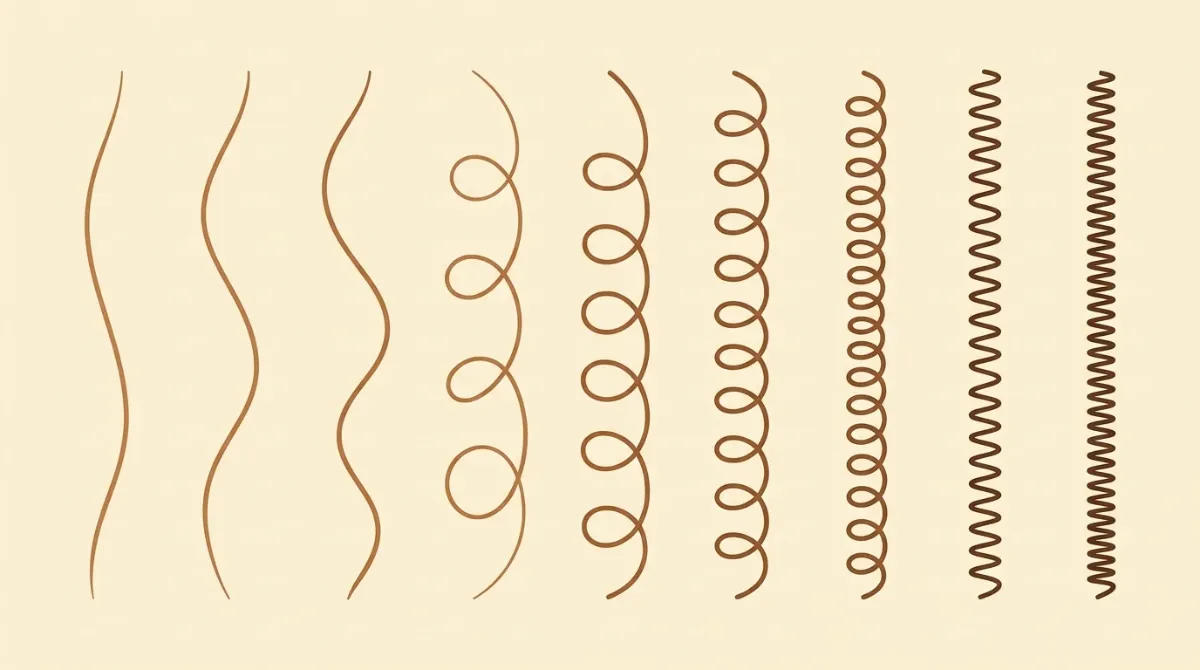
Curl Pattern (2A to 4C)
Curl pattern is the shape of your strands. Most heads have two or three patterns, often looser at the crown and tighter underneath, so treat it as a rough guide.
| Type | Looks like | Main challenge |
|---|---|---|
| 2A–2C (waves) | S-shaped bends, flat at the roots | Weighed down easily, frizz |
| 3A–3C (curls) | Defined spirals, pencil to marker size | Frizz, losing definition by day 2 |
| 4A–4C (coils) | Tight coils or zigzags, lots of shrinkage | Dryness, tangles, breakage |
Wavy rather than curly? Our guide to wave types and wavy hair care covers 2A–2C hair in more depth.
Porosity: How Well Hair Absorbs and Holds Water
Porosity often matters more than curl type when choosing products.
- Low porosity: water beads on the hair, products sit on top, hair takes ages to get wet and to dry. Use lightweight, water-based products and warm water.
- Medium porosity: absorbs and holds moisture well. Most standard curly routines work.
- High porosity: soaks up water fast and dries fast, often frizzy or damaged from bleach or heat. Needs richer conditioners, leave-ins and occasional protein.
Quick test: after washing, wet a section and watch it. If water sits on the strand for a while, you’re likely low porosity. If the strand goes wet and frizzy almost instantly, you’re likely high porosity. The float test in a glass of water is popular, but product residue skews it, so use it as a hint, not a verdict.
Density and Strand Width
Density is how many strands you have. Width is how thick each strand is.
- Fine or low-density hair needs less product and lighter stylers like mousse.
- Thick or high-density hair needs sectioning so product reaches every strand, and usually stronger gels or creams.
Curly Hair Routine at a Glance
Here’s the whole routine in one table, with what each step does and whether you can skip it.
| Step | What you do | Why it matters | Skip it? |
|---|---|---|---|
| 1. Pre-detangle | Finger-detangle dry hair with a little oil or conditioner | Fewer knots and less breakage in the shower | Optional |
| 2. Cleanse | Shampoo the scalp; clarify every 2–4 weeks | Clean hair holds styler and clumps better | No |
| 3. Condition | Conditioner on lengths, detangle, rinse | Adds slip and softness | No |
| 4. Leave-in | Light leave-in on soaking wet hair | Extra softness for dry or high-porosity curls | Yes, for fine waves |
| 5. Styler | Gel, mousse or cream, raked or scrunched in | Hold and frizz control | No |
| 6. Blot | Microplop with microfiber towel or T-shirt | Cuts drying time, sets clumps | Optional |
| 7. Dry | Air-dry or diffuse, hands off | Keeps curl clumps intact | No |
| 8. Finish | Scrunch out the crunch, optional drop of oil | Soft, touchable curls | No |
Step-by-Step Curly Hair Routine for Wash Day
Wash day sets up how your curls behave for the next 3 to 5 days. Follow these steps in order; the optional ones are marked.
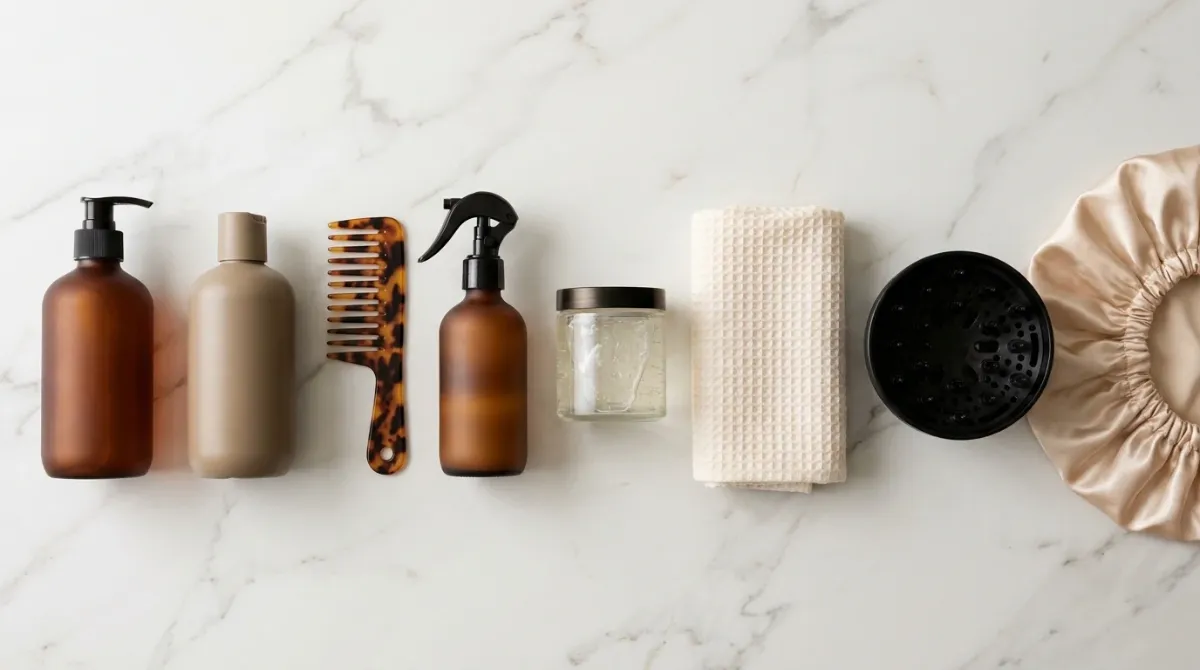
Step 1: Pre-Detangle Dry Hair (Optional)
If your hair knots easily, finger-detangle before you get in the shower. Apply a little oil or conditioner to the lengths and gently separate knots, ends first. This makes shampooing easier and prevents matting, especially for 4A–4C coils.
Step 2: Cleanse Your Scalp Properly
Shampoo is not the enemy of curls; buildup is. Wet hair fully, then massage shampoo into the scalp with your fingertips, not your nails. Let the suds rinse through the lengths. Dense hair? Section it so you reach the scalp underneath.
- Regular wash: a gentle shampoo, 1 to 3 times a week depending on how oily your scalp gets.
- Clarifying wash: every 2 to 4 weeks, or when curls feel coated, limp or waxy. Use a chelating shampoo if you have hard water.
- Co-wash: a cleansing conditioner for very dry coils between shampoos. It’s not a full replacement for shampoo.
Sulfate-free isn’t automatically better. Judge a shampoo by how clean your scalp feels and how soft your lengths feel after conditioning.
Step 3: Condition and Detangle in the Shower
Apply conditioner from mid-lengths to ends, using plenty. Add a splash of water for extra slip, then detangle with fingers, a wide-tooth comb or a wet detangling brush, working from ends up. The American Academy of Dermatology recommends detangling curly hair while it is wet and conditioned, not dry.
Use a deep conditioner instead of regular conditioner once a week or when curls feel rough. Use one or the other on the same day, not both.
Rinse until hair feels soft but not slippery. Leftover conditioner is a common reason gel doesn’t hold.
Step 4: Keep Hair Soaking Wet and Add Leave-In (Optional)
This is where most beginners go wrong. Curls start to frizz as they dry, so products applied to damp, fuzzy hair lock that frizz in. Style while hair is still dripping or very wet. If a section dries, mist it again.
If your curls are dry, coarse or high porosity, smooth a lightweight leave-in through the lengths first. Fine waves can skip it.
Step 5: Apply Your Styler
Use one styler to start, usually a gel or mousse. Add a cream only if you need more softness. Apply in this order: leave-in, then cream, then gel or mousse.
- Rake: run product through with spread fingers for even coverage and definition.
- Praying hands: smooth product between flat palms over sections to reduce frizz.
- Brush style: use a brush to distribute product evenly and form bigger clumps.
Start with a nickel-sized amount per side and add more until every section feels coated. Lift hair at the roots as you apply to avoid flat roots.
Step 6: Scrunch and Microplop
Scrunch hair upward toward the scalp to encourage curl formation. Then gently squeeze out excess water with a microfiber towel or cotton T-shirt. Never rub with a terry towel; it roughens the cuticle and causes frizz.
If you want extra hold, apply a second light layer of gel with praying hands after microplopping. This reinforces the cast and helps on humid days.
Step 7: Dry Without Touching
Air-drying gives more length and less heat exposure. Diffusing gives more volume, more definition and a faster dry. Either works, as long as you don’t touch your curls while they’re wet.
To diffuse, use low or medium heat and low airflow. Cup sections in the diffuser bowl, hold for 30 to 60 seconds, then move on. Use a heat protectant if you diffuse often.
If you style at night, make sure hair is at least mostly dry before bed.
Step 8: Scrunch Out the Crunch (SOTC)
Gel dries into a firm, crunchy layer called a cast. It means your hold is working. Once hair is 100% dry, scrunch upward with dry hands to break the cast. Rub a drop of oil between your palms first if your ends feel dry. Fluff the roots with your fingertips for volume.

Leave-In, Curl Cream, Mousse or Gel: Which Do You Need?
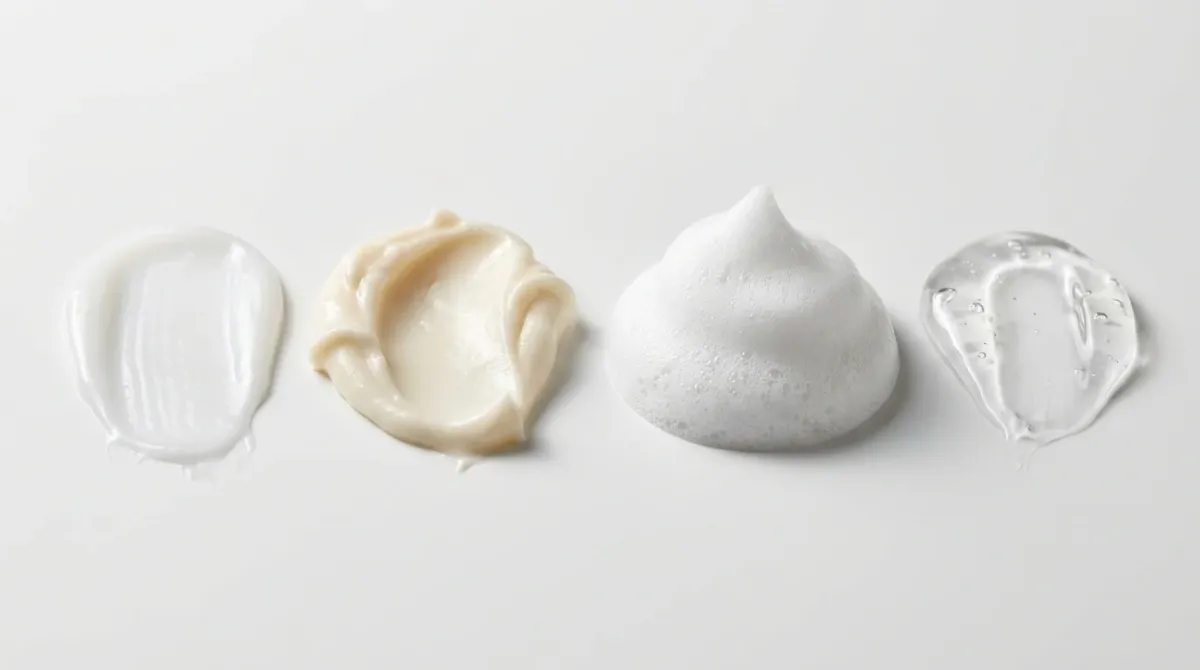
Most curly hair routines need only one or two stylers. Moisture products (leave-in, cream) add softness; hold products (mousse, gel) keep the shape. Curls that look soft but fall flat by noon usually need more hold, not more moisture.
| Product | Main job | Best for | Hold | Watch out for |
|---|---|---|---|---|
| Leave-in conditioner | Softness, slip | Dry, coarse, high-porosity curls | None | Too much weighs down fine waves |
| Curl cream | Softness, clumping | 3B–4C curls and coils | Light | Needs a gel on top for humid days |
| Mousse / foam | Volume, light hold | Fine waves and loose curls | Light–medium | Can feel drying on coarse hair |
| Gel | Definition, frizz control | All types, humid weather | Medium–strong | Crunchy cast until you scrunch it out |
| Oil / serum | Shine, seal ends | Dry ends after drying | None | Heavy if applied to roots |
Simple combos to start with:
- Fine 2A–2C waves: mousse only, or mousse + light gel.
- 3A–3C curls: leave-in + gel, or curl cream + gel.
- 4A–4C coils: leave-in + cream + gel (the classic LCG layering).
Want specific picks? See our roundup of the best curly hair products.
Curly Hair Routine by Curl Type, Porosity and Time
The core steps stay the same; what changes is product weight, how often you wash and how much styling effort you put in.
By Curl Type
| Waves (2A–2C) | Curls (3A–3C) | Coils (4A–4C) | |
|---|---|---|---|
| Wash frequency | 2–3 times a week | 2–3 times a week | Once a week or less |
| Conditioner | Lightweight | Medium | Rich + weekly deep condition |
| Leave-in | Skip or very light | Light | Yes, every wash |
| Styler | Mousse or light gel | Gel, cream + gel | Cream + strong gel or custard |
| Technique | Scrunch, light brush style | Rake, praying hands, finger coil | Sectioning, shingling, twist-outs |
| Drying | Diffuse for root lift | Diffuse or air-dry | Air-dry or low diffuse; stretch styles |
By Porosity
- Low porosity: use warm water to help products absorb, choose lighter, water-based formulas, apply to very wet hair, and clarify regularly because buildup shows fast.
- Medium porosity: follow the standard routine; adjust only when hair feels dry or coated.
- High porosity: use richer conditioners, layer leave-in under gel, add a protein treatment every few weeks, finish with a light oil to slow moisture loss, and keep heat low.
By Time: 15-Minute, 30-Minute and Full Routine
Effort affects results, but you don’t need a full wash day every time. Pick the version that fits your day.
| Routine | Steps | Trade-off |
|---|---|---|
| 15-minute | Shampoo, condition, rake one gel through soaking wet hair, scrunch, air-dry | More frizz and less day-2 hold |
| 30-minute | Add detangling, praying hands, microplop, quick diffuse to set the cast | Good definition, decent day-2 |
| Full (60+ min) | Pre-detangle, clarify or deep condition, section, leave-in + cream + gel, finger coil problem areas, full diffuse | Best definition and longest-lasting curls |
Time-saving tip: don’t style every section. Focus on the crown, the part line and face-framing curls, the areas people actually see. Everything else gets a quick rake and scrunch.
Weekly Curly Hair Routine Schedule
A weekly plan stops you from over-washing and over-producting. Here’s a sample week for 3A–3C curls; waves can add a mid-week wash, coils can drop one.
| Day | What to do |
|---|---|
| Sunday | Full wash day + deep conditioner |
| Monday | Day 2: leave it alone or fluff roots |
| Tuesday | Day 3: water-only refresh on flat sections |
| Wednesday | Regular wash day (shampoo, condition, styler) |
| Thursday | Day 2: leave alone |
| Friday | Day 3: refresh with water + a little gel |
| Saturday | Day 4: updo, or wash if scalp feels oily |
| Every 2–4 weeks | Swap one wash for a clarifying wash |
How to Refresh Curls on Day 2, 3 and 4
Refresh only what’s lost shape, not your whole head.
- Mist flat or frizzy sections with water (add a few drops of leave-in to the bottle for dry hair).
- Smooth a pea-sized bit of gel or cream over the section with praying hands.
- Scrunch, or finger coil face-framing pieces.
- Let it dry, or diffuse for a minute, before touching.
If hair feels sticky when wet, there’s already enough product in it. Use water only and plan your next wash.
Night Routine to Protect Your Curls
Friction from cotton pillowcases is the main reason curls look flat and frizzy in the morning.

- Sleep on a satin or silk pillowcase, or wear a satin bonnet.
- Pineapple longer curls: gather them loosely on top of your head with a soft scrunchie.
- Loose braids or twists work well for waves and coils.
- Never go to bed with soaking wet hair; it dries flat and can stay damp at the scalp.
Adjust Your Curly Hair Routine for Humidity, Hard Water and Protein
The same routine can give great curls in one city and frizz in another. Weather, water and protein balance are the three hidden variables most guides skip.
Humid and Hot Weather
In high humidity, hair pulls moisture from the air and swells, which breaks up curl clumps.
- Use a strong-hold gel as your last layer; it seals the hair better than cream alone.
- Add a second gel layer after microplopping.
- Go lighter on humectant-heavy products (high glycerin or honey) on very humid days.
- Dry fully before going outside; damp curls frizz fastest.
Dry or Cold Weather
In dry air, humectants can pull moisture out of your hair instead of in.
- Layer a leave-in or cream under your gel.
- Choose stylers with oils or butters rather than glycerin-first formulas.
- Finish with a few drops of oil on the ends.
Hard Water
Hard water leaves calcium and magnesium deposits that make curls feel dry, dull and rough, and stop products from working. Signs: hair feels coated right after washing, and products seem to stop working over time.
- Use a chelating or clarifying shampoo every 2 to 4 weeks.
- Consider a shower filter if you live in a hard-water area.
- Do a final rinse with filtered or bottled water if build-up is severe.
Protein vs Moisture Balance
Curls need both. Too little protein and they feel mushy and won’t hold a curl. Too much and they feel stiff, straw-like and snap easily. This review of hair cosmetics and hair fiber damage explains why damaged, porous hair loses strength and moisture faster.
| Hair feels | Likely need | What to do |
|---|---|---|
| Mushy, overly stretchy, limp, won’t hold curls | Protein | Use a protein mask or protein-containing leave-in |
| Stiff, rough, breaks without stretching | Moisture | Deep condition, skip protein products for a few washes |
| Soft, bouncy, stretches slightly and returns | Balanced | Keep your routine as is |
Stretch test: gently stretch a wet strand. If it stretches far and doesn’t bounce back, you need protein. If it snaps with little stretch, you need moisture.
Curly Hair Routine for Men, Kids and Transitioning Hair
The basics don’t change, but each group has its own shortcuts and pitfalls.
Curly Hair Routine for Men
Men’s curls are often shorter, which means less weight and more frizz at the top.
- Shampoo 2 to 3 times a week, conditioner every wash.
- On soaking wet hair, scrunch in a curl cream or light gel. Skip hair wax and clay pomades on wet curls; they flatten the pattern.
- Blot with a T-shirt, then air-dry hands-off.
- Ask your barber for a cut that keeps length on top and avoid thinning shears, which cause frizz in curls.
For a full men’s version with cuts and product picks, read our curly hair routine for men.
Curly Hair Routine for Kids
Keep it short and gentle; kids won’t sit through a 60-minute routine.
- Use a mild, tear-free shampoo once or twice a week.
- Detangle only with conditioner in, using fingers or a wide-tooth comb, from ends up.
- A leave-in conditioner is often enough as the only styler.
- Braids or loose twists at night reduce morning tangles.
The AAD also has simple advice on teaching children healthy hair care habits.
Transitioning or Heat-Damaged Curls
If you’re moving from years of straightening, your ends may be straight while the roots curl. This is normal.
- Get regular small trims every 8 to 12 weeks to cut damaged ends gradually, or one big chop if you prefer.
- Use a protein treatment every 2 to 4 weeks to support damaged lengths.
- Pause flat irons and use low heat on the diffuser.
- Styles like twist-outs, braid-outs or flexi rods blend the two textures while you grow out.
Curly Hair Routine Troubleshooting Chart
When your curls don’t turn out right, the symptom usually points straight to the cause. Change one thing at a time so you know what actually fixed it.
| Problem | Likely cause | Fix |
|---|---|---|
| Frizz all over | Styling on damp hair, touching while drying, weak hold | Apply styler to soaking wet hair; use stronger gel; hands off until dry |
| Curls flat by midday | Too little hold, too much moisture | Add or switch to a stronger gel; cut back leave-in |
| Flat roots | Heavy products at the scalp, no lift while drying | Lift roots while applying; clip roots; diffuse upside down |
| Hair feels coated or greasy | Buildup or hard water | Clarify or chelate; use less product |
| Stringy, separated curls | Too little product or no clumping technique | Use more styler; try praying hands or brush styling |
| Crunchy curls that stay crunchy | Cast not broken, or hair not fully dry | Wait till 100% dry, then scrunch with a drop of oil |
| Curls look different every wash | Inconsistent water level, amount or drying | Note amount, wetness and drying method; take a photo each time |
| Dry, rough ends | Moisture loss or damage | Deep condition weekly; seal ends with oil; trim |
Still fighting frizz? Our frizzy hair fixes go deeper on humidity, cuts and product swaps.
Common Curly Hair Routine Mistakes
- Brushing curls when dry. It breaks up clumps and causes frizz.
- Rubbing hair with a terry towel.
- Using too many new products at once, so you can’t tell what works.
- Skipping clarifying, so buildup slowly ruins results.
- Leaving conditioner in when it’s a rinse-out formula.
- Touching curls before they’re fully dry.
- Expecting results in one wash. Most people need 4 to 6 wash days to dial in a routine.
Many of these overlap with the general dermatologist tips for healthy hair.
Beginner Curly Hair Starter Kit
You don’t need a full shelf. Start with three products and two tools, then add only what solves a real problem.
| Must-have | Why | Add later if needed |
|---|---|---|
| Gentle shampoo | Clean scalp, good styler hold | Clarifying or chelating shampoo |
| Conditioner with good slip | Detangling, softness | Deep conditioner or mask |
| Medium-hold gel | Definition and frizz control | Leave-in, curl cream, mousse |
| Microfiber towel or cotton T-shirt | Less friction, faster drying | Diffuser attachment |
| Wide-tooth comb or wet brush | Gentle detangling | Satin pillowcase or bonnet |
Track it: keep a simple note after each wash day with the products, amounts, how wet your hair was, drying method and a photo of the result. After a month you’ll know exactly what works for your curls.
Curly Hair Routine FAQs
What is the correct order of a curly hair routine?
Shampoo, conditioner, leave-in (optional), curl cream (optional), gel or mousse, then dry and scrunch out the crunch. The rule of thumb is moisture first, hold last. A light oil goes on only after hair is fully dry.
How often should you wash curly hair?
Most waves and curls do well with 2 to 3 washes a week; coils often go once a week or less. Let your scalp decide: if it’s itchy, oily or flaky, wash it. Refresh with water between washes instead of doing a full wash day.
Should curly hair be wet or damp when applying products?
Soaking wet for most people. Curls begin to frizz as they dry, so product applied to damp hair locks frizz in. If your hair rarely frizzes, slightly damp hair can work and gives more volume.
Is the Curly Girl Method necessary?
No. The Curly Girl Method popularised useful habits like gentle detangling and avoiding rough towels. But strict rules such as never using sulfates or silicones don’t suit everyone. Many people get better results with a regular shampoo and occasional clarifying.
Why does my curly hair look frizzy after it dries?
The most common reasons are applying products to damp instead of wet hair, touching curls while drying, using a styler with too little hold, or buildup. Start by fixing the water level and keeping hands off until fully dry.
How long does it take to see results from a new curly hair routine?
Usually 4 to 6 wash days. Damaged or straightened hair can take a few months as healthy curls grow in and damaged ends are trimmed away.
Can I use oil as a leave-in for curly hair?
Oil alone doesn’t moisturise; it seals moisture that’s already there. Use a water-based leave-in first, then a little oil on the ends if needed.
Your Curly Hair Routine Doesn’t Need to Be Complicated
Clean scalp, good conditioner, styler on wet hair, hands off while it dries, protect it at night. Get those five right and you’ll have better curls than most complex 12-step routines deliver.
Start with the 3-product starter kit, follow the wash day steps for a month, and change one thing at a time. Your curls will tell you what they need.
Next step: pick your products with our best curly hair products guide, then save this page and use it as your wash day checklist.