
The best beard styles are the ones that fit three things: how thick your beard grows, the shape of your face, and how much time you will spend on upkeep. Get those right and almost any style works. Get them wrong and even a perfect barber cut looks off in a week.
This guide covers 30 different beard styles, from stubble to a full Viking beard. For each one you get the trimmer guard size, growth time, upkeep level and who it suits. You will also find sections for Black men, bald men, patchy beards and hot climates, which most beard guides skip.
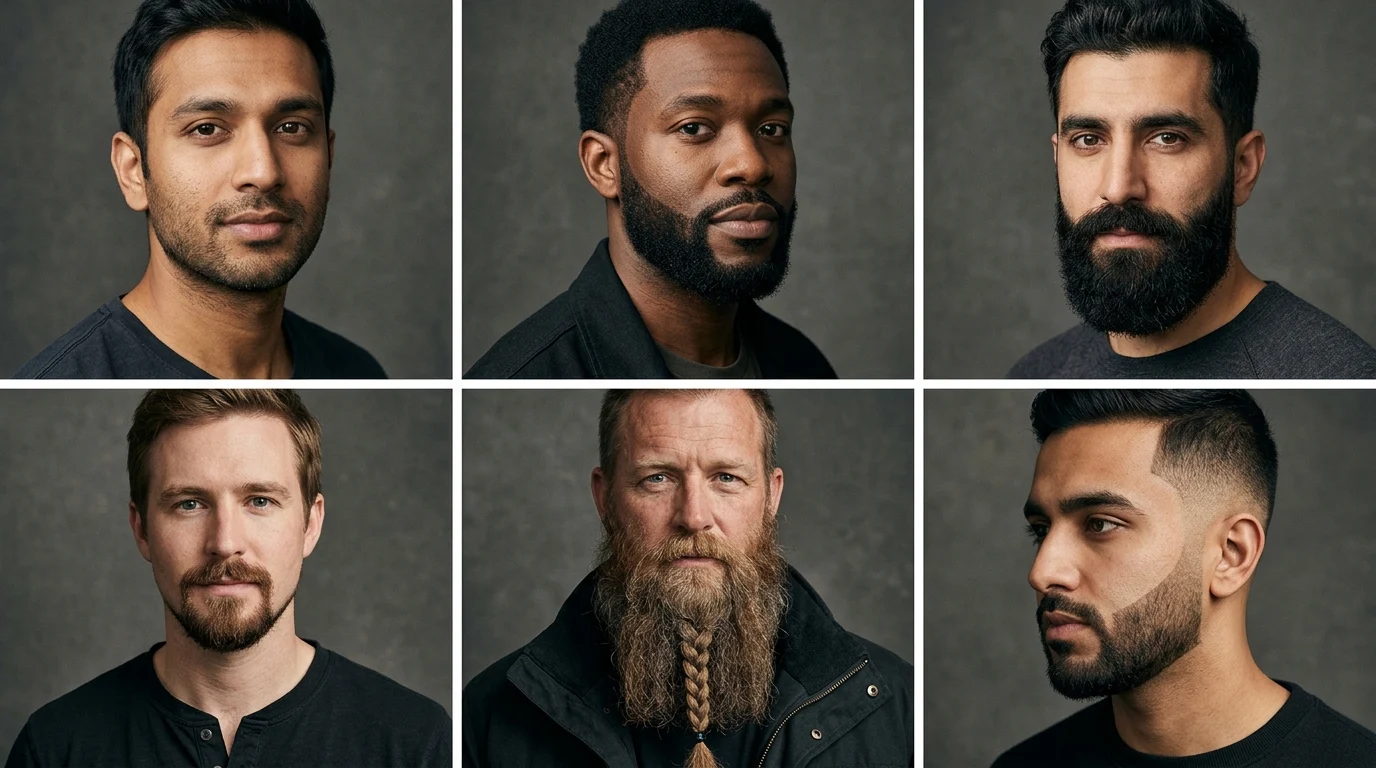
Quick answer: If you want one safe pick, choose a short boxed beard (6–13 mm, about 3–4 weeks of growth). It suits most face shapes, passes most office dress codes and hides mild patchiness on the cheeks.
Table of Contents
Beard Style Picker: Find Your Match in 30 Seconds
Start with density, not face shape. Your growth pattern decides which styles are even possible; face shape only fine-tunes the outline.
Step 1: Check your beard density
Grow everything out for 3–4 weeks without trimming, then look in daylight.
| Your growth after 4 weeks | Best style families | Avoid |
|---|---|---|
| Thick and even everywhere | Full beard, Viking, Garibaldi, Bandholz, boxed beard | Nothing; you can wear any style |
| Thin or patchy cheeks, strong chin and moustache | Goatee, Van Dyke, Balbo, anchor, circle beard | Full beard, chin strap |
| Strong cheeks, weak moustache link | Short boxed beard, chin curtain, faded beard | Goatee, Van Dyke |
| Light growth overall | Stubble, 5 o’clock shadow, short faded beard | Anything over 2 cm |
Step 2: Match the outline to your face shape
The rule is simple: a beard should add what your face lacks. Add length to round faces, width to long faces, and softness to very angular jaws.
| Face shape | How to tell | Best beard styles | Why it works |
|---|---|---|---|
| Oval | Length slightly more than width, soft jaw | Almost any; short boxed, full beard, Balbo | Already balanced, so keep proportions even |
| Round | Width close to length, soft cheeks | Goatee, Van Dyke, anchor, ducktail, short boxed with tight sides | Longer chin + short sides make the face look longer |
| Square | Strong, wide jaw and forehead | Circle beard, goatee, rounded full beard | Rounded edges soften the hard angles |
| Oblong / rectangle | Face clearly longer than wide | Mutton chops, chin strap, short full beard with fuller sides | Width on the sides, short at the chin, so the face does not look longer |
| Heart / triangle | Wide forehead, narrow pointed chin | Full beard, Garibaldi, boxed beard | Bulk at the jaw balances a wider top |
| Diamond | Wide cheekbones, narrow chin and forehead | Chin curtain, full beard with fuller chin | Adds width at the chin |

Step 3: Be honest about upkeep
| Upkeep you will actually do | Choose |
|---|---|
| 2 minutes, twice a week | Stubble, short faded beard, short boxed beard |
| 5 minutes daily + barber every 2–3 weeks | Goatee, Van Dyke, Balbo, corporate beard, fade |
| 10 minutes daily (wash, oil, brush, shape) | Full beard, Garibaldi, Viking, Verdi, ducktail |
Hot or humid climate? If you live somewhere like Karachi, Dubai, Riyadh or Houston, short-to-medium styles under 3 cm are easier to keep clean and cool. Long beards still work, but plan on daily washing and a light, non-greasy oil so sweat and dust do not build up.
Workplace and faith beards: Corporate settings usually favour the short boxed or corporate beard with a sharp neckline. Many Muslim men keep at least a fist-length beard (often called the Sunnah beard); the full beard and Garibaldi sections below apply, with the moustache kept trimmed short.
Short Beard Styles (Stubble to Corporate)
Short beard styles run from 1 mm to about 1.5 cm. They are the easiest to wear at work and the best starting point if you have never grown a beard.

1. Light stubble (5 o’clock shadow)
Light stubble is 1–3 mm of even growth, usually 2–4 days after a shave. Set your trimmer to guard #0 or 1 mm and keep only the neckline clean. It sharpens a soft jaw and suits every face shape.
2. Heavy stubble
Heavy stubble sits at 4–6 mm (guard #1–2). It looks deliberate rather than lazy, which makes it one of the most popular different beard styles for men in their 20s and 30s. Trim every 3–4 days or it starts to look untidy.
3. Short boxed beard
A short boxed beard is 6–13 mm on the chin with tighter sides and crisp cheek and neck lines. It is the best all-round pick for round and oval faces. Use guard #2 on the sides and #3–4 on the chin to add length.
4. Corporate beard
The corporate beard is a full but short beard, about 1–2 cm, kept very neat. Think of it as a boxed beard with a slightly fuller chin. It passes almost every dress code.
5. Chin strap
A chin strap is a thin line of beard that follows the jawline from ear to ear with no moustache. It needs dense growth along the jaw and suits oval faces best. Expect daily edging.
6. Circle beard
A circle beard joins a moustache and a rounded goatee into one ring around the mouth. It is a great fix for patchy cheeks and softens square jaws.
Medium Beard Styles
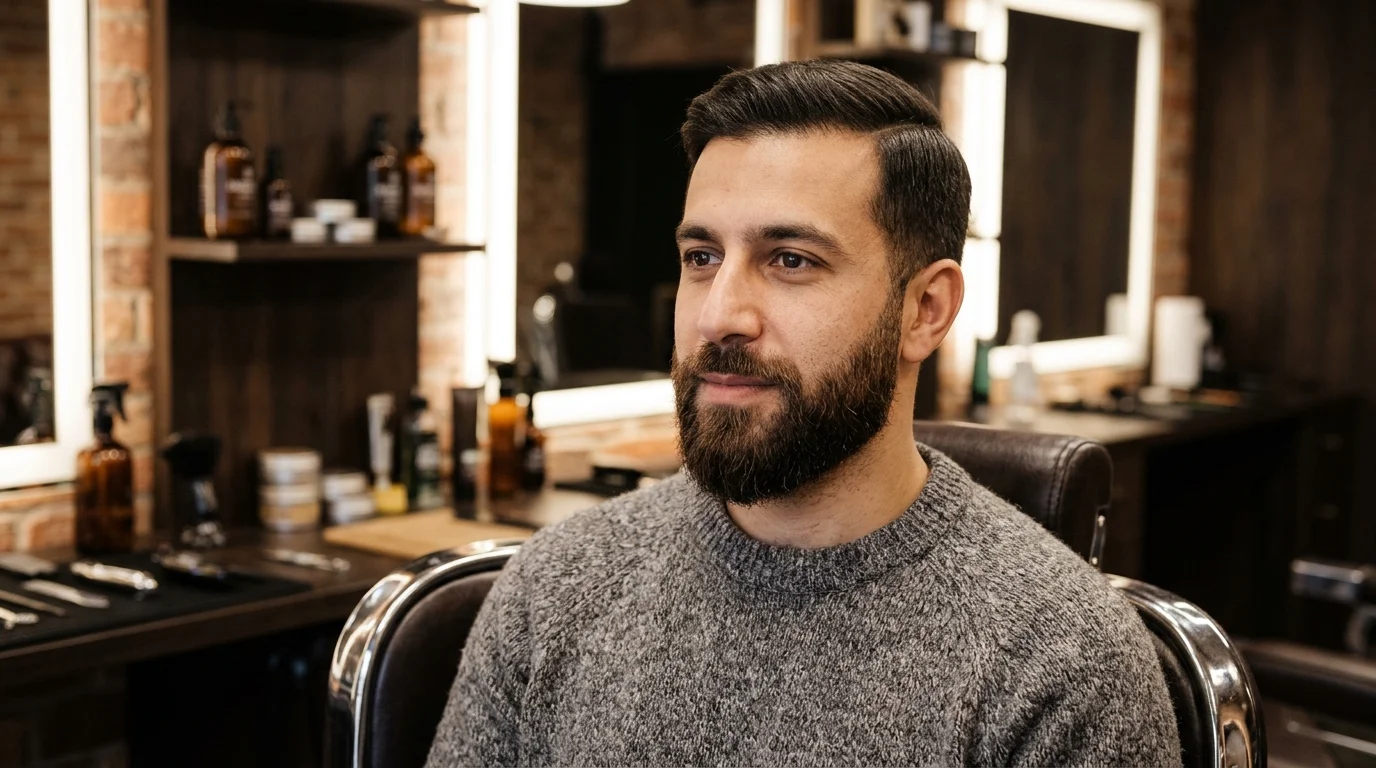
Medium beard styles are roughly 1.5–5 cm long, reached in about 6–10 weeks. This is the sweet spot for most men: enough length to shape, short enough to manage.
7. Medium full beard
A medium full beard covers cheeks, jaw and chin at 2–4 cm with a tidy outline. Taper the sides shorter than the chin so the face does not look wide. It is the most flexible look on this list.
8. Balbo beard
The Balbo is a chin beard and a floating moustache with no sideburns and shaved cheeks. It suits men with weak cheek growth and adds definition to round faces.
9. Anchor beard
An anchor beard is a pointed chin beard that runs along the jaw, paired with a pencil moustache. The shape looks like a ship’s anchor. It lengthens round faces and works with patchy cheeks.
10. Beardstache
A beardstache pairs a thick, prominent moustache with short stubble on the rest of the face. Keep the stubble at 3–5 mm and let the moustache grow for 4–6 weeks.
11. Mutton chops
Mutton chops are thick sideburns that connect to the moustache with a shaved chin. They add width, so they suit long, oblong faces. This is a bold vintage look, best for strong cheek growth.
12. Ducktail beard
The ducktail is a medium-to-long beard with short sides and a chin shaped to a point, like a duck’s tail. It makes round faces look longer and needs about 2–3 months of growth.
Long and Full Beard Styles
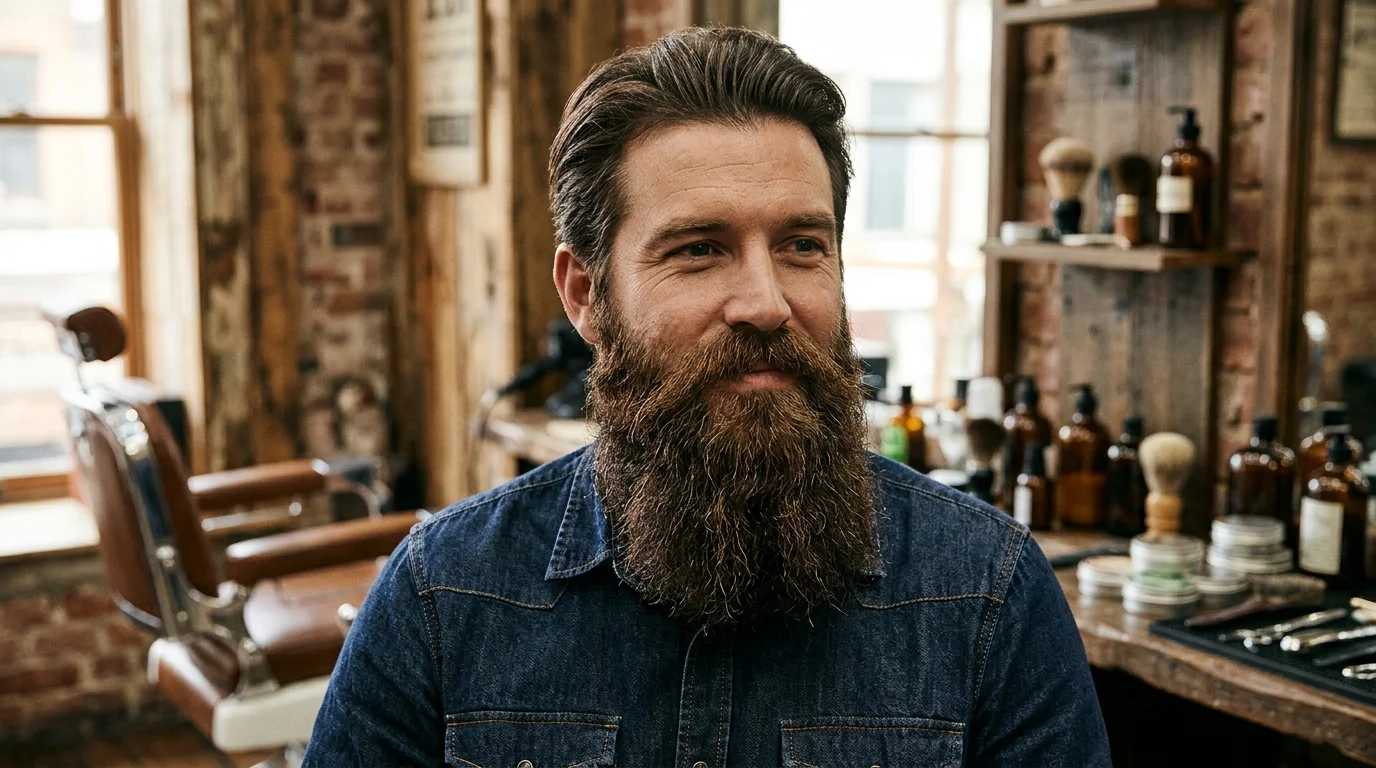
Long beard styles start at about 5 cm and full beard styles keep coverage on cheeks, jaw and neck. Facial hair grows roughly half an inch (1.3 cm) a month, so a true long beard takes 4–12 months.
13. Classic full beard
A classic full beard is natural growth on cheeks, chin, jaw and upper neck, shaped but not sculpted. It needs even density everywhere. It suits oval, heart and square faces, and is the base for most long styles.
14. Garibaldi beard
The Garibaldi is a wide full beard up to about 20 cm, with a rounded bottom and a moustache blended in. It is meant to look slightly natural, so it is lower effort than its size suggests.
15. Bandholz beard
The Bandholz is a very long, full beard grown out for 6 months or more with minimal trimming, named after Beardbrand founder Eric Bandholz. It needs patience through the awkward phase and best suits oval and heart faces.
16. Verdi beard
The Verdi is a shorter full beard (under 10 cm) with a rounded bottom and a styled moustache that stays separate from the beard. Use moustache wax to keep the shape.
17. Spade beard
A spade beard is long and full with a squared-off, slightly pointed bottom, like the spade on a playing card. It adds structure to round faces.
18. Long tapered beard
This is a long full beard trimmed in a V toward the chin. It slims wide faces and keeps a long beard looking sharp rather than wild.
Goatee Beard Styles
Goatee beard styles keep hair on the chin (and often the moustache) while the cheeks stay clean. They are the top choice for patchy cheeks and for making round faces look longer.

| Goatee style | What it looks like | Best for |
|---|---|---|
| Classic goatee | Chin hair only, no moustache | Round faces, weak cheek growth |
| Extended goatee | Goatee + moustache, extended slightly along the jaw | Square jaws that need softening |
| Van Dyke | Pointed chin beard + separate, styled moustache | Round faces, patchy growth |
| Royale | Moustache + pointed chin beard, not connected, no soul patch | Oval faces |
| Petite goatee | Small patch directly under the lower lip and chin | Light growth, minimal look |
| Faded goatee | Goatee with the edges blended into stubble | A softer, modern version for work |
How to trim a goatee: grow everything for 2–3 weeks, shave the cheeks first, then outline the chin area with the trimmer’s edge blade. Keep the outer edges in line with the corners of your mouth. Too narrow looks dated; too wide becomes a chin strap.
Viking Beard Styles
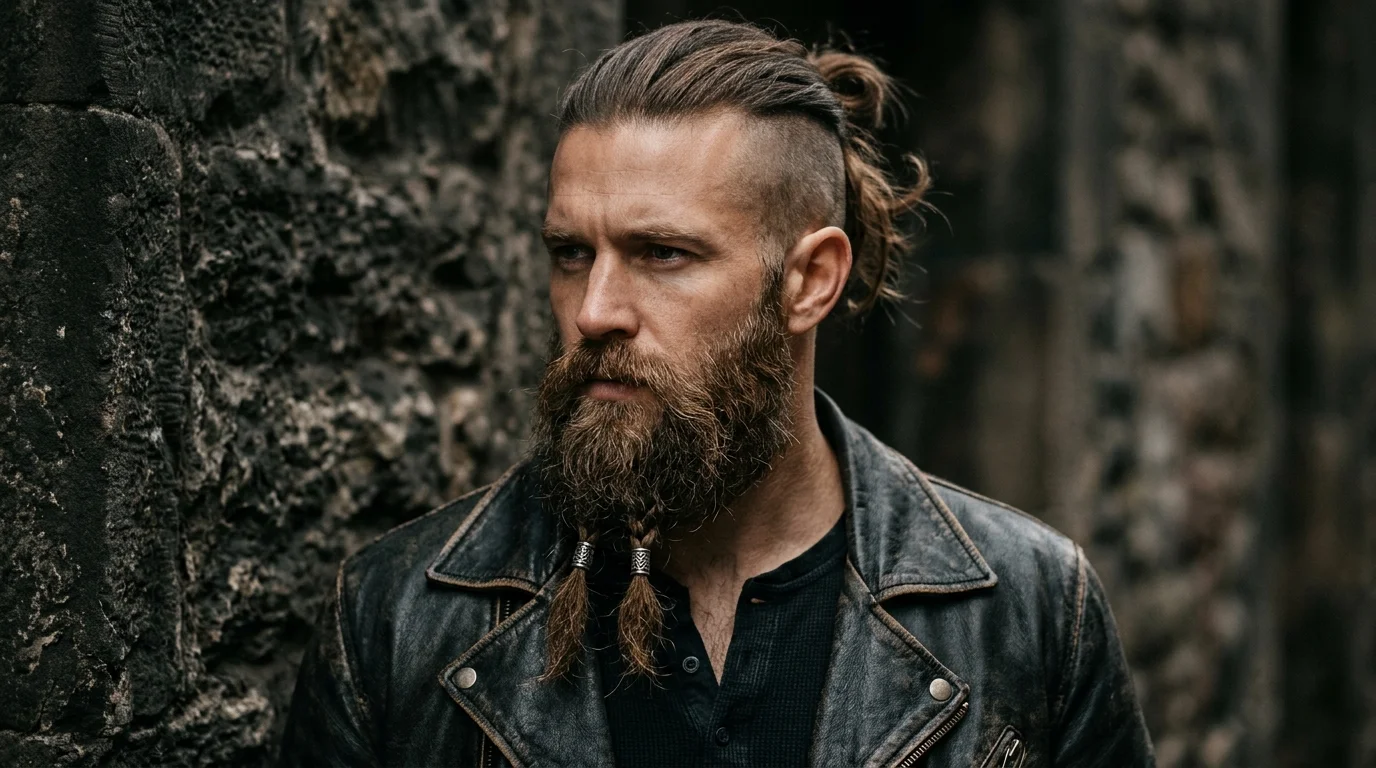
Viking beard styles are long, thick and full beards, often braided or decorated with beads. Expect 6–12 months of growth and good, even density.
19. Classic Viking beard
A classic Viking beard is a long full beard with sides trimmed slightly tighter to show the jawline. It suits square, oval and heart faces.
20. Braided Viking beard
A braided Viking beard needs at least 10–15 cm of length at the chin. Use beard balm before braiding to control frizz, and keep braids loose so they do not pull on the skin.
21. Short Viking beard
A short Viking beard is about 5–8 cm: full and rugged without the year-long wait. It is the practical choice for offices or hot climates.
22. Viking beard with undercut or fade
Pairing a long beard with a short undercut or high fade on the head creates strong contrast. It is popular for men with thinning hair on top.
Grooming tip: long Viking beards trap food, sweat and dust. Wash 2–3 times a week with a beard wash, oil daily, and brush with a boar bristle brush to spread the oil to the tips.
Faded Beard Styles
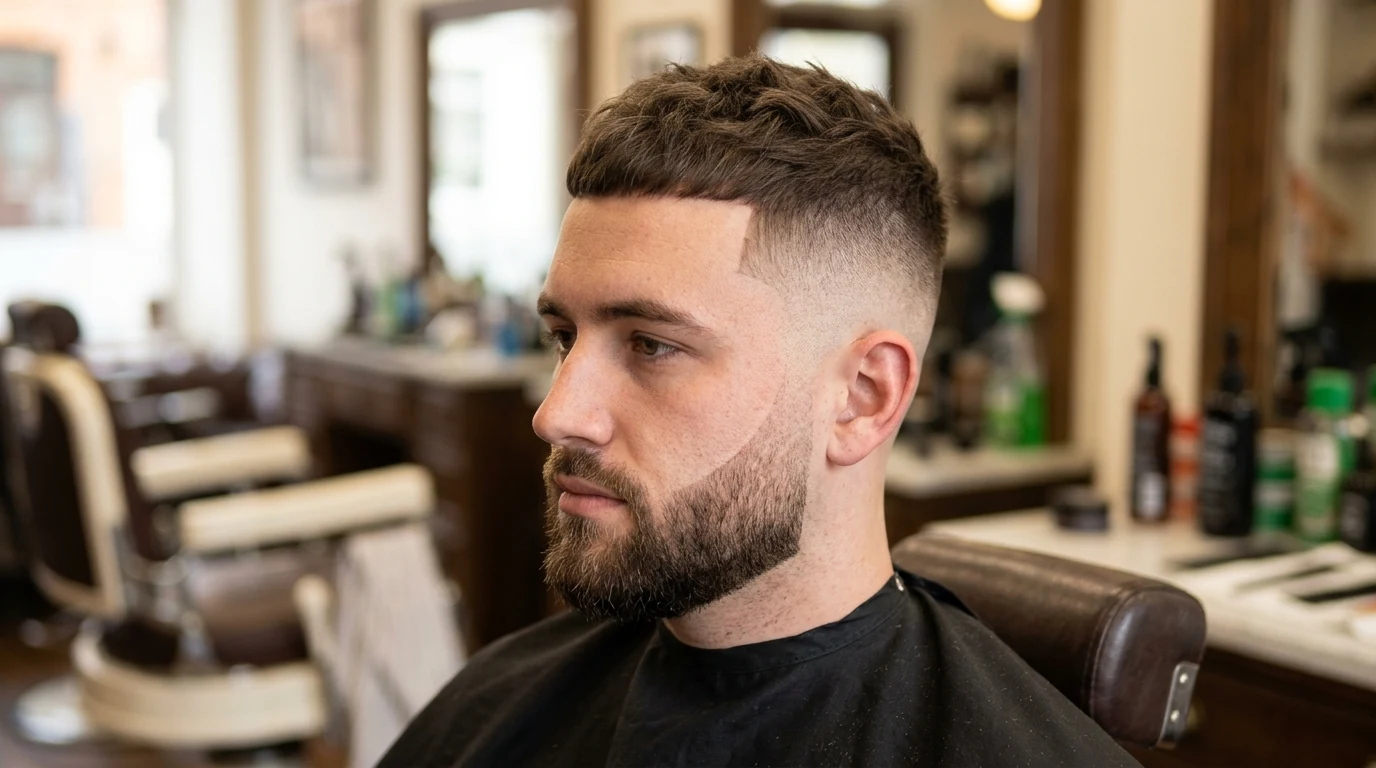
Faded beard styles blend the beard from very short at the sideburns into a fuller beard on the jaw and chin. The fade makes the beard and haircut look like one connected style. Pair it with one of these low taper fade haircuts so the hair and beard blend at the same level.
23. Low fade beard
The fade starts just at the sideburn and blends over the top of the cheek. It is subtle and office-friendly.
24. High fade / skin fade beard
The fade starts from skin at the temple and blends down to the jaw. It needs a barber visit every 1–2 weeks to stay sharp.
25. Long faded beard
A long beard with faded sides keeps length at the chin while the cheeks stay tight. It slims round and wide faces.
How to fade a beard at home (5 steps):
- Trim the whole beard to your target chin length (e.g. guard #4).
- Switch to guard #2 and trim the cheeks up to the top of the jaw.
- Switch to guard #1 and trim the lower sideburns.
- Use guard #0.5 or open the lever for the top of the sideburns.
- Blend each line by flicking the trimmer outward in short strokes.
Black Men Beard Styles
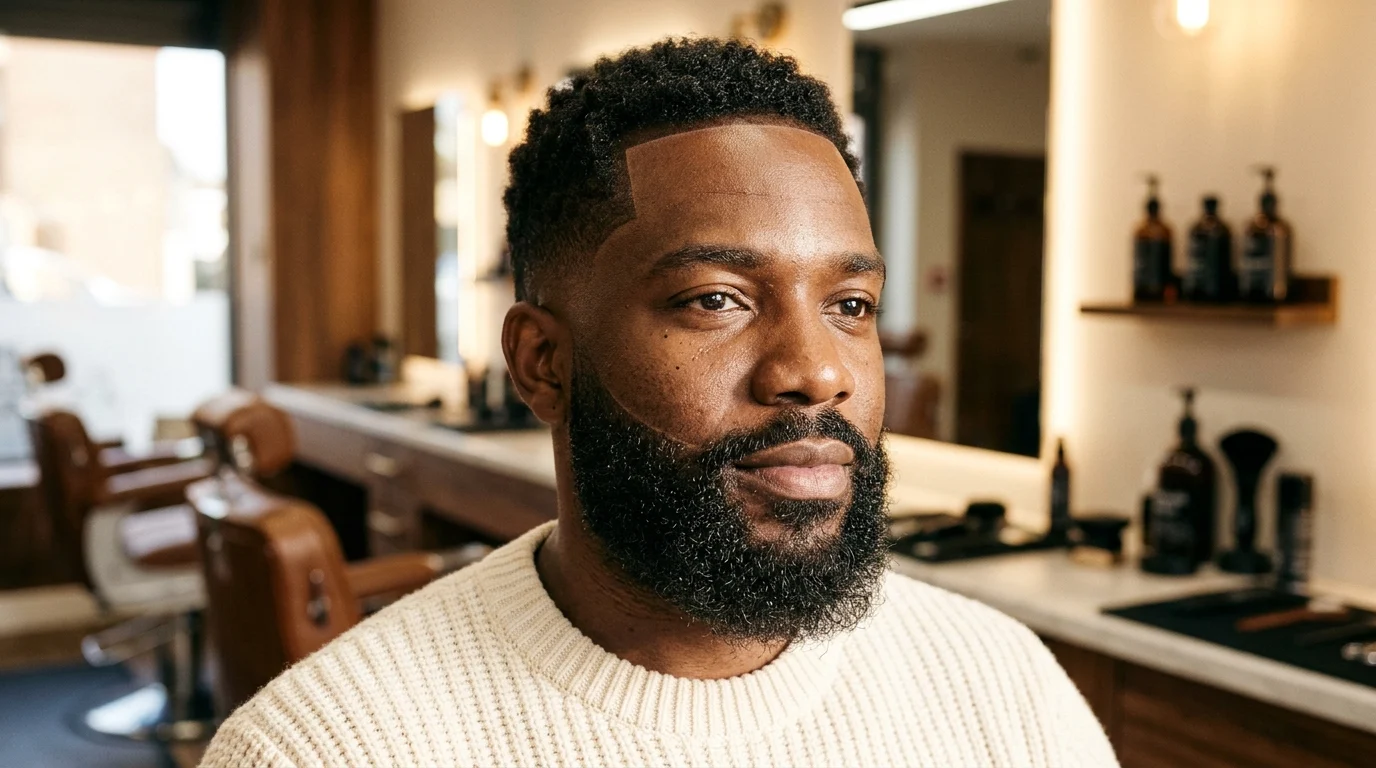
The best black men beard styles work with tight curls instead of fighting them: a crisp shape-up, a full beard, a short boxed beard, the Garibaldi, the anchor and the circle beard. Curly hair hides small gaps, so many styles look fuller than the same length on straight hair.
Popular styles for textured beards
- Full beard with sharp shape-up: natural volume with razor-sharp cheek and neck lines. The line-up is what makes it look expensive.
- Short boxed beard with fade: a fade at the sideburns that blends into a 1–2 cm beard. Clean, modern and office-ready.
- Garibaldi: the curl pattern gives this wide, rounded beard natural shape with less sculpting.
- Circle beard or Van Dyke: great when cheek growth is light; easy to keep neat.
- Chin strap with moustache: defines the jaw and suits round faces.
- Coloured or dyed beard: a growing trend; use a beard-specific dye and patch-test first.
Razor bumps: why many Black men keep some length
Razor bumps (pseudofolliculitis barbae, or PFB) happen when shaved, tightly curled hairs grow back into the skin. Research estimates PFB affects 45% to 83% of men of sub-Saharan African ancestry. Doctors note that stopping close shaving is the best first treatment.
In practice, this means:
- Keep at least 1–3 mm of length instead of a skin-close shave.
- Shave the neckline and cheek lines with the grain, never against it.
- Use a trimmer or single-blade razor rather than multi-blade cartridges.
- See a dermatologist if bumps leave dark marks or keloid scars.
Moisture is non-negotiable
Coily beard hair is drier and more prone to breakage because natural oil travels down the curl slowly. Apply beard oil daily and a leave-in conditioner or beard butter 2–3 times a week. Use a wide-tooth comb or pick, not a fine comb.

Beard Styles for Bald Men
The best beard styles for bald men add weight to the lower face so the head does not look top-heavy: a full beard, short boxed beard, heavy stubble, Van Dyke or a goatee. A medium length of 1–3 cm suits most bald men.

| Style | Look | Best for |
|---|---|---|
| Heavy stubble | Clean, tough, very low effort | Oval and square faces; first-time beard growers |
| Short boxed beard | Sharp, professional | Round faces; office settings |
| Full beard | Strong contrast with a smooth head | Heart and long faces; dense growth |
| Van Dyke / goatee | Focus on the chin | Round faces; patchy cheeks |
| Faded beard | Blends sideburn area to bare scalp | Men who shave the sides of the head |
| Long Viking or Garibaldi | Bold, rugged statement | Confident wearers with thick growth |
Proportion rule for bald heads: the bald scalp acts like a big blank space. A beard about 1–3 cm long balances it. Very thin stubble can make the head look larger, while a very long beard can make the face look stretched on oblong faces.
Tip: shave your head and trim your beard on the same day. Mismatched timing is the most common reason a bald + beard combo looks scruffy. Prefer a buzz to a full shave? Our 0 guard vs 1 guard buzz cut comparison helps you match the head length to your beard.
Growth Timeline and Guard Size Cheat Sheet
Use this table to see how long each beard style takes and what trimmer guard to use. Times assume average growth; yours may be faster or slower.
| Style | Length | Trimmer guard | Growth time | Upkeep |
|---|---|---|---|---|
| Light stubble | 1–3 mm | #0 / 1–3 mm | 2–4 days | Every 2–3 days |
| Heavy stubble | 4–6 mm | #1–2 | 1–2 weeks | Every 3–4 days |
| Short boxed / corporate | 6–20 mm | #2 sides, #3–4 chin | 3–5 weeks | Weekly lines |
| Goatee / Van Dyke / Balbo | 1–3 cm | #3–4 + edge blade | 3–6 weeks | Shave cheeks 2–3x a week |
| Faded beard | 3 mm to 2 cm | #0.5 to #4 | 3–6 weeks | Barber every 1–2 weeks |
| Medium full beard | 2–4 cm | #6–8 or scissors | 6–10 weeks | Weekly |
| Ducktail / spade / Verdi | 5–10 cm | Scissors + comb | 3–6 months | Every 2 weeks |
| Garibaldi / Viking / Bandholz | 10–20+ cm | Scissors only | 6–12+ months | Daily care, trim monthly |
(Guard sizes: #1 = 3 mm, #2 = 6 mm, #3 = 10 mm, #4 = 13 mm, #8 = 25 mm on most clippers. Check your brand’s chart.)
The awkward phase, week by week
- Weeks 1–2: itching is normal. Moisturise the skin underneath; do not trim yet.
- Weeks 3–4: patches show. This is when most men quit. Only clean the neckline.
- Weeks 6–8: curls fill gaps. Get your first professional shape.
- Months 3–6: you can now choose any medium style or keep growing.
Patchy beard? Pick by where the gaps are
| Where it’s patchy | Styles that hide it |
|---|---|
| Upper cheeks | Short boxed beard with low cheek line, faded beard |
| Whole cheeks | Goatee, Van Dyke, Balbo, anchor, circle beard |
| Moustache-to-chin connection | Mutton chops, chin curtain, beard with a disconnected moustache (Verdi, Balbo) |
| Neck | Any style; set the neckline higher |
| Everywhere | Heavy stubble (patchiness is least visible at 4–6 mm) |
If patches do not fill after 3–4 months, genetics are usually the cause. Speak to a dermatologist about options rather than buying unproven “growth” oils.
How to Maintain Any Beard Style
Good beard care comes down to four habits: wash, moisturise, shape and line up.
- Wash 2–3 times a week with a beard wash. Regular shampoo strips oil and leaves the skin flaky.
- Oil daily (3–5 drops for short, 6–10 for long) on the skin and hair after a shower.
- Brush or comb in the direction of growth. Use balm for medium and long beards to hold shape.
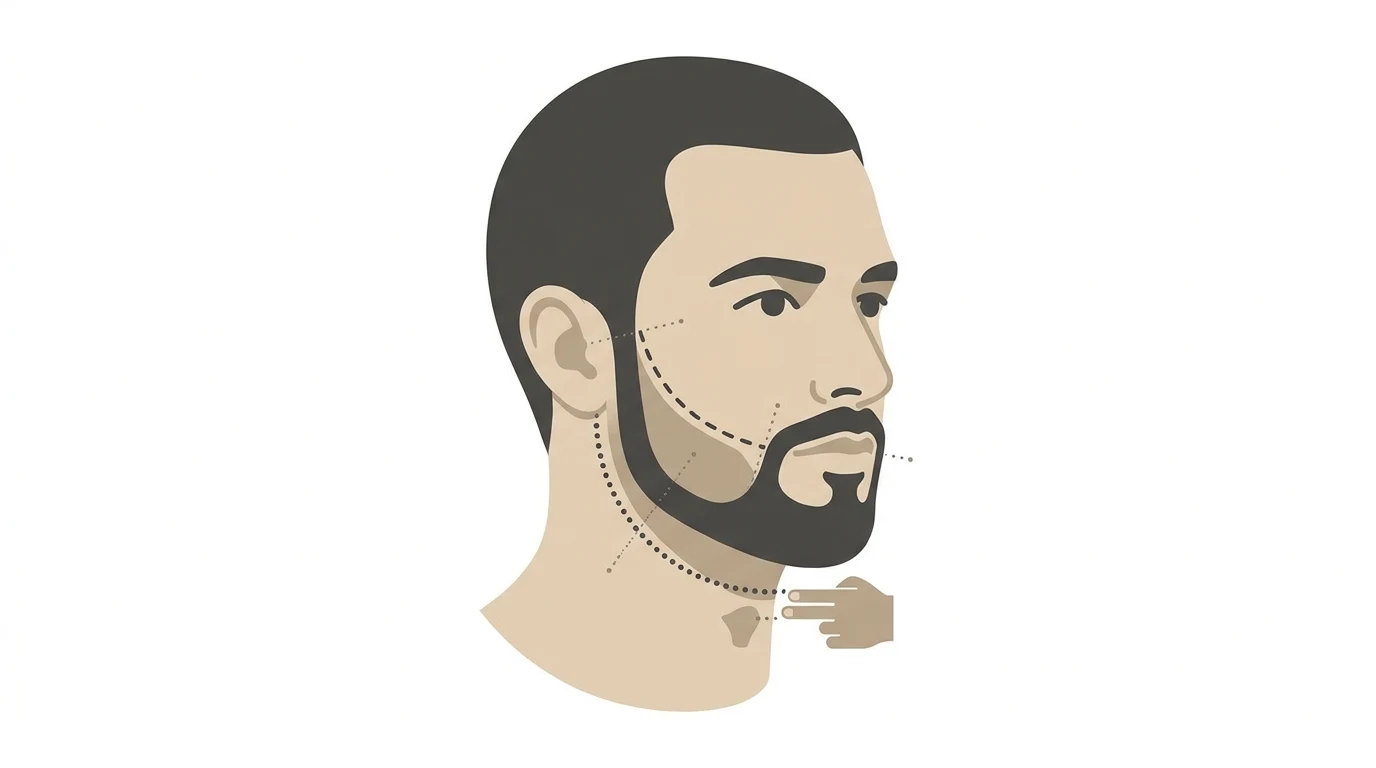
- Set your neckline about one to two finger-widths above the Adam’s apple, curving up to just behind the ears.
- Keep a natural cheek line: trim only stray hairs above it. A cheek line cut too low looks fake.
- Trim when dry. Wet hair looks longer, so you take off too much.
Common Beard Mistakes
- Neckline too high: it makes a double chin look worse. Two fingers above the Adam’s apple is the safe line.
- Choosing a style your growth can’t support: a full beard on patchy cheeks looks thin. Use the picker table above.
- Ignoring the haircut: a fresh skin fade with a two-week-old beard looks unbalanced. Book both together.
- Skipping the skin: dandruff and itching come from dry skin under the beard, not the hair.
- Over-trimming the moustache: leave it slightly longer than the beard so it blends in.
FAQs About Beard Styles
What is the most attractive beard style?
Barbers most often recommend heavy stubble and the short boxed beard as the safest crowd-pleasers. They show a defined jaw while still looking tidy. The most attractive beard on you, though, is the one that matches your density and face shape.
Which beard style is best for a round face?
Choose styles that add length at the chin and stay short on the sides: the goatee, Van Dyke, anchor, ducktail or a short boxed beard with tight cheeks. Avoid wide, rounded full beards.
How long does it take to grow a full beard?
Most men need 2–4 months for a medium full beard and 6–12 months for a long full beard. Facial hair grows about half an inch a month, and genetics decide density.
What beard styles suit patchy growth?
Goatee beard styles, the Van Dyke, Balbo, anchor and circle beard all keep the cheeks clean, so gaps don’t show. Heavy stubble at 4–6 mm also hides patchiness well.
Are faded beard styles professional?
Yes. A low fade beard is one of the most office-friendly looks because the sides look clean and controlled. Keep it professional by booking a barber touch-up every 1–2 weeks.
Do bald men look better with a beard?
For most bald men, yes. A 1–3 cm beard adds weight to the lower face and balances the bare scalp. Heavy stubble or a short boxed beard is the easiest place to start.
How do Black men avoid razor bumps with a beard?
Keep at least 1–3 mm of length, shave lines with the grain using a single blade, and moisturise daily. If bumps scar or darken the skin, see a dermatologist.
Final Thoughts
The right beard style is the one your growth can support, your face shape flatters, and your routine can maintain. Start with the picker table, grow for at least four weeks before judging, and let a good barber set your first shape.
Next step: Still unsure which outline suits you? Use our beard look guide to find your face shape step by step, then come back and pick your style from the tables above. Save this page so you can compare beard styles as your beard grows.
