
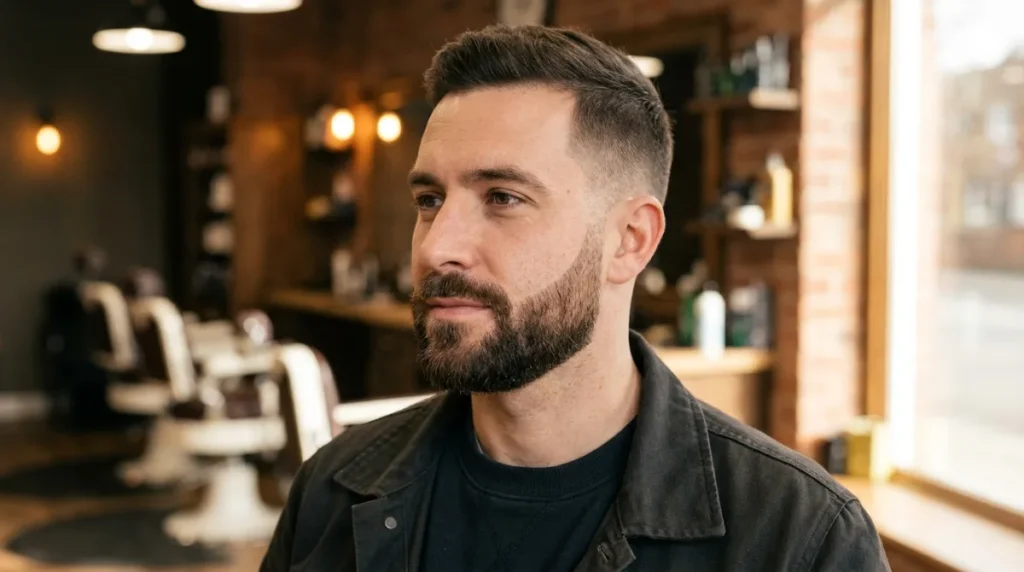
The right beard look can make your jaw look stronger, your face look slimmer, and your whole appearance look more put-together. The wrong one can do the opposite, even if the beard itself is thick and healthy.
Most beard guides show you 30 or 50 styles and leave you to guess. This guide works the other way round. First you check three things: your face shape, how dense your beard grows, and how much time you’ll give it each week. Then you pick from a short list of styles that actually fit.
You’ll also get a trimmer guard chart, a week-by-week growth timeline, and a simple routine to keep any beard look sharp.
Table of Contents
Quick Answer: Which Beard Look Suits You?
The best beard look balances your face. Add length at the chin if your face is round or wide. Add width at the sides if your face is long. Keep it short and clean if your growth is patchy or you want low maintenance.
If you want one safe choice that works for most men, go with heavy stubble or a short boxed beard (about 3–10 mm). It suits most face shapes, hides minor patchiness, and looks fine in an office.
There’s also research behind this. A 2013 University of New South Wales study by Barnaby Dixson and Robert Brooks showed photos of the same men at four stages: clean-shaven, 5 days, 10 days and a full beard. Women rated heavy stubble (about 10 days of growth) as the most attractive. Both men and women rated full beards highest for looking healthy and like a good parent.
Step 1: Find Your Face Shape
Your face shape decides where your beard should add volume and where it should stay tight. Stand in front of a mirror, pull your hair back, and compare three widths: forehead, cheekbones and jaw. Then compare face length to face width. For more examples, see our beard styles for every face shape and our picks for a beard for a long face.
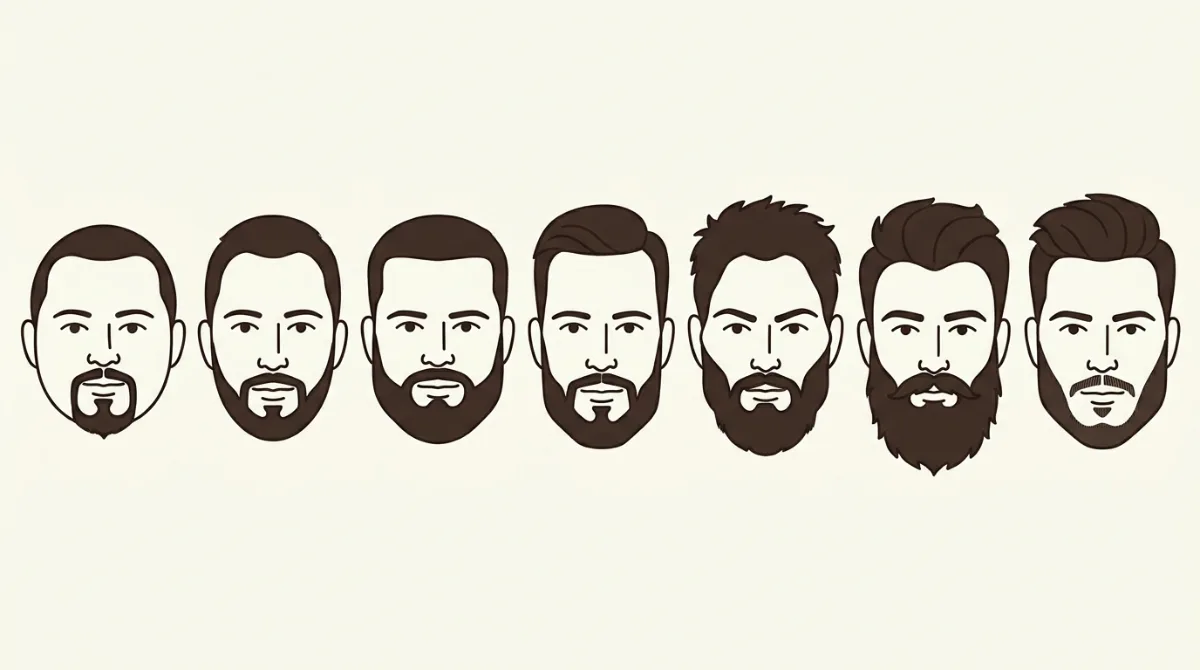
| Face shape | How to recognise it | Goal of the beard | Best beard looks | Avoid |
|---|---|---|---|---|
| Round | Width and length almost equal, soft jaw | Make the face look longer | Goatee, Van Dyke, short boxed beard with a slightly pointed chin, anchor | Wide, bushy sides; mutton chops |
| Square | Strong, wide jaw with sharp corners | Show off the jaw, soften the corners slightly | Heavy stubble, corporate beard, rounded full beard, Balbo | Very boxy beards with hard corners |
| Oblong / rectangle | Face clearly longer than wide | Add width, don’t add length | Short boxed beard with fuller cheeks, mutton chops, beardstache | Long pointed beards (Garibaldi, ducktail) |
| Oval | Balanced, slightly longer than wide | Keep the balance | Almost anything: stubble, full beard, boxed beard | Very long beards that drag the face down |
| Diamond | Wide cheekbones, narrow forehead and chin | Add fullness at the chin | Full goatee, Balbo, chin-focused full beard | Big sideburns that widen the cheeks |
| Heart / inverted triangle | Wide forehead, narrow pointed chin | Add bulk to the lower face | Full beard, Garibaldi, ducktail, Verdi | Chin strap, thin goatee |
| Triangle | Wide jaw, narrower forehead | Keep jaw sides tight, add focus above | Heavy stubble with a mustache, beardstache, short rounded beard | Wide full beards that bulk the jaw more |
Not sure? Take a straight-on photo, then trace the outline of your face with your finger on the screen. The shape is usually obvious once you see the outline instead of your features.
Step 2: Check Your Beard Density
A beard look only works if your growth can support it. Grow everything out for 4 weeks without trimming, then check which areas fill in.
| Density | What you see after 4 weeks | Beard looks that work |
|---|---|---|
| Light / patchy | Gaps on cheeks, thin connection between mustache and chin | Light or heavy stubble, goatee, Van Dyke, faded short beard |
| Medium | Mostly connected, a few thin spots on the upper cheeks | Short boxed beard, corporate beard, Balbo, rounded short beard |
| Dense | Even coverage, cheeks fill in fully | Full beard, Garibaldi, Verdi, ducktail, any long style |
Don’t judge your beard in week one or two. Many men quit right when the patchy phase is about to fill in. Hair on different parts of the face grows at different speeds, so gaps often close by week four to six.
Step 3: Decide How Much Maintenance You Want
Be honest about your time. A sharp short beard needs more frequent trims than most people think. A long beard needs fewer trims but more washing, oiling and brushing.
- Low (5 minutes, 2× a week): stubble, or a natural rounded beard trimmed with one guard all over.
- Medium (10 minutes, 2–3× a week): short boxed beard, corporate beard, goatee. You need to keep the neckline and cheek line clean.
- High (daily care + trims every 1–2 weeks): full beard, Garibaldi, Verdi, ducktail, Van Dyke with styled mustache.
12 Best Beard Looks Compared
Use this table to shortlist two or three styles, then match them against your face shape and density from the steps above.
| Beard look | Length | Time to grow | Density needed | Maintenance | Best face shapes | Office-friendly? |
|---|---|---|---|---|---|---|
| Light stubble | 1–2 mm | 3–5 days | Low | Low | Square, oval, triangle | Yes |
| Heavy stubble | 3–5 mm | 7–12 days | Low–medium | Low | Almost all | Yes |
| Short boxed beard | 6–12 mm | 3–5 weeks | Medium | Medium | Round, oblong, oval | Yes |
| Corporate beard | 10–20 mm | 4–8 weeks | Medium | Medium | Square, oval, round | Yes |
| Goatee | Chin only | 2–4 weeks | Low (chin) | Medium | Round, diamond | Yes |
| Van Dyke | Chin + separate mustache | 4–6 weeks | Low–medium | Medium–high | Round, oval | Usually |
| Balbo | Chin + floating mustache | 4–6 weeks | Medium | Medium | Square, diamond | Yes |
| Beardstache | Short beard + full mustache | 4–6 weeks | Medium (upper lip) | Medium | Oblong, triangle | Yes |
| Faded beard | Short sides fading into cheeks | 3–6 weeks | Medium | Medium–high | Oval, square | Yes |
| Full beard | 2–4 cm | 2–4 months | High | High | Oval, heart, oblong (kept short) | Yes, if tidy |
| Garibaldi | Wide, rounded, ~10–20 cm | 6+ months | High | High | Heart, oval | Depends on workplace |
| Ducktail | Full, pointed at chin | 4–6 months | High | High | Round, heart | Depends on workplace |
Growth times are rough. Most men grow facial hair at about a centimetre or a bit more per month, but genetics and age change this a lot.
Trimmer Guard Cheat Sheet
Guard numbers vary by brand, so always check the millimetres printed on the guard, not just the number.
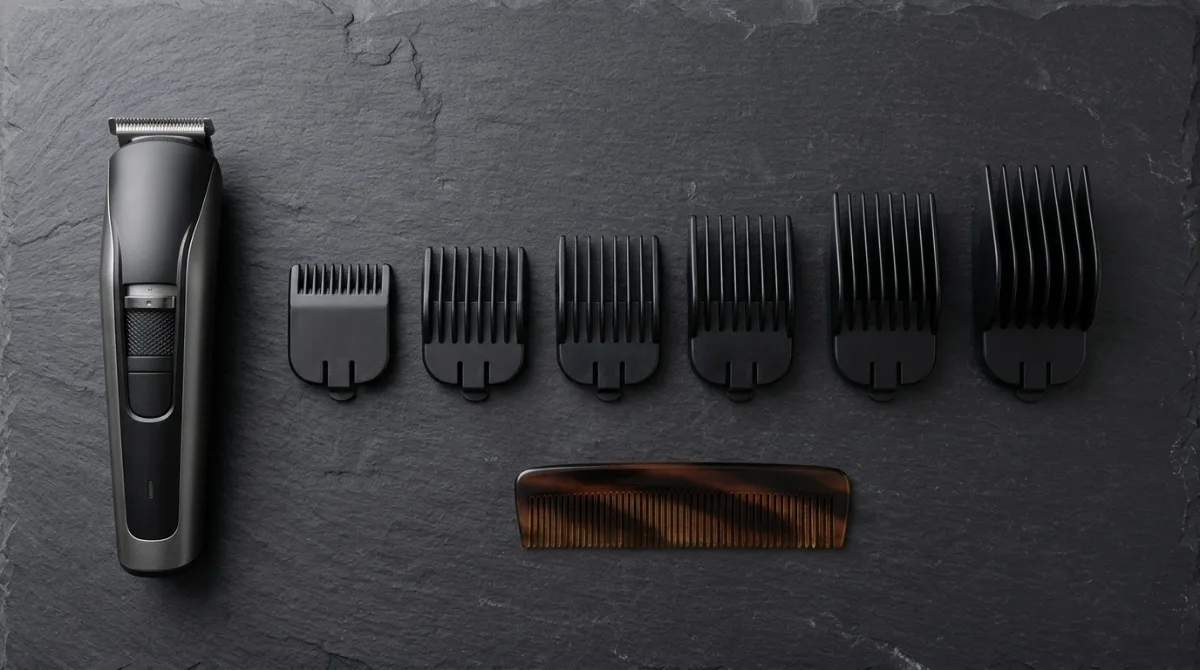
| Area / look | Guard length |
|---|---|
| Light stubble | 1–2 mm |
| Heavy stubble | 3–5 mm |
| Short boxed beard (body) | 6–12 mm |
| Cheeks on a faded beard | 1–2 mm shorter than the chin |
| Mustache (short) | Same as beard or 1 step shorter |
| Neck below the neckline | 0–0.5 mm, or shave |
| Full and long beards | Scissors + comb, trimmer only for edges |
Pro tip: start one guard longer than you think you need. You can always take more off. You can’t put it back.
How to Shape the Neckline and Cheek Line
The neckline is the single biggest difference between a messy beard and a sharp beard look. Most men cut it too high, which makes the jaw look weak and creates a double-chin effect.
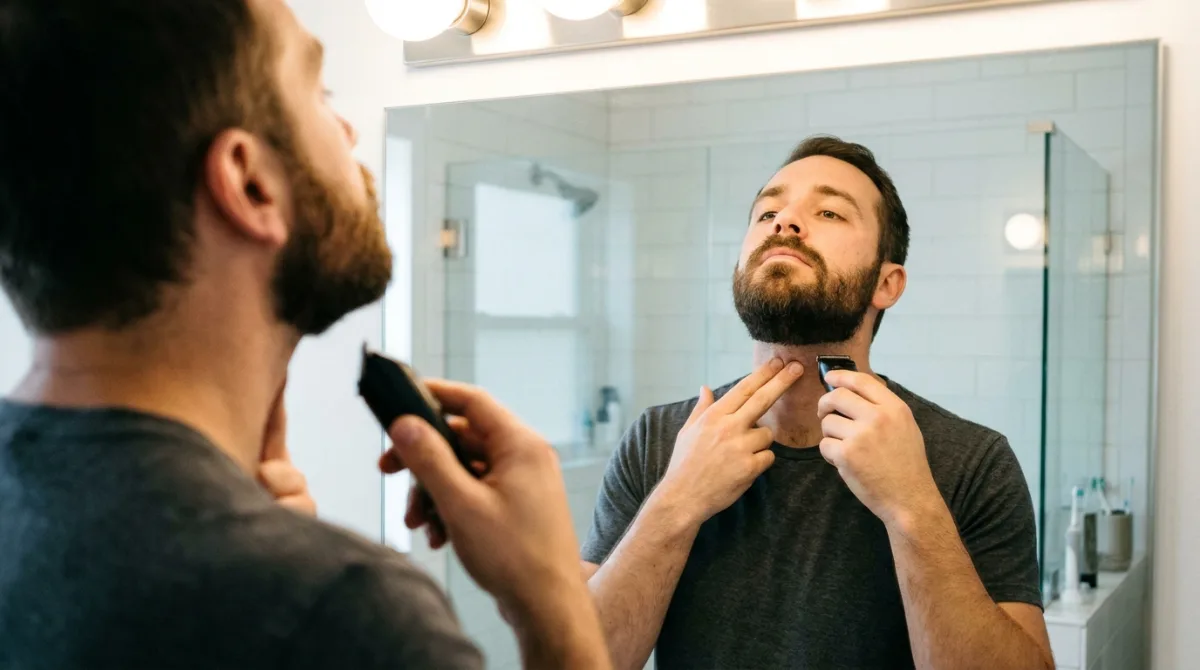
Neckline, step by step:
- Tilt your head slightly up and place two fingers above your Adam’s apple. The top edge of your fingers is where the neckline goes.
- Picture a U-shaped curve from that point back to just behind each earlobe.
- Trim everything below that curve with no guard. Keep the curve smooth and symmetrical.
- Never follow the jawline itself unless you’re going for a chinstrap.
Cheek line:
- For a natural look, only remove the stray hairs high on the cheeks. Leave your natural line.
- For a sharper look, draw an imaginary line from the top of your sideburn to the corner of your mustache and clean above it.
- Don’t drop the cheek line too low. It makes the face look heavy and the beard look fake.
Beard Growth Timeline: What to Expect Week by Week
Growing a beard has a predictable rhythm. Knowing it helps you push through the awkward phases.
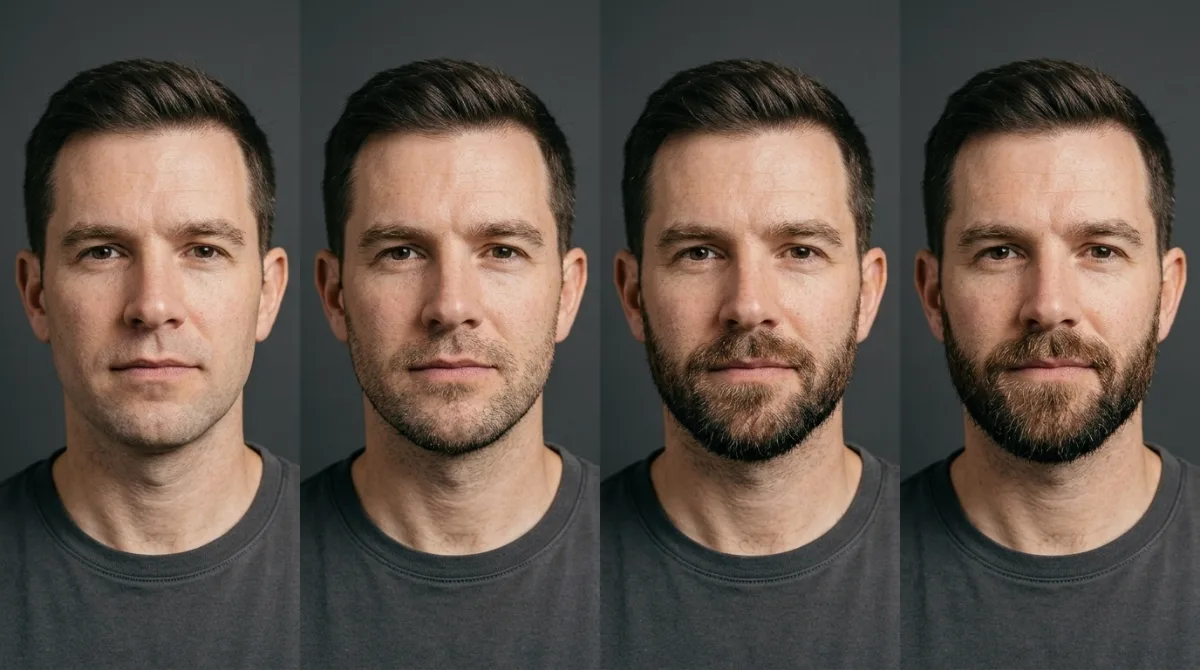
| Stage | What happens | What to do |
|---|---|---|
| Days 1–7 | Stubble appears, itching starts | Moisturise skin, don’t trim except the neck |
| Days 7–14 | Heavy stubble, itching peaks | Start beard oil. This is a good stopping point if you want stubble |
| Weeks 3–4 | Short beard, patchy areas visible | Don’t quit. Clean the neckline only |
| Weeks 5–8 | Most gaps fill, shape becomes visible | First real shaping trim: neckline, cheek line, sides |
| Months 2–4 | Full beard length | Trim every 1–2 weeks, use a beard brush |
| Months 4+ | Long styles possible | Shape the chin (Garibaldi, ducktail), trim split ends |
Beard Looks for Patchy Beards
If your beard is patchy, go short and go even. Short lengths make gaps less visible because there’s less contrast between full and thin areas.

What actually works:
- Heavy stubble at 3–5 mm. This is the most forgiving beard look for patchy growth.
- Chin-focused styles like the goatee or Van Dyke, if your chin and mustache grow well but your cheeks don’t.
- Let the longer areas cover the thin ones. Growing slightly longer on the jaw can hide thin spots above it.
- Brush the beard in one direction. It spreads the hair and makes coverage look more even.
- Wait 6 weeks before deciding. Many patches close with time, especially in men in their early 20s.
If patchiness bothers you a lot, talk to a dermatologist. Some men use treatments like minoxidil for beard growth, but that’s a medical decision and results vary.
Curly and Coarse Beards: Avoiding Bumps and Ingrown Hairs
Men with curly or coarse facial hair are much more likely to get razor bumps and ingrown hairs, especially on the neck. The curled hair grows back into the skin after a close shave. The American Academy of Dermatology’s razor bump tips explain how to reduce them.
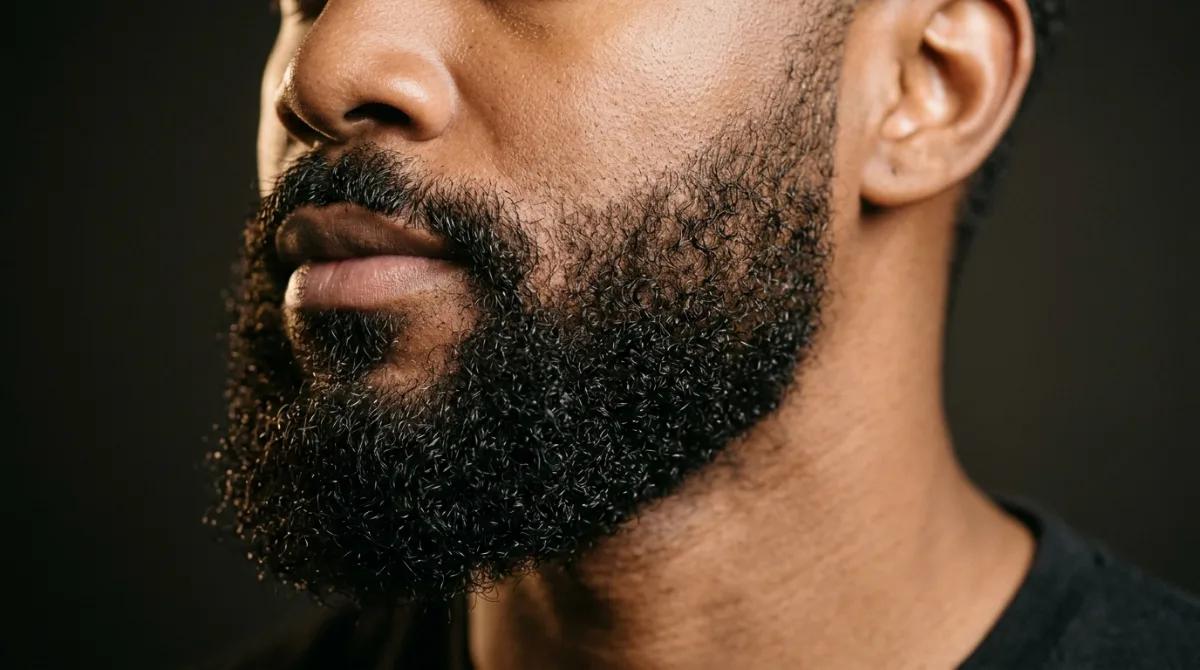
- Use a 0.5 mm trimmer instead of a blade on the neckline.
- If you shave, shave with the grain, not against it, and use a sharp single-blade or safety razor.
- Exfoliate gently 2× a week to stop dead skin from trapping hairs.
- Use a beard butter or balm. Coarse hair dries out faster and holds shape better with heavier products.
- Choose looks that work with texture: a rounded full beard or short boxed beard often looks better than very sharp, laser-cut lines.
If bumps keep coming back or get infected, see a dermatologist. Constant irritation can leave dark marks, especially on darker skin.
Matching Your Beard Look to Your Hairstyle
Your beard and haircut should look like one plan, not two separate decisions. A simple rule: keep the overall outline of your head balanced. Short hair on top usually pairs with a fuller beard, and big hair pairs with a shorter beard. If you wear a fade, our low vs mid vs high fade guide helps you pick the right height.
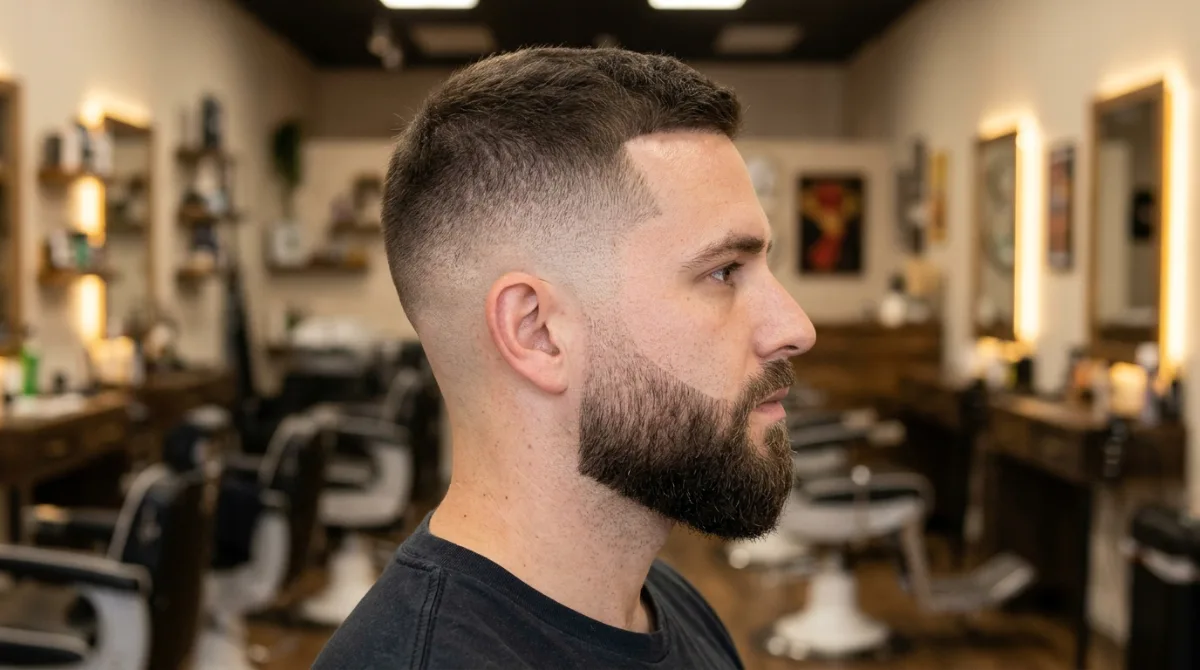
| Hairstyle | Beard look that pairs well |
|---|---|
| Buzz cut / bald | Full beard, boxed beard, Balbo. The beard becomes the main feature |
| Skin fade | Faded beard that blends into the sideburns |
| Classic side part | Corporate beard or heavy stubble |
| Textured crop | Heavy stubble or short boxed beard |
| Long hair / man bun | Short to medium beard. Avoid two big volumes competing |
| Curly top | Short rounded beard or stubble, keeping sides tight |
Bald men: a beard adds shape to the lower half of the face and balances a bare scalp. Keep the beard well-defined so it looks intentional. See our beard styles for bald men for more ideas.
Glasses wearers: thick frames pair well with stubble or short beards. Thin, minimal frames can carry a fuller beard look.
Beard Looks for Office, Weddings and Everyday Life
Where you’ll wear the beard matters as much as your face.
- Office / corporate: corporate beard, short boxed beard or heavy stubble. Keep edges sharp and trim every 3–4 days. Clean lines matter more than length.
- Wedding (groom or guest): get a professional trim 1–2 days before, not on the day. This gives any redness time to settle and the lines time to look natural in photos.
- Gym and outdoor life: heavy stubble or a short rounded beard. Less sweat, less product, less fuss.
- Creative jobs: more freedom. Beardstache, Van Dyke and longer styles all work.
7 Beard Mistakes That Ruin a Good Look
Most bad beard looks come from a few avoidable mistakes:
- Neckline too high. It’s the most common mistake and makes the jaw look weak.
- Cheek line too low. It looks drawn-on and makes the face look heavy.
- Trimming during the patchy phase. You never let the beard fill in.
- No beard oil or moisturiser. Leads to itching, flakes (beardruff) and dry, frizzy hair.
- Ignoring the mustache. Hair over the lip looks messy even if the rest is perfect.
- Same length everywhere on a round face. Slightly shorter sides and a longer chin make a big difference.
- Copying a celebrity without his growth or face shape. Use the tables above instead.
Daily and Weekly Beard Care Routine
A good beard look is 50% style and 50% care.

| When | Task | Why |
|---|---|---|
| Daily | Rinse with water, apply 2–4 drops of beard oil | Keeps the skin under the beard moisturised and stops itching |
| Daily | Brush or comb into shape | Trains the hair direction and spreads the oil |
| 2–3× a week | Wash with beard shampoo | Regular shampoo strips natural oils |
| 1–2× a week | Clean the neckline and cheek line | Keeps the look sharp |
| Every 2–4 weeks | Full shape-up (or barber visit) | Maintains length and shape |
Basic kit: a trimmer with adjustable guards, a beard comb, a boar-bristle brush, beard oil, and small scissors for the mustache.
Frequently Asked Questions
Which beard look is most attractive?
Research from the University of New South Wales found that women rated heavy stubble, around 10 days of growth, as the most attractive. Full beards scored highest for looking healthy and mature. In real life, the most attractive beard look is the one that suits your face shape and is kept clean. A well-groomed short beard usually beats a messy long one.
How long does it take to grow a beard?
Heavy stubble takes about 7–12 days. A short boxed beard takes about 3–5 weeks. A proper full beard usually needs 2–4 months. Long styles like the Garibaldi or ducktail need six months or more. Growth speed depends on genetics, age and hormones, so don’t compare your timeline with friends.
What beard look suits a round face?
Round faces look best with beard styles that add length at the chin and keep the sides shorter. Good options are the goatee, Van Dyke, anchor beard, or a short boxed beard with a slightly pointed chin. Avoid wide, bushy sides and mutton chops because they make the face look even rounder.
What is the best beard look for a patchy beard?
Heavy stubble at 3–5 mm is the best choice for a patchy beard because short, even hair hides the gaps. If your chin and mustache grow well, a goatee or Van Dyke also works. Grow your beard for at least 6 weeks before deciding, because many patches fill in over time.
Is a beard look professional for office jobs?
Yes. Most workplaces accept beards today, as long as they’re well-groomed. The safest office beard looks are the corporate beard, short boxed beard and heavy stubble. Keep a clean neckline and cheek line, trim every few days, and keep the mustache off your lip.
How often should I trim my beard?
Short beard looks like stubble and boxed beards need a trim every 3–5 days to stay sharp. Medium beards need trimming every 1–2 weeks. Long beards only need a shape-up every 3–4 weeks, but the neckline should still be cleaned weekly.
Conclusion
The best beard look isn’t the trendiest one. It’s the one that fits your face shape, your beard density and the time you’re willing to spend on it. Start with heavy stubble or a short boxed beard if you’re unsure, get the neckline right, and build from there.
Next step: use the comparison table above to pick two styles, then follow the neckline steps above to shape it at home (our face shape beard guide has more examples), or book a beard shape-up with a barber near you.