
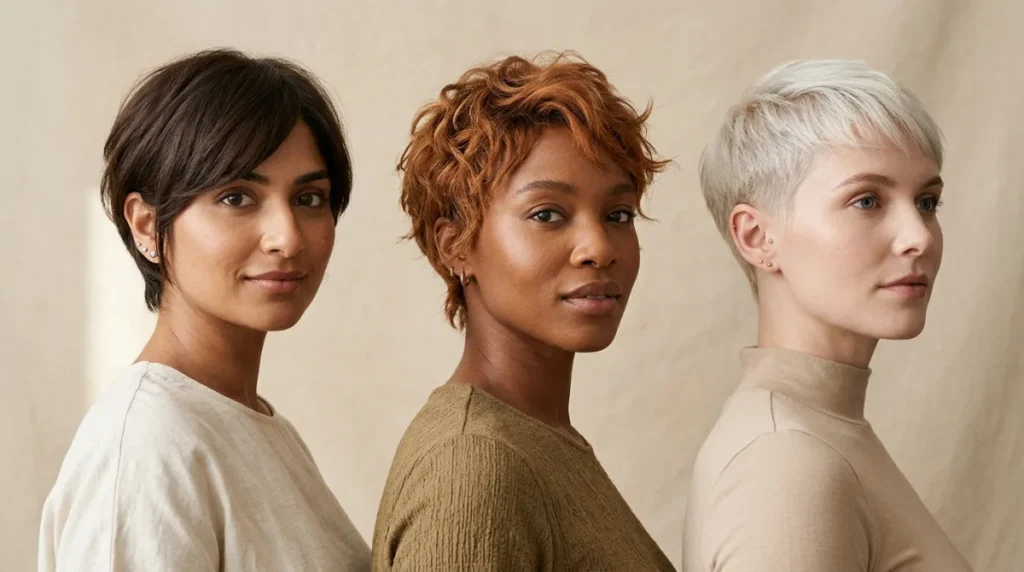
This pixie cut guide is for anyone standing at the edge of the big chop and wondering two things: will short hair suit me, and which pixie should I actually ask for? The honest answer is that almost anyone can wear a pixie cut. What changes is the version. Fringe length, crown height, how tight the sides go and how your texture behaves decide whether it looks sharp or severe.
Below you will find quick tests to check if you suit short hair, the right pixie for each face shape and hair type, what to say in the salon chair, how often you will need trims, a 5-minute styling routine and a month-by-month plan if you ever want to grow it out.
Quick answer: A pixie cut suits you when its shape matches your face shape, hairline and hair texture, and when you are fine with a trim every 4–6 weeks. If you are unsure, start with a long pixie or pixie-bob. You can always go shorter at the next visit; you cannot add length back.
Table of Contents
What Is a Pixie Cut?
A pixie cut is a short women’s haircut where the back and sides are cropped close to the head, usually around or above the ears, while the top and fringe are left a little longer for movement. The name comes from the pixie, a small mischievous creature from folklore, which suits the cut’s light, playful look.
The pixie went mainstream in the 1950s when Audrey Hepburn wore a cropped style on screen. Jean Seberg, Twiggy and Mia Farrow made it iconic through the 1960s. Today it is worn by everyone from Halle Berry and Zoë Kravitz to Emma Stone, who debuted a cropped auburn pixie at the 2025 Golden Globes.
People often mix up the pixie with other short cuts. Here is the difference:
| Cut | Length at sides | Length on top | Ears | Feel |
|---|---|---|---|---|
| Crop / buzz | Very short, often clippered | Very short | Fully visible | Bold, minimal |
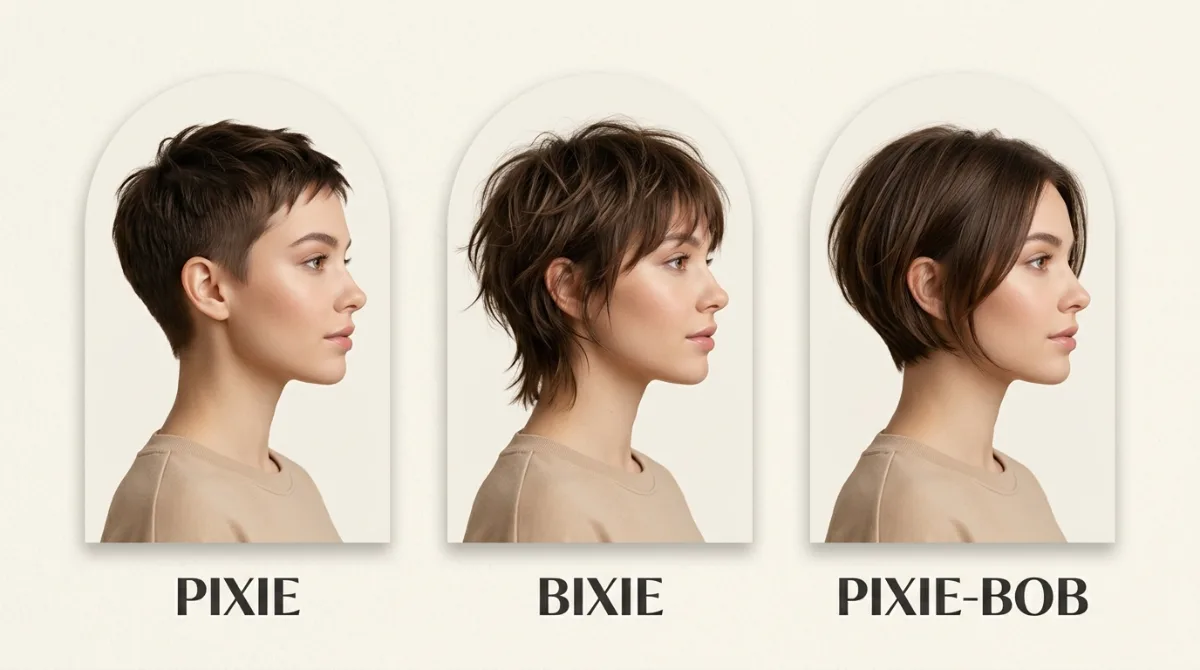
| Pixie | Short, around or above ears | Short to medium | Mostly visible | Soft or edgy |
| Bixie | Short to chin-skimming | Longer, shaggy | Partly covered | Undone, in between |
| Pixie-bob | Ear to jaw length | Medium | Mostly covered | Safe first step |
| Bob | Jaw to shoulder | Even or layered | Covered | Classic |
Types of Pixie Cuts
There are at least 11 distinct pixie styles, and they look very different on the same face. Pick the version first, then save photos of only that version.
| Pixie type | What it looks like | Best for | Upkeep |
|---|---|---|---|
| Classic pixie | Short, even layers, neat outline | Oval and heart faces, fine to medium hair | Trim every 4–5 weeks |
| Long pixie | Longer top and fringe, softer sides | First-timers, round faces, glasses wearers | Trim every 6–8 weeks |
| Textured (piecey) pixie | Choppy, point-cut layers on top | Fine hair that needs lift, casual styling | Trim every 5–6 weeks |
| Side-swept pixie | Deep side part, long diagonal fringe | Round, square and heart faces | Fringe trim every 4 weeks |
| Pixie with micro fringe | Short, blunt or choppy fringe above brows | Oval and long faces, strong eyes and brows | Fringe trim every 3–4 weeks |
| Undercut pixie | Shaved or clippered sides or nape, longer top | Thick hair, bold style | Clipper clean-up every 2–3 weeks |
| Curly pixie | Shaped curls on top, tapered sides | Natural waves, curls and coils | Shape every 6–8 weeks |
| Asymmetrical pixie | One side longer than the other | Square and diamond faces | Trim every 5–6 weeks |
| Pixie-bob | Pixie back, bob-length front | Thick hair, cautious first cut | Trim every 6–8 weeks |
| Bixie | Shaggy mix of bob and pixie | Wavy hair, low-effort texture | Trim every 6–8 weeks |
| Micro / buzzed pixie | Very close all over | Strong bone structure, zero styling | Clean-up every 2–3 weeks |
Will a Pixie Cut Suit You? 3 Quick Tests
You can get a good idea in under 10 minutes at home. Do all three tests; one alone can mislead you.
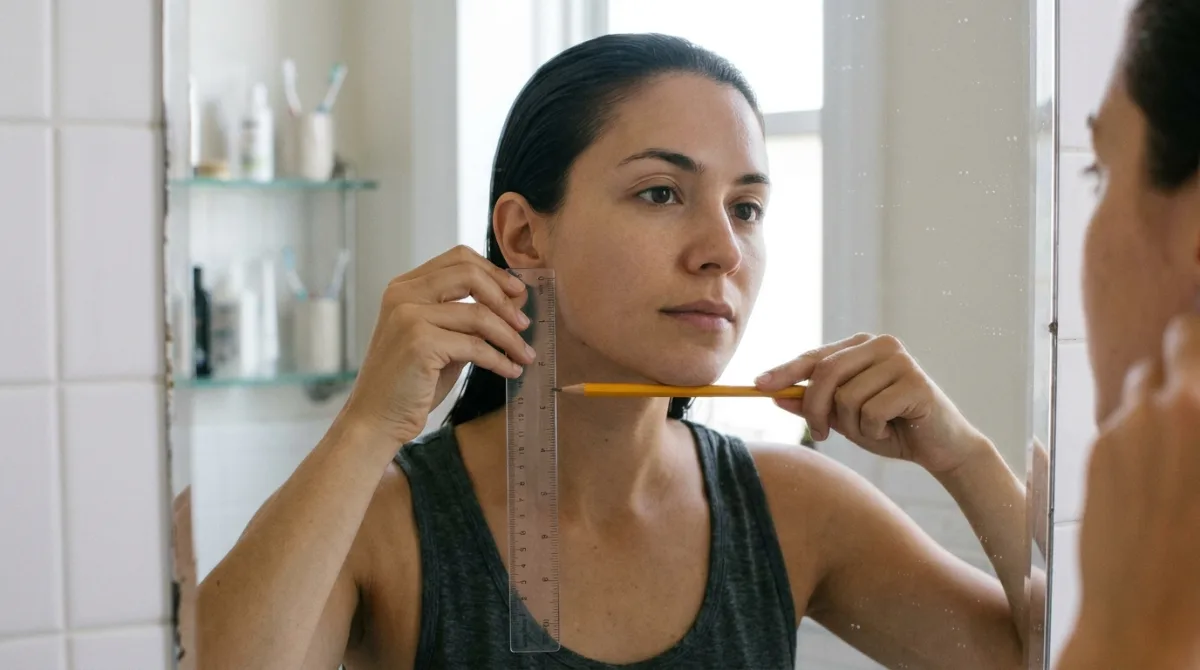
Test 1: The 2.25-Inch Rule
This test, created by stylist John Frieda, checks your jaw angle, which matters more for short hair than face width.
- Hold a pencil horizontally under your chin.
- Hold a ruler vertically, starting just below your earlobe.
- Read the number where the pencil meets the ruler.
Under 2.25 inches (5.7 cm) suggests your face suits short styles, including a pixie. Over 2.25 inches does not rule a pixie out. It means you will probably look better in a longer pixie, a side-swept fringe or a pixie-bob that keeps some length near the jaw.
Test 2: The Pull-Back Photo Test
Slick your hair back tightly with a little gel or tuck it into a low bun, so no hair shows around your face. Take a front photo and a side photo in daylight.
If you like what you see, especially your ears, neck and jawline, a short pixie will feel natural. If you keep wanting to pull pieces forward, choose a version with a longer fringe.
Test 3: Try It Before You Cut It
Wear a short wig for an afternoon, or use a virtual hairstyle try-on app with a clear, front-facing photo. Look at how much forehead, ear and neck you are comfortable showing.
Then bring one saved preview plus one real salon photo of someone with your hair texture.
Pixie Cut for Your Face Shape
Face shape tells your stylist where to put volume and where to keep softness. Treat it as a starting point, not a rule, because hair texture and your hairline can change the answer.
How to Find Your Face Shape in 60 Seconds
Pull your hair back, stand in front of a mirror and trace the outline of your face on the glass with an old lipstick or washable marker.
Then compare three things: which is widest (forehead, cheekbones or jaw), whether your face is longer than it is wide, and whether your jaw is rounded or angular. Match the outline to the shapes below.
| Face shape | How to recognise it | Best pixie | Avoid |
|---|---|---|---|
| Oval | Slightly longer than wide, balanced forehead and jaw | Almost any; classic, textured or micro fringe | Very tall crown if your face leans long |
| Round | Width and length similar, soft jaw | Long or side-swept pixie with crown height | Flat, even-length or bowl-shaped crops |
| Square | Strong, angular jaw, broad forehead | Soft, piecey or asymmetrical pixie | Blunt, boxy outlines at the sides |
| Heart | Wide forehead, narrow pointed chin | Long side fringe, pixie-bob | Heavy volume on top only |
| Long / oblong | Clearly longer than wide | Pixie with fringe and soft side width | High quiff or stacked crown |
| Diamond | Wide cheekbones, narrow forehead and jaw | Pixie with fringe, textured top | Extra width at cheekbone level |
| Triangle (pear) | Jaw wider than forehead | Crown volume, close sides, piecey top | Fullness at the jaw |
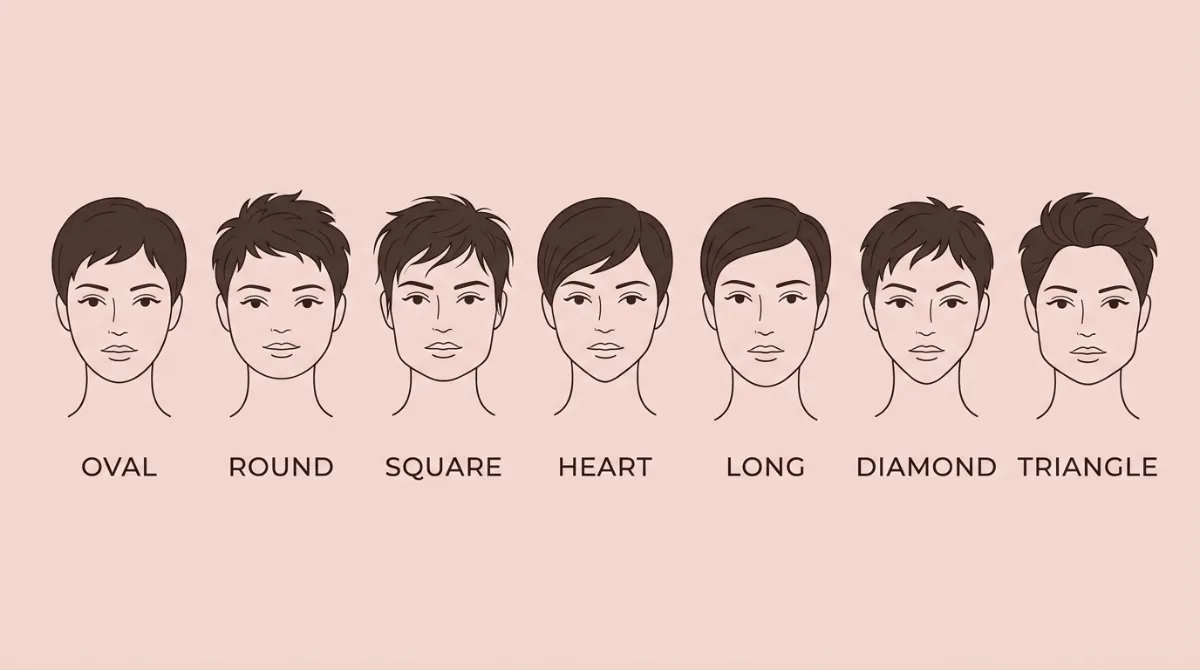
Oval Face
Oval faces can wear almost any pixie because the proportions are already balanced. Choose by texture and how much styling you want. If your face is on the longer side of oval, keep the crown flatter and add a sweeping fringe.
Round Face
A round face needs vertical lines. Ask for height at the crown, a deep side part and a long diagonal fringe, with sides kept close. Choppy layers on top break up the curve.
Skip pixies that sit evenly around the head; they mirror the roundness. If you also want to soften a fuller lower face, see our guide to the best hairstyles for a double chin.
Square Face
You can either soften a strong jaw or show it off. To soften, ask for wispy layers, longer pieces at the temples and a side-swept fringe. To show it off, go sharp and short, but know that crisp lines show regrowth faster.
Heart Face
The goal is balancing a wider forehead with a narrower chin. A long, side-swept fringe softens the forehead, and a little length at the nape or around the ears adds width lower down. A pixie-bob works especially well here.
Long or Oblong Face
Avoid adding height. A full or brow-skimming fringe shortens the face visually, and a bit of soft width at the sides adds balance. Wearing the top slightly wavy helps too.
Diamond Face
Diamond faces have striking cheekbones, which a pixie shows off well. A fringe adds width to the narrow forehead, and a textured top stops the cut from looking too severe. Keep bulk away from the cheekbones.
Triangle Face
A triangle face is widest at the jaw, so the pixie should pull attention upward. Ask for volume at the crown, close-cut sides and a piecey, lifted top. Done right, this face shape often suits a high, tapered pixie very well.
Pixie Cut for Thin, Thick, Curly and Grey Hair
Your texture can override your face shape. Two people with identical faces may need opposite cuts if one has fine hair and the other has thick hair.
| Hair type | What works | What to ask for | Watch out for |
|---|---|---|---|
| Fine or thin | Short, soft layers; textured top | “Keep weight on top, light texturizing only” | Over-thinning makes it look sparse |
| Thick | Tapered sides, undercut, pixie-bob | “Remove bulk at the sides and nape” | Sides puffing out into a triangle |
| Wavy | Bixie, long or textured pixie | “Cut so the wave can lift, not widen” | Too many layers create frizz |
| Curly | Curly pixie with longer top | “Check length dry or as I wear my curls” | Cutting wet ignores shrinkage |
| Coily (4A–4C) | Tapered pixie, shaped TWA-style crop | “Shape the edges and keep the top defined” | A stylist who does not cut textured hair |
| Grey or silver | Textured or side-swept pixie | “Add movement so it doesn’t look flat” | Dull tone; use a purple shampoo weekly |
A fine-hair tip worth knowing: shorter hair often looks thicker because each strand carries less weight and stands up more easily. That is why the pixie is one of the most common cuts recommended for thinning hair.
If you notice sudden shedding or patchy loss, though, see a doctor or dermatologist first. The American Academy of Dermatology notes that losing 50 to 100 hairs a day is normal; more than that is worth checking. A haircut can hide thinning but it cannot treat it.
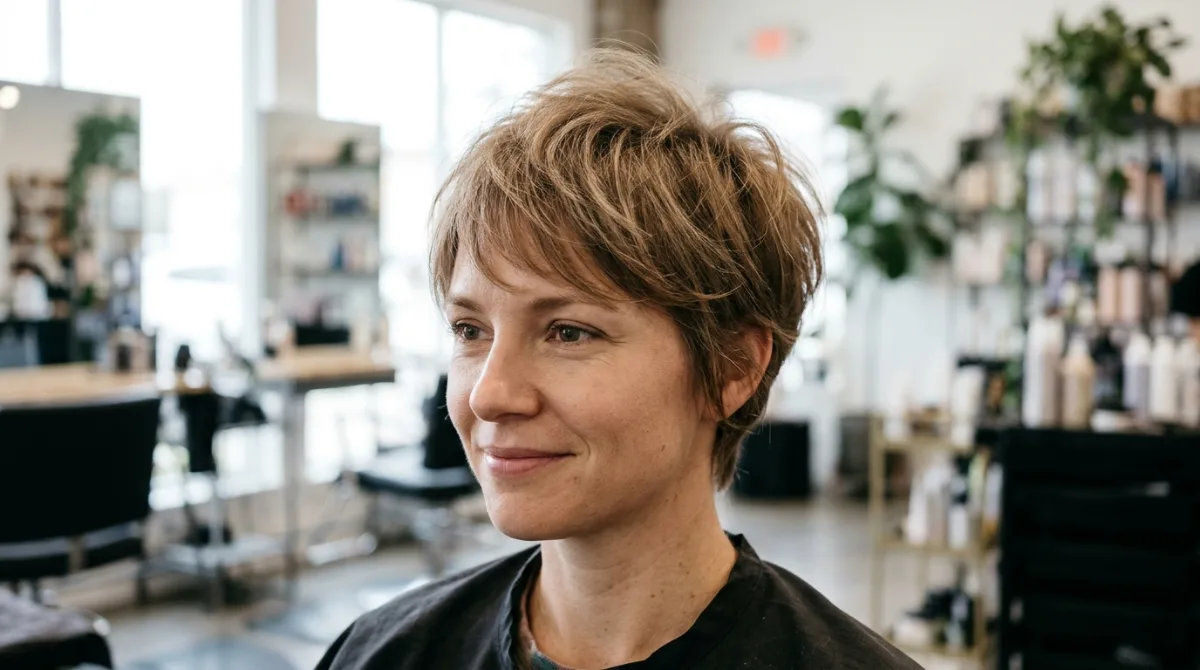
Curly pixies live or die by moisture and definition. For a full wash-day routine that works on short curls too, follow our step-by-step curly hair routine.
Pixie Cuts for Women Over 40 and 50
A pixie does not age you; the wrong shape does. Very tight sides, a flat crown and harsh, blunt lines can look severe, while soft texture, a little crown lift and a movable fringe tend to look fresh.
For mature hair, ask for:
- a side-swept or wispy fringe instead of a straight, heavy one
- soft layers at the crown for lift
- slightly longer pieces around the ears and nape
- a gloss or highlights if your colour looks flat; short hair shows tone clearly
Halle Berry, Jamie Lee Curtis, Annie Lennox and Judi Dench are good reference points for a mature pixie that looks polished rather than plain.
Glasses, Earrings and Makeup With a Pixie
A pixie puts your whole face on show, so accessories suddenly matter more. It is one of the first things new pixie wearers notice.
- Glasses: Ask your stylist to cut with your glasses on, so the sides do not stick out over the arms. A longer pixie or side fringe balances heavy frames.
- Earrings: Statement earrings look great with a pixie; it is the perfect frame for them. Keep the hair around the ears neat so it does not compete.
- Makeup and brows: Brows become a key feature. Groomed brows and a touch of definition around the eyes make a short cut look intentional.
- Necklines: Your neck and nape are visible, so a clean nape line matters more than ever.
What to Tell Your Stylist
Never just say “a pixie, please.” That one word covers a dozen different haircuts. Give your stylist decisions about five zones: fringe, crown, sides, ears and nape.
8 Pixie Terms to Know Before Your Appointment
| Term | What it means | Why it matters |
|---|---|---|
| Crown | The top-back of your head | More height here lengthens round faces |
| Nape | The hairline at the back of your neck | Tapered, squared or soft changes the whole look |
| Sideburns | Hair in front of the ears | Longer pieces soften; short ones look edgy |
| Fringe / bangs | Hair at the front over the forehead | The single biggest choice in a pixie |
| Point cutting | Snipping into the ends vertically | Creates soft, piecey texture |
| Texturizing | Removing weight with shears or razor | Great for thick hair, risky for fine hair |
| Taper | Gradually shorter towards the neck | Keeps the back neat as it grows |
| Cowlick | A section that grows in its own direction | Decides where your part and fringe can go |
Copy-and-Paste Scripts for the Salon
- First pixie: “I want a soft, long pixie. Please don’t take the fringe or sides too short on the first cut. I want room to adjust next time.”
- Fine hair: “Keep weight on top and texturize lightly. I want movement without it looking thin.”
- Thick hair: “Please remove bulk at the sides and nape so it sits close, but keep the top soft.”
- Curly hair: “Please cut or finish my curls dry, or check the length as I normally wear them.”
- Round face: “I’d like height at the crown and a long side-swept fringe, with the sides kept close.”
- Bold crop: “I’m ready to go short. Can we check the fringe, sideburns and nape from the side before finishing?”
Bring 2–3 photos and say what you like in each, for example the fringe in one and the nape in another. Pick photos of people with a similar hair texture to yours, or the result will not match.
Pixie Cut Maintenance and Cost
A pixie is quick to style but needs frequent trims. Most pixies need a trim every 4–6 weeks to keep their shape, because even a small amount of growth changes a short silhouette.
Scalp hair grows about 1 cm (roughly half an inch) a month, according to the Cleveland Clinic, so after six weeks the nape and ears already look fuzzy.
| Pixie style | Trim interval | Visits per year | What gets trimmed |
|---|---|---|---|
| Micro, buzzed or undercut | 2–4 weeks | 13–26 | Nape, sides, clipper lines |
| Classic or textured | 4–6 weeks | 9–13 | Full shape |
| Long pixie, pixie-bob, bixie | 6–8 weeks | 7–9 | Perimeter and fringe |
| Fringe only (between cuts) | 3–4 weeks | — | Fringe, often free or low-cost |
Cost: a pixie is usually priced like a standard women’s cut at most salons, and some charge less for a short cut. The real cost is frequency. Multiply your salon’s cut price by the visits per year above.
For example, a classic pixie at 10 visits a year costs 10 times your usual cut price, compared with 3–4 visits for long, layered hair. Ask your salon if they offer a lower-priced “pixie maintenance” or neckline clean-up between full cuts.
The good news: you will use far less shampoo, conditioner and drying time. Many pixie wearers dry their hair in 2–5 minutes.
How to Style a Pixie Cut in 5 Minutes
A great pixie should look good with very little effort. This routine works for most textures.
- Start damp, not wet. Towel-dry until hair is about 70% dry.
- Set the direction. Push the fringe and top in the direction you want with your fingers while it is damp. Work with your natural part and cowlicks, not against them.
- Add lift if you need it. For fine hair, a pea-sized amount of volumizing mousse or root spray at the crown.
- Dry with your fingers. Use a hairdryer on medium heat, lifting the roots at the crown and smoothing the sides flat. Use a heat protectant first.
- Finish with a tiny amount of product. Rub a pea-sized amount of matte paste or wax between your palms until warm, then pinch and twist pieces on top. Keep the sides smooth.
- Refresh on day two. Dampen your hands, re-shape the top and add dry shampoo at the roots if it looks flat.
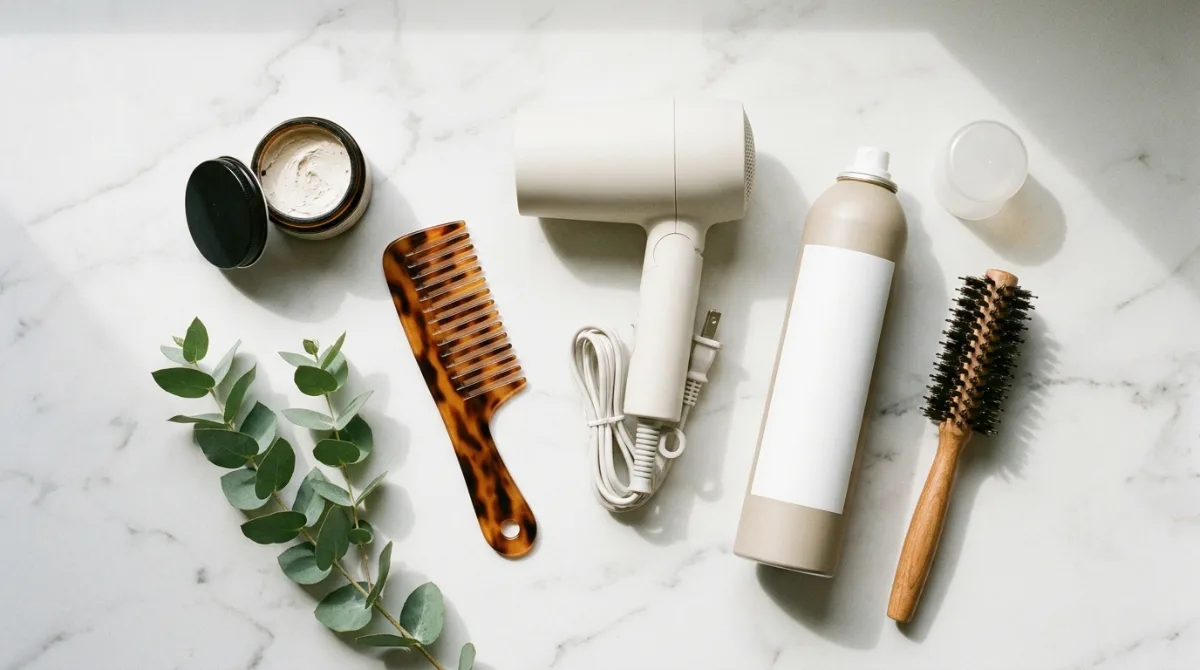
5 Quick Pixie Looks
- Messy texture: matte paste, fingers only, pieces pinched upward.
- Sleek and polished: a little pomade or cream, combed to one side.
- Slicked back: gel or high-shine pomade, combed back from the hairline. Perfect for events.
- Soft side-swept: blow-dry the fringe sideways with a small round brush.
- Wet look: gel on damp hair, combed back or to the side.
Best Products by Hair Type
| Hair type | Use | Skip |
|---|---|---|
| Fine | Volumizing mousse, texture spray, light matte paste | Heavy waxes and oils |
| Thick | Matte clay or wax, smoothing cream | Volumizing mousse |
| Wavy | Sea-salt spray, light curl cream | Strong-hold gel |
| Curly and coily | Leave-in conditioner, curl cream, light gel | Brushing dry |
| Grey | Purple shampoo weekly, shine serum | Products with heavy yellow tones |
One caution: a pixie needs less product than you think. Start with a pea-sized amount; too much makes short hair look greasy or stiff.
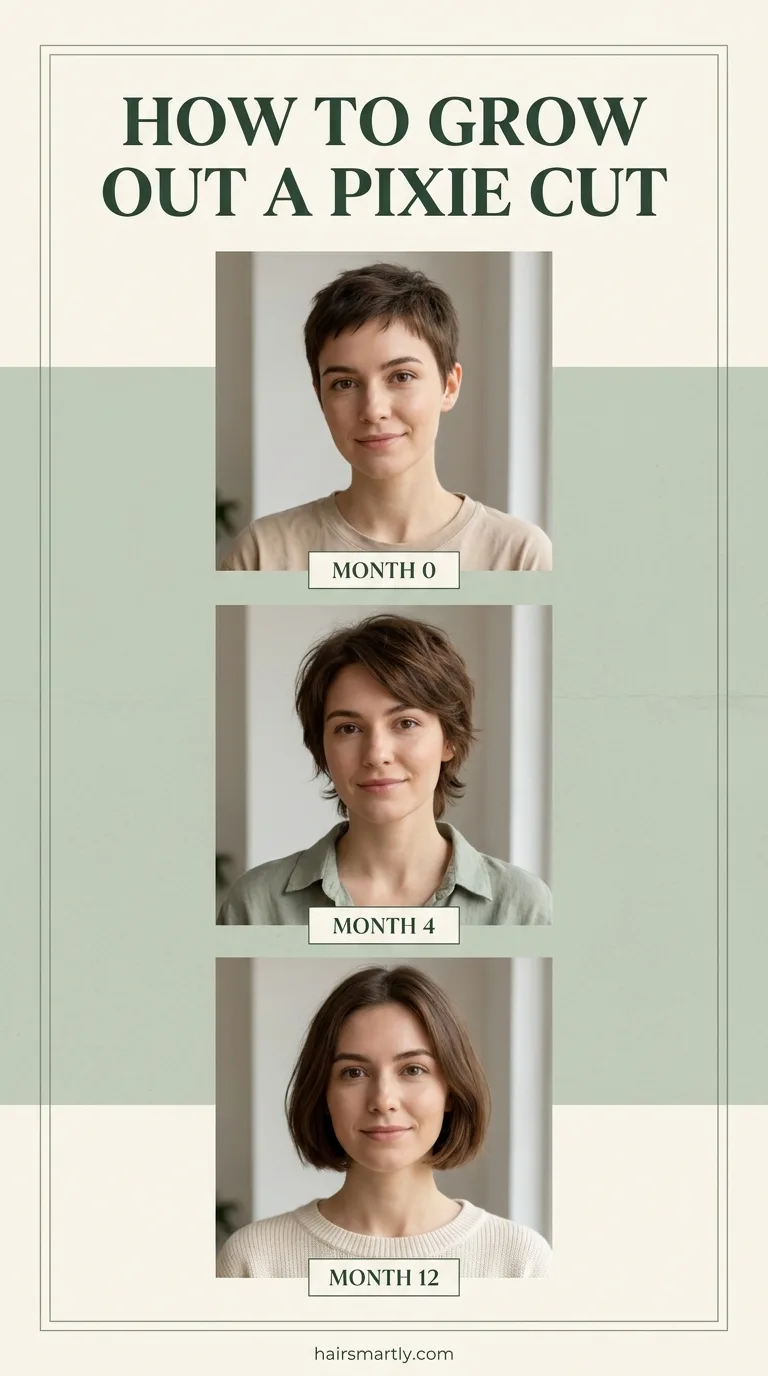
How to Grow Out a Pixie Cut
Growing a pixie into a chin-length bob usually takes 9–12 months, and about two years to reach your shoulders. The trick is to keep trimming the back and sides while leaving the top alone, so every stage looks like a haircut, not a mistake.
| Months | What your hair is doing | What to do | Tell your stylist |
|---|---|---|---|
| 0–2 | Top still pixie, nape starts creeping | Trim only nape and around ears | “I’m growing it out. Leave the top.” |
| 2–4 | Sides cover the ears and flip out | Tuck behind ears, side part, matte paste | “Tidy the sides, keep the length on top.” |
| 4–6 | Back touches the collar (mullet risk) | Shorten the back to match the sides | “Cut the back shorter than the front.” |
| 6–9 | Looks like a short, layered bob | Clips, headbands, soft waves | “Shape it into a graduated bob.” |
| 9–12 | Front reaches the chin | Get your first proper bob cut | “Even out the perimeter only.” |
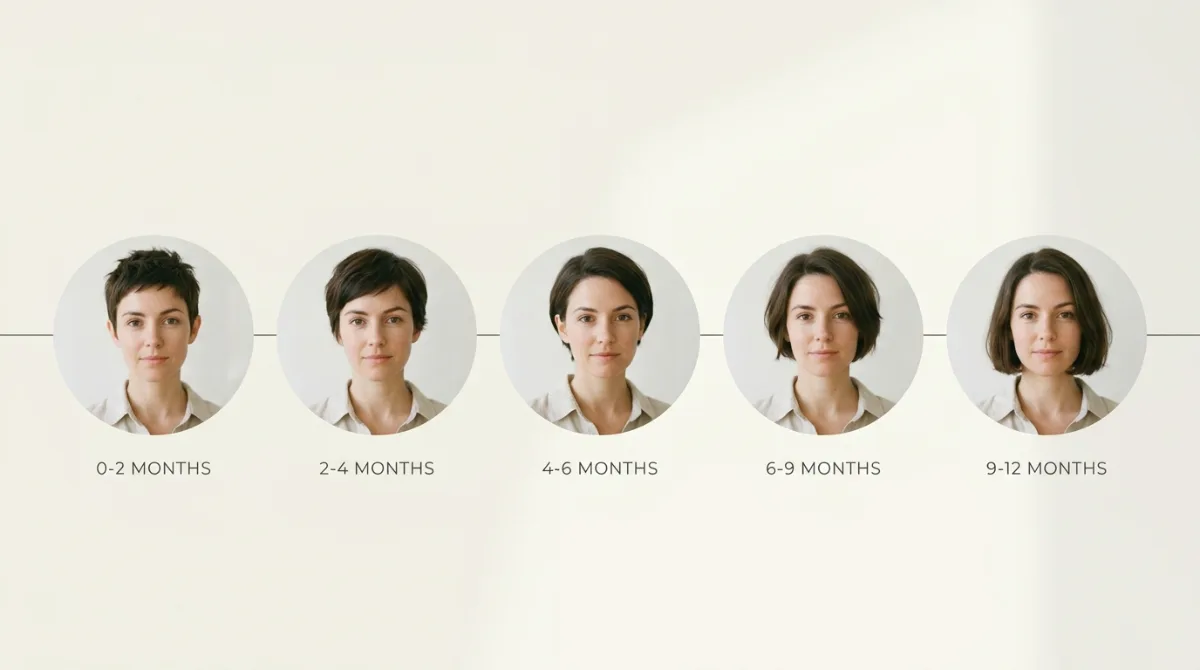
Three habits make the biggest difference: keep the nape tidy, stop thinning the top, and never let a new stylist “tidy up” everything evenly, because that can undo two months of growth.
Hair growth supplements will not speed this up unless you have a genuine deficiency, so check with a doctor before buying them.
Common Pixie Cut Mistakes to Avoid
Most pixie regret comes from one zone being wrong, not from short hair itself.
- Copying a photo of someone with a different texture. A sleek pixie on straight hair will not look the same on curls.
- Going ultra-short on the first cut. Start longer; you can always take more off.
- Cutting the fringe before checking your hairline. Cowlicks decide where a fringe can sit.
- Over-thinning fine hair. It looks sparse instead of airy.
- Leaving too much bulk in thick hair. The sides puff out into a triangle.
- Cutting curly hair wet and short. Curls shrink, sometimes by half.
- Skipping trims. Once the outline blurs, the whole cut reads “grown out”.
- Cutting before a big event. Give a new pixie 1–2 weeks to settle before weddings or photos.
Pixie Cut Pros and Cons
A pixie saves time every morning but costs more salon visits. Weigh both columns honestly before you book.
| Pros | Cons |
|---|---|
| Styling and drying in 2–5 minutes | Trims every 4–6 weeks |
| Uses far less shampoo and product | Nowhere to hide on bad hair days |
| Shows off eyes, cheekbones and earrings | Cannot tie it back for workouts or work |
| Fine hair often looks thicker | Growing it out takes about a year |
| Removes damaged, over-processed ends in one go | Cowlicks and hairline show clearly |
| Cooler in hot weather | Hats and helmets can flatten it |
Your Pixie Decision Checklist
Tick at least five of these before you book:
- ☐ My 2.25-inch test result is under 2.25 inches, or I’m choosing a longer pixie
- ☐ I like how my face looks with my hair pulled back
- ☐ I know which pixie type I want, and I have 2–3 matching photos
- ☐ I’m happy to visit the salon every 4–8 weeks
- ☐ I’m okay with my ears, neck and nape on show
- ☐ I don’t need to tie my hair back for work or sport
- ☐ I have no big event in the next two weeks
- ☐ I’ve tried a wig or virtual try-on and still like it
Fewer than five ticks? A long pixie or pixie-bob gives you the feel of short hair with far less risk.
Ready to book? Screenshot this checklist and the stylist scripts above, save 2–3 photos of your chosen pixie, and take them to your appointment. Want to see what else is trending first? Browse our 2027 hair trends for women.
Pixie Cut Guide FAQs
Is a pixie cut right for my face shape?
Almost every face shape can wear a pixie; the style just changes. Oval faces suit most versions. Round faces need crown height and a side-swept fringe. Square faces look best with soft, piecey layers. Heart faces suit a long side fringe, and long faces need a fringe with some side width to avoid looking longer.
Does a pixie cut make you look older or younger?
A pixie usually makes people look younger because it opens the face and draws attention to the eyes and cheekbones. It can look severe and ageing if the sides are too tight, the crown is flat or the fringe is heavy and blunt. Soft texture and a little lift keep it fresh.
Is a pixie cut good for thin or fine hair?
Yes. A pixie is one of the best cuts for fine hair because shorter strands weigh less and lift more, so the hair looks fuller. Ask your stylist to keep weight on top and texturize lightly. Heavy thinning is the most common mistake with fine hair.
Can you get a pixie cut with curly hair?
Yes. Curly pixies look great when the stylist plans for shrinkage, which can make curls spring up much shorter than they look wet. Ask for the cut to be checked dry, keep more length on top than you think you need, and use a leave-in or curl cream to define the shape.
How often does a pixie cut need trimming?
Most pixies need a trim every 4–6 weeks to stay sharp. Very short or undercut styles may need a clean-up every 2–4 weeks, while long pixies and pixie-bobs can stretch to 6–8 weeks. A quick fringe or neckline trim between full cuts helps you stretch the gap.
How long does it take to grow out a pixie cut?
Hair grows about 1 cm (half an inch) a month, so growing a pixie into a chin-length bob usually takes 9–12 months, and reaching your shoulders takes about two years. Regular trims to the back and sides, not the top, make every stage look intentional.
What is the difference between a pixie and a bixie?
A pixie keeps the sides and back short, around or above the ears. A bixie is a mix of a bob and a pixie, with longer, shaggier layers that partly cover the ears. A bixie is a good choice if you want short hair but are not ready for a full pixie.
Should I cut a pixie at home?
It is not recommended for a first pixie. A good pixie depends on precise sectioning, tapering at the nape and cutting around your cowlicks, which is very hard to do on your own head. Small fringe trims between salon visits are fine if you use proper hair scissors.
What should I do if I regret my pixie cut?
Don’t cut it again straight away. Change your part, add texture with a matte paste, try clips or headbands, and ask your stylist to reshape it towards a long pixie or pixie-bob. Most regret happens in the first two weeks, before the cut settles and you learn to style it.
Final Thoughts
The best pixie cut is not the shortest or trendiest one; it is the one that fits your face shape, your hair texture and your morning routine. Run the three quick tests, pick the version that matches your features, bring specific photos and use the scripts above with your stylist.
If you are on the fence, start with a long pixie. You will get the freedom of short hair with room to adjust.
Next step: Pin this pixie cut guide so it’s ready for your salon day, then read our guide to choosing hair styling shears before you try any fringe trims at home.